

Redline Roadside & Towing LLC

Fuel Delivery

Fuel delivery driver pouring gas into a stranded SUV on a Phoenix roadside at sunset
Fuel Delivery

How Much Is Fuel Delivery Per Gallon? Real Phoenix Costs Explained

How much is fuel delivery per gallon in Phoenix? You pay the pump price for the fuel, plus one flat service fee. Redline Roadside & Towing LLC brings gas and diesel to stranded drivers across Phoenix, 24/7. In November 2026, 5 gallons of regular costs $21.40 in fuel, plus a delivery service fee. That fee is why a small fill costs more per gallon than the price at the station. The driver, the trip, and the safe fuel container cost the same for 3 gallons or 10. This guide shows the math, current Phoenix prices, and how to avoid overpaying. Quick Answer: What You Pay Per Gallon Here is what a typical call looks like right now. Item What You Pay Source Regular gas $4.28 per gallon Arizona average, Nov. 6, 2026 Diesel About $6.43 per gallon EIA West Coast (without California) average, Nov. 9, 2026 Service fee $20–$80 flat per call Redline rate Fuel is billed at cost, so you pay the pump price and nothing hidden on top. The flat service fee is the only extra charge. You get a quote before dispatch and a receipt when the job is done. How Fuel Delivery Cost Per Gallon Is Worked Out So how much is fuel delivery per gallon once the fee is added? One short formula answers it. The Formula Effective cost per gallon = (fuel price × gallons + service fee) ÷ gallons. In plain words, multiply the pump price by the gallons. Add the flat fee. Then divide by the gallons you received. That number is your fuel delivery cost per gallon. The fuel part never changes. Gas stays at $4.28 whether you take 3 gallons or 10. Only the fee share shrinks as the gallons grow. A quick shortcut is $4.28 + (fee ÷ gallons). What Phoenix Drivers Pay Right Now Gas Prices in the Valley Arizona reported $4.28 for a gallon of regular on November 6, 2026. Prices vary from station to station across Maricopa County, so your pump price may differ by a few cents. For a second check, look at the U.S. Energy Information Administration. Arizona sits in the EIA’s West Coast group. On November 9, 2026, West Coast gas without California averaged $4.58. The U.S. average was $3.995, down about 16 cents in one week. You can see the newest numbers on the EIA gasoline and diesel update page. Seasons play a part too. Refiners switch to a winter blend in cooler months, and it costs less to make than summer gas. That is one reason prices often ease in the fall. Diesel Fuel Delivery Cost Diesel costs far more than gas right now. The EIA put West Coast diesel, without California, near $6.43 on November 9, 2026. The U.S. average was $6.127. Diesel passed $6 a gallon nationwide in September, and it has stayed high since. Diesel fuel delivery cost runs higher for two reasons. The fuel itself costs about $2 more per gallon than regular. Trucks and diesel SUVs also tend to need more gallons to reach a station. Gallons Diesel at $6.43 Plus Service Fee 3 gallons $19.29 $19.29 5 gallons $32.15 $32.15  10 gallons $64.30 $64.30  Regular vs diesel is a real gap, so tell the dispatcher your fuel type when you call. What the Service Fee Covers Dispatch, Driver, and Safety Container Roadside fuel delivery cost covers more than the gas. When you call, dispatch logs your location and sends the closest truck. A trained driver arrives with an approved fuel container built for gasoline or diesel. It has a spout that pours clean, so nothing spills on your paint or the hot pavement. The fee also pays for a 24/7 crew. Someone is on shift at 3 a.m., on Sunday, and on holidays. That standby time is part of what you are buying. Why Small Fills Cost More Per Gallon Emergency fuel delivery cost has two parts: the fuel and the fee. The fuel part is the same everywhere. The fee is flat, so it does not shrink when you order less. Think of it like a pizza delivery fee. A single slice and a full pie cost the same to bring to your door. Three gallons carry the same fee as ten, which is why the small fill looks pricey per gallon. What Changes the Price Distance and Travel Fees Many companies charge by mileage bands. The farther the truck drives, the more the call can cost. Redline covers Phoenix, Avondale, Tolleson, Laveen, and the West Valley. Gallons, Fuel Type, and Time of Day Three things can move your total. The first is gallons, since the minimum and maximum gallons set how much fuel you can order. The second is fuel type, because diesel and premium fuel cost more at the pump. The third is time, which matters for night or holiday calls at some companies. Fuel Delivery vs Tow vs Gas Can Out of gas gives you four choices. Each one fits a different moment. Option Cost Time Best When Fuel delivery Fuel at pump price + flat fee 10 to 25 minutes with Redline Your car is fine and just needs gas Tow truck Hook-up fee + per-mile charge Often 20 to 45 minutes Something else is wrong, or the car is diesel and will not restart Gas can About $4.28 per gallon Depends on your ride to the station A friend can drive you and you have a safe can Walking Free 30 minutes or more Rarely a good idea in Phoenix heat or on a freeway shoulder Do not skip the gas, even if you think you can limp to a station. A fuel pump sits in the tank and uses gas to stay cool. Driving on fumes can wear it out, and that repair costs far more than a delivery. Car type matters too. Some diesels need priming after they run dry, and some hybrids need a quick check. If you are unsure whether a tow is the
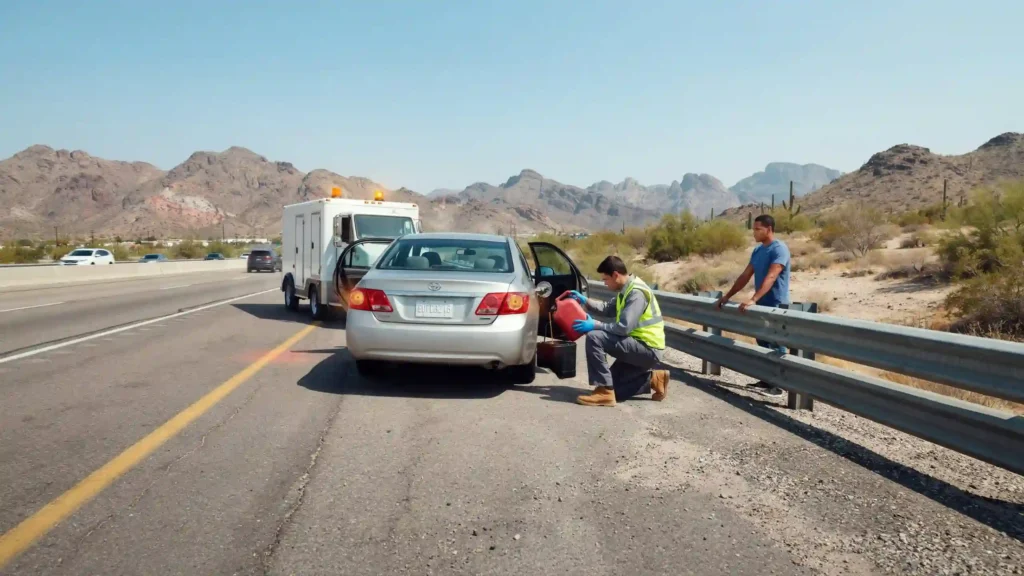
Technician kneels and pours gasoline from a red can into a car’s fuel door while the driver waits by a guardrail
Fuel Delivery

How Does Fuel Delivery Work? Steps, Cost, and Wait Time

You are stuck with a zero tank. Here’s how does fuel delivery work: You call, provide your location and a technician comes to you with petrol or diesel. They hold enough litres to transport you to the nearest station. Most drops in Phoenix take 10 to 25 minutes, and you pay for the fuel and a service fee. This tutorial covers the steps, cost, fuel delivery vs hauling, and safety. Redline Roadside & Towing LLC provides 24/7 fuel delivery in Phoenix, therefore the rates and timeframes listed below are from actual calls, not estimates. Fuel Delivery in Short: Three Types and Which One Is Yours Fuel delivery is not one service. Three kinds exist, and each fits a different need. Type Who uses it How it is ordered How much fuel Typical wait Roadside emergency Drivers who ran dry Phone call, live GPS location A few gallons 10 to 25 minutes Home and business tank delivery Homes, farms, shops Schedule ahead Hundreds of gallons Same day to a few days Fleet and on-site fueling Companies with many vehicles Contract and schedule Full tanks Set by schedule Roadside Emergency Fuel Delivery This is the one most drivers need. A service truck brings gas or diesel to your car so you can drive to a station. Home and Business Tank Delivery Bobtail trucks fill large tanks at homes and shops. They carry propane, heating oil, and diesel. These deliveries are planned, not urgent. Fleet and On-Site Fueling Mobile fueling trucks fill fleet vehicles on the lot, often overnight. Off-road equipment may use dyed diesel, which is taxed differently and is not for road use. How Emergency Fuel Delivery Works Behind the Scenes How emergency fuel delivery works starts with the dispatcher. They read your GPS location and send the closest service truck. That cuts drive time and gets you moving sooner. The truck carries gasoline, diesel, or both. Fuel goes into your car from approved containers or a transfer tank with a metered pump. The driver is trained and licensed, and the truck is built for safe fuel handling. A 24/7 dispatch desk means a night call gets the same response as a noon call. Response time depends on where the truck is when your call comes in. Step-by-Step Roadside Fuel Delivery From Call to Restart Pull over safely. Turn on your hazard lights and coast to the shoulder or a parking lot. Call for help. Dial your fuel delivery company and stay on the line. Share your location and fuel type. Give the mile marker, cross street, or landmark. Say gas or diesel. The dispatcher confirms and sends a truck. You get a price and a wait time before anyone drives out. The driver verifies and fuels. They check your vehicle and fuel type, then add fuel. Restart check. The engine starts, the driver confirms it runs, and you get a receipt. What to Have Ready Before You Call Your exact location, such as a mile marker or cross street Fuel type: gas or diesel Vehicle make, model, and color License plate number A phone with battery left A way to pay What the Driver Does at Your Car The driver asks you to turn the engine off. No smoking and no open flames, since fuel vapor ignites easily. They use an approved can or a nozzle, pour with care, and avoid spills. Then they ask you to test the restart. How Much Fuel You Get, How Long It Takes, and What It Costs Item What to expect Wait time 10 to 25 minutes in Phoenix Service fee Typically $50–$95 in Arizona, excluding fuel costs. Actual pricing varies by location and distance. Fuel price Charged separately based on the current local gas or diesel price and the amount delivered.  How Much Fuel You Get The goal is to get you to the nearest station, not to fill the tank. A few gallons covers that. Ask the dispatcher if you need more. Wait Time and What Slows It Down Redline’s real arrival time is 10 to 25 minutes. Heavy traffic, a crash on the freeway, or a dust storm can add time. Rush hour on the I-10 is the usual cause. What the Bill Includes You pay a service call fee plus the price per gallon. Some companies add an after-hours surcharge. Ask for the full total on the phone before the truck leaves. Fuel Delivery Versus Towing: Which One Do You Need? Situation Best choice Why Empty tank Fuel delivery A few gallons fixes it Faulty gauge Fuel delivery first Add fuel, then get the gauge checked Car will not restart after fuel Tow Something else is wrong Unsafe location Tow, or call 911 Safety comes first Wrong fuel in tank Tow Running it can damage the engine Diesel that will not prime Tow, or a diesel-ready technician Air in the lines needs more than fuel When Fuel Delivery Is Enough If you simply ran dry and the car starts after fueling, you are done. This is also the cheaper fix, since a tow cost adds miles and a flatbed. When Towing Is the Better Call Wrong fuel needs a tow, because starting the engine can spread bad fuel through the system. A bad fuel pump or clogged fuel filter also means a shop visit. Not sure how to order one? Read our guide on how to call a tow truck. Gas, Diesel, and Special Cases Diesel: After it runs dry, the system often needs to be primed or bled to clear air. Hybrids: They still use gasoline when the battery is low. Box trucks and RVs: They hold more fuel, so they may need a bigger delivery. Motorcycles: They need a small amount, poured with care. Electric vehicles: They need charging, not fuel. Common Misconceptions and Safety: What Is True and What Is Not Myths vs Facts Myth Fact They fill the whole tank Most drops give enough to reach a station It only works in cities Trucks cover

Scroll to Top