What Is 24/7 Roadside Assistance? Coverage, Cost, and Real Value
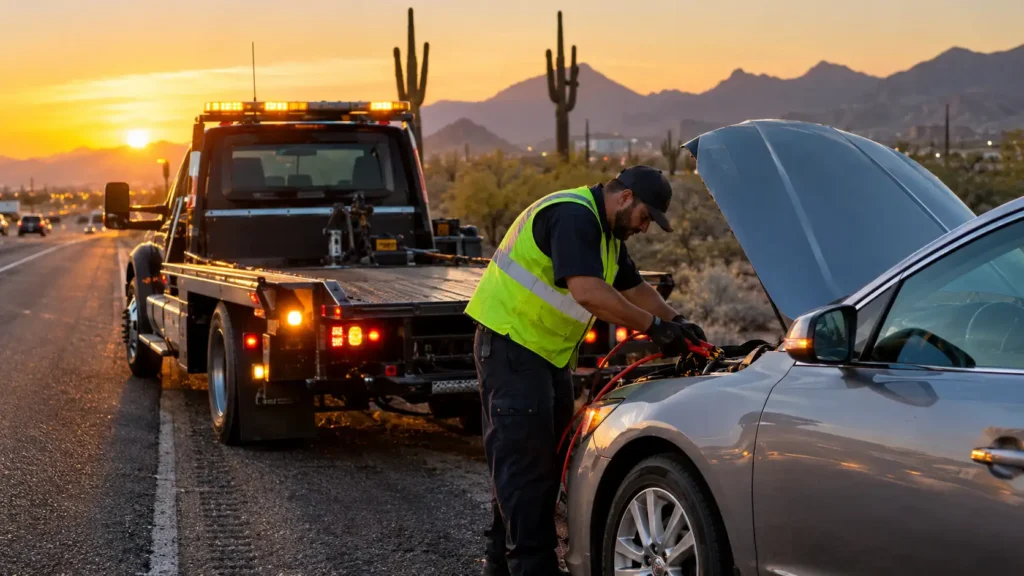
What is 24/7 roadside assistance? It is a service that sends a live dispatcher and a real service truck to your stalled car at any hour, any day of the year. In Phoenix, that call often comes on a 110 degree afternoon, when a dead battery or a blown tire cannot wait. At Redline Roadside & Towing LLC, we answer those calls all day and all night across the West Valley. This guide covers the services, the real costs, and a clear verdict on whether it is worth paying for. What 24/7 Roadside Assistance Means 24/7 roadside assistance means help is available whenever your car breaks down, day or night. The Short Answer So what is 24/7 roadside assistance in plain words? It is a service that sends a trained tech to fix or tow your vehicle at any hour. The tech can jump a battery, change a tire, unlock a door, bring fuel, or tow you to a shop. What “24/7” Really Promises The label means 24 hours a day, 7 days a week, 365 days a year. A true around-the-clock provider keeps a live dispatcher on the phone at 3 a.m., on Sunday night and on Christmas Day. You talk to a person, and that person sends a driver. A phone line is not the same as a truck on the road. Some companies answer at night but only start trucks in the morning. One question tells you the truth: is a driver on duty right now? A real service call starts with a yes. 24 Hour vs 24/7 vs Emergency Roadside Assistance 24 hour roadside assistance, 24/7 roadside assistance and emergency roadside assistance all describe the same service. Companies pick the wording they like. The truck, the tech and the tools stay the same. The word “emergency” matters when you are in danger. Think of a stall on a freeway shoulder, kids in the car in 108 degree heat, or a breakdown on a dark road at night. Say so to the dispatcher right away. Safety calls should come first. What Services Does It Include? Service What the tech does When it is not enough Jump start Restarts the engine with cables or a booster pack The battery is old or the alternator is bad, so the car dies again Battery test Checks if the battery can hold a charge The test fails and you need a new battery, which costs extra Flat tire Swaps the bad tire for your spare No spare, a flat spare, or a damaged wheel Fuel delivery Brings a few gallons of gas or diesel The fuel itself costs extra, and a bad fuel pump needs a shop Lockout Opens the door without damage A lost or broken key needs a locksmith Tow Loads the car and hauls it to a shop or home The trip is longer than your plan’s tow limit Core Services Most calls fall into six jobs: jump start, battery test, flat tire, fuel, lockout and tow. The tech fixes the problem where you stopped. If the fix fails, the tech tows the car. Towing comes in two styles. A flatbed carries the whole vehicle on its bed. A wheel-lift raises two wheels and rolls the rest. Flatbeds are safer for low cars, all-wheel-drive models and anything that will not roll. Extra Services Some Providers Add Not every company stops at the basics. Some add winching, which pulls a stuck vehicle out of sand, mud or a ditch. Some carry batteries and replace yours on the spot. A few tow motorcycles and RVs with the right gear. Ask before you need it, because these extras differ from company to company. How It Works, Step by Step Request Help Call, text or use an app. Then give the dispatcher four facts: Your exact location. Share your GPS pin from your phone, or name the freeway, exit and mile marker. Your vehicle: make, model, color and year. The problem: won’t start, flat tire, keys inside, out of gas. Whether you are in a safe or unsafe spot, such as a freeway shoulder. Good details save time. The dispatcher can send the right truck with the right gear on the first trip. What Happens on Arrival The tech checks the car and tells you the plan and the price. Most jobs end on the spot. A jump start or a tire swap takes minutes. If the fix fails, the tow fallback kicks in and the tech loads your car for the ride to a shop or home. How Fast Should Help Arrive? At Redline, drivers in Phoenix usually see a tech in 10 to 25 minutes. Directory listings for other Phoenix providers show average waits from about 18 to 38 minutes. Heat, rush hour and storms can add time, so always ask for an ETA. Ask for an update if the clock runs past it. Membership vs Pay-Per-Call Membership Pay-per-call Billing Yearly fee You pay when you use it Who is covered A person or a vehicle, based on the plan The vehicle on the call Call limit 4 calls a year on typical plans None Tow-mile cap 5, 100 or 200 miles by plan None. You pay by distance Activation wait Some plans have a wait after you join None Best for Frequent calls and older cars Rare breakdowns and newer cars Membership Plans National auto club plans in Phoenix run from $64.99 to $124.99 a year. Most give you 4 calls a year. Tow caps change by tier: 5 miles on the base plan, then 100 or 200 miles on higher plans. Some plans cover the person in any car. Others cover only one vehicle. Read that line before you pay. Pay-Per-Call Service On-demand service has no yearly fee. You pay nothing until you need help, and there is no call limit. Two breakdowns in one month cost the same as two calls spread over a year. This works well for drivers who rarely call. Roadside Help You