Where do cars get towed after an accident? Most go to one of four places: a body shop you pick, the tow company’s yard, a police impound lot, or your home. Who decides depends on who called the truck and whether police need the car. At Redline Roadside & Towing LLC, we answer this question for Phoenix drivers often.
This guide helps you find your car, choose where it goes, and avoid extra fees. The steps are short and easy to follow, even on a rough day.
Where Do Cars Get Towed After an Accident? The 4 Usual Places
Four places cover almost every crash tow. Which one you get depends on who called the truck, where the car sits, and whether police need to keep it.
A body shop you pick. This is the best case. You can talk, the car isn’t evidence, and you name a repair shop. The truck takes it there.
The tow company’s yard. Police often call the truck when a car blocks the road or the driver is hurt. If no one names a shop, the car goes to the tow yard, also called a storage lot. Storage fees start there.
A police impound lot. After a crash with a crime, like a DUI or a hit and run, police may place a police hold on the car. In Phoenix, the lot is usually run by a contract tow company. You can’t take the car until police release it.
Your home or a dealership. If the damage is light, a flatbed can take the car to your driveway or your dealer. Many drivers pick this when the repair plan isn’t set yet.
Not sure which one fits you? The next sections show how to choose and how to find the car.
Can You Choose Where Your Car Is Towed After an Accident?
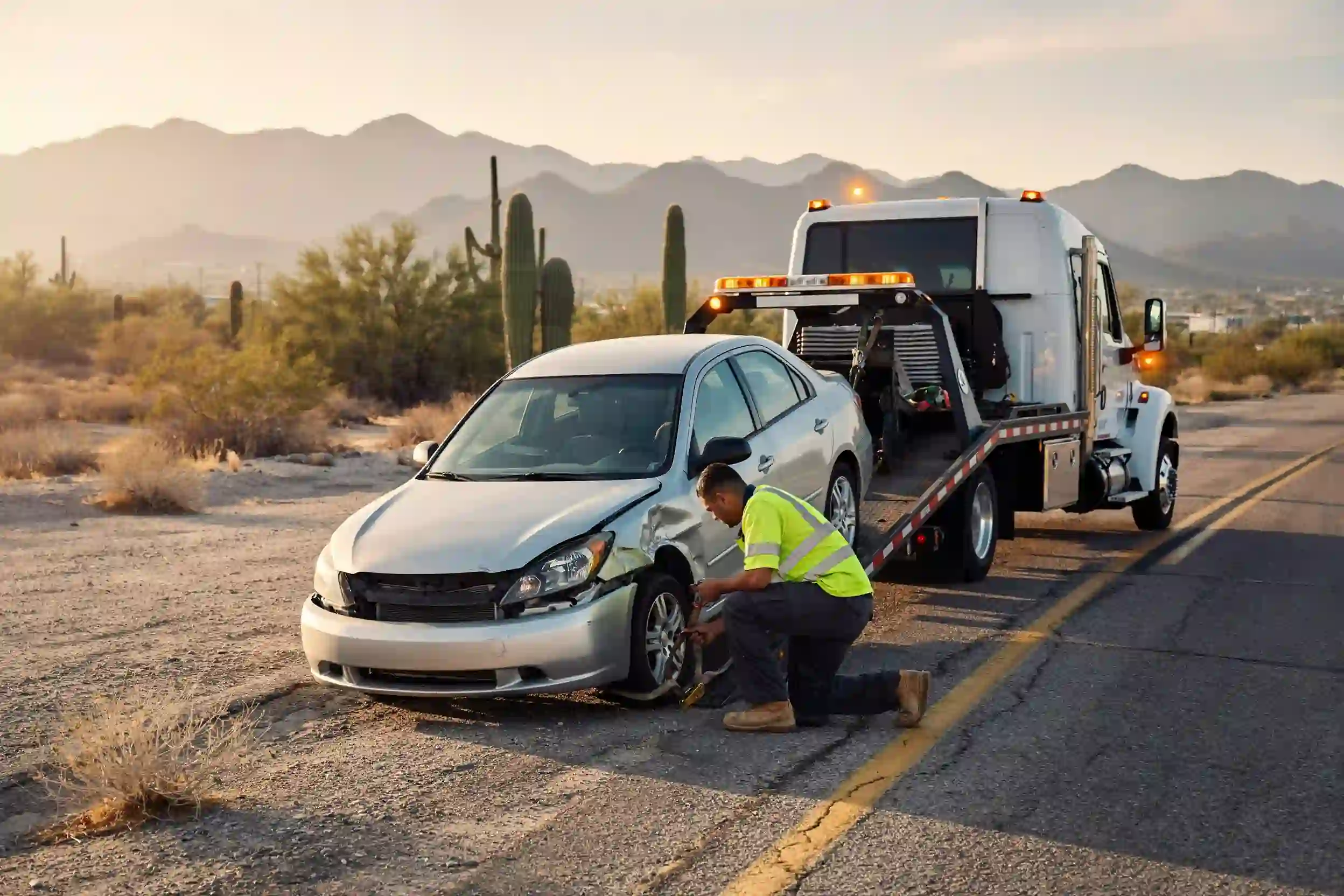
Yes, you can choose where your car is towed after an accident, provided you are uninjured, coherent, and the vehicle isn’t needed as police evidence. Simply give the driver your preferred drop-off address before the hook-up begins.
However, if you are incapacitated or blocking traffic, police will order a non-consensual tow using a local rotation list or zone contract, routing your vehicle directly to an impound lot.
Do these things at the scene:
- Say your drop-off address out loud.
- Ask for the company name and phone number.
- Get the tow slip before the truck leaves.
- Take photos of the car from all sides.
- Remove your valuables, like your wallet, phone, and ID.
- Don’t sign blank forms.
The tow slip is your proof. It lists the company, the lot, and the car. If the tow driver says you have no choice, ask the officer on scene. A calm, clear request works best. You’re the driver, and it’s your car.
How to Find Out Where Your Car Was Towed
Work through these steps in order. Most people find the car by step three.
- Check the tow slip. It shows the company name, the lot address, and a phone number.
- Call the police non-emergency line. Give your report number. Dispatch can tell you which company took the car. In Phoenix, the city asks you to start with police before you call a contract tow company.
- Call the tow company that serves that zone. Ask for your car by plate or VIN.
- Use the company’s online vehicle locator. Many yards let you type in a plate or VIN and see if the car is there.
- Check with the hospital. If an ambulance took you, ask staff to reach the officer. The officer can say where the car went.
- Try 311. If your city has a 311 line, ask them. They can often point you to the right office.
Be careful out there. Confirm the company is a licensed tow company with a real lot. A real lot has a street address, posted hours, and a person at the desk. Don’t pay anyone who texts you from an unknown number. Don’t pay before you see proof that they hold your car.
What Happens to Your Car After an Accident
Here is the usual path, from the crash to the next step.
- Hook-up at the scene. The driver checks the car and picks a method, like a flatbed or wheel lift. Then they secure it. New to tow terms? Our guide, What Is the Meaning of Tow, explains them in plain words.
- Transport. The truck takes the car to the drop-off you chose, or to the yard if no one chose.
- Photos and inventory. Many lots photograph the car and list what’s inside. Ask for a copy.
- Storage. The car sits in the lot. Daily storage fees start counting.
- Hold or release. If police placed a hold, the car stays put. Once police release it, you can claim it.
- Repair, total loss, or salvage. A shop writes a repair estimate. If repairs cost more than the car is worth, it’s a total loss. A total loss car often goes to a salvage yard.
Each day in storage adds cost. Moving fast on steps four and five saves money.
What Towing and Storage Cost
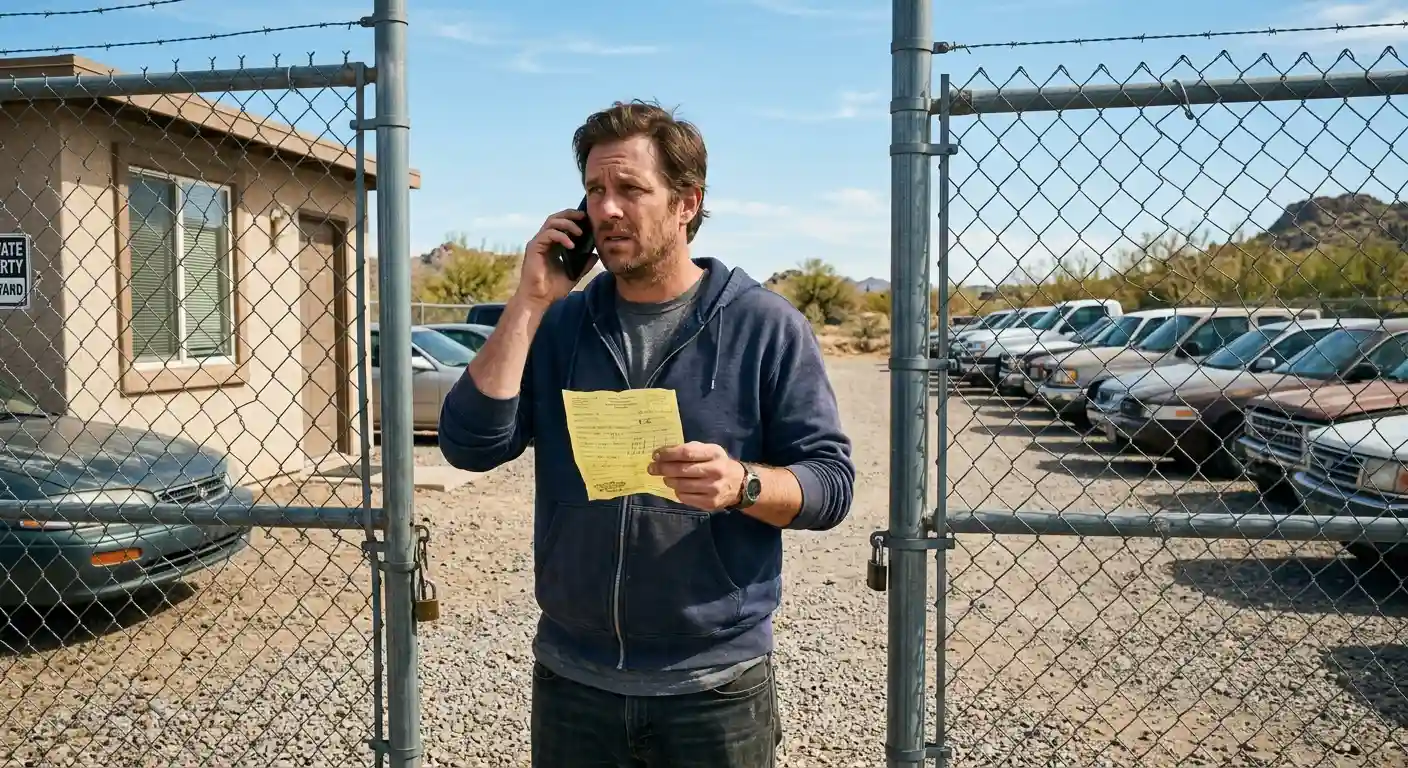
Prices change by city, so here is a real example. These are Phoenix police contract rates from the city’s 2025 schedule. They apply to police-ordered tows in Phoenix only. Check the Phoenix Police towing page for the current sheet.
- Base tow rate for a vehicle under 10,000 pounds: $65.46
- After-hours gate fee: $75 per visit, from 6:31 p.m. to 7:59 a.m.
- Mileage outside the city: $10 per mile
- Storage rate: capped at $25 a day under A.R.S. 28-3511 and $15 a day under Phoenix City Code 23-55
- City fee for 28-3511 impounds: $150
Redline’s accident recovery costs range from $100 to $500, with exact quotes provided before vehicle hookup based on the specific vehicle type and crash severity. Five core factors drive the final bill: the vehicle’s GVWR weight class, special circumstances (like rollovers that require extra gear and time), daily storage accumulation, after-hours fees for late arrivals, and total mileage. For example, five days of storage at the $25 daily cap ($125) combined with the $150 city fee brings the subtotal to $275 before adding the base tow charge.
What You Need to Get Your Car Back, and How Fast
Bring the right papers, and the visit takes minutes. Skip them, and you lose a day.
If you’re the owner: a government photo ID, plus your title or registration.
If you send someone: a signed owner statement, a copy of your ID, and their own ID and license. Some lots also accept a power of attorney. Call first to ask.
If police placed a mandatory hold, you need a release form from them before the lot can let the car go. In Phoenix, a 28-3511 impound means you pay the city fee first, then take the release form to the tow company. The lot can’t release the car without it.
Call ahead about payment types. Some lots take cards, and others want cash. The city fee takes cash, a cashier’s check, or a money order.
Check lot hours too. Phoenix contract lots open at 8 a.m., and late visits cost the $75 gate fee. You can’t work on the car at the lot, so plan to tow it out. Ask for your personal belongings when you arrive. Most lots let you take them even before you pay.
Deadlines matter:
- Fees grow every day the car sits.
- If no one claims the car within 10 days after the release date, it can be treated as abandoned. The lot can then apply for an abandoned title.
- If you think the police tow wasn’t lawful, you can ask for a post-storage hearing. The request is due within 10 days of the notice. Phoenix doesn’t charge for it. Details are on the city’s post-storage hearing page.
What to Do If the Tow Lot Won’t Release Your Car or the Bill Looks Wrong
Stay calm and keep records. Follow these steps:
- Write down names and times. Note who you spoke to and when.
- Ask for an itemized receipt. Each fee should have a line and a price. Compare it to the rate sheet.
- Take damage photos before you leave. Shoot every side, the wheels, and the inside. Do it at the lot, in daylight if you can.
- Speak to a supervisor. Many mix-ups end here.
- File a written complaint. For Phoenix police tows, send the Tow Complaint Form to the tow contract liaison. Attach copies of your receipts.
Your notes make the case. A clear paper trail gets answers faster than a phone call.
Need Your Car Moved After a Crash? Call Redline
You pick the drop-off. We take your car where you want it. A body shop, your home, or your dealer all work.
Our light-duty tow trucks and flatbeds reach drivers across the West Valley and all over Phoenix, AZ. Our 24/7 dispatch picks up day or night. Most arrivals take 10 to 25 minutes. You get a clear price before we hook up.
24/7 Accident Recovery Service covers cars that need a careful pull, from a fender bender to a rollover. Redline Roadside & Towing LLC keeps it simple and honest. Call us now, tell us where you are, and we’ll start the recovery.
Conclusion
Find the car fast. Choose the drop-off if you can. Pay the fair bill, and get the car out before fees pile up. Each day in a lot costs money.
Need help right now? Contact Redline Roadside & Towing LLC. We’ll reach you in 10 to 25 minutes, take your car where you want it, and give you a clear price first. Call today for accident recovery.
FAQs
Where is my car towed after an accident?
Where do cars get towed after an accident depends on who called the truck. You pick the spot if you can speak. Police pick it if they order the tow or hold the car.
What happens to your car after an accident?
The truck hooks up, hauls the car, and logs what’s inside. Then it goes to storage or a shop. Police may hold it first.
How to find out where your car was towed?
Check the tow slip. Then call the police non-emergency line with your report number. Call the tow company or use its online locator.
Can I choose where my car is towed after an accident?
Yes, in most cases. Say your drop-off address before the hook-up. Police may override you if they order the tow.