What are common mistakes during an off-road recovery? The dangerous mistakes when recovering a vehicle off-road happen when you use the wrong gear pick weak anchor points or skip safety steps. Attaching recovery straps to a trailer tow ball, bumper or suspension components can lead to metal breaking dangerously. Using a rigid strap instead of a flexible kinetic rope puts too much stress on the frame and can damage it.
A snapping cable can release force that can injure or even kill someone nearby. Not using a line damper and letting people stand in the snap zone are safety failures. These dangers can be greatly reduced by using rated frame points and checking the terrain first with traction boards or shovels. Always make sure the area is safe, before pulling. Redline Roadside & Towing LLC handles off-road recovery calls across the West Valley.
Common Off-Road Recovery Mistakes
These common mistakes may cause dangerous off road recovery.
Using the Wrong Recovery Gear
A tow strap has little stretch. A kinetic recovery rope stretches and stores energy. Mix them up and parts break. Every recovery strap, soft shackle, and D-shackle also needs the right load rating for your winch or rope setup. Severity: high. Safe fix: match each piece to the job and the vehicle weight.
Attaching to an Unsafe Recovery Point
Skip the trailer ball, axle, suspension parts, and tie-down loops. Some tow hooks are made for light towing only. These parts can tear off the frame under recovery loads. Severity: deadly. Safe fix: use a rated point bolted to the chassis.
Skipping a Recovery Assessment
Look at the terrain, the vehicle position, and the best anchor point first. Pick the recovery direction that lets the truck roll out the way it came in. Know the vehicle weight. Severity: medium. Safe fix: take two minutes and walk the scene.
Rushing the Recovery
Speed adds dynamic load. A hard jerk creates shock load, and the recovery force can climb far past the truck’s weight. That cracks parts and bends frames. Vehicle damage follows. Severity: high. Safe fix: pull smooth and slow, and stop if anything looks wrong.
Standing Too Close to the Recovery Line
People like to watch from beside the winch line or kinetic rope. If it snaps, the recoil can kill. Severity: deadly. Safe fix: clear the recovery zone and drape a recovery damper over the line.
Using a Weak or Unsafe Anchor
A small tree, a loose rock, or a stump can pull free. A bare cable around a tree also hurts it. Severity: high. Safe fix: use a tree saver strap on a sturdy live tree, a snatch block to change direction, or a ground anchor in open desert.
Ignoring Equipment Ratings
Gear carries a working load limit (WLL) and a minimum breaking strength (MBS). They are not the same number. Winch capacity must fit your vehicle weight too. Severity: high. Safe fix: read every tag and never pass the WLL.
Continuing After Something Goes Wrong
A frayed strap, a bent shackle, a moving anchor, or a bending point is a warning. Pulling on is how a recovery point failure happens. Severity: deadly. Safe fix: stop, release the load, and fix the problem first.
Skipping the Gear Check
Worn rope and cracked hardware fail first. Severity: high. Safe fix: inspect every item before each trip. Details are in the gear check section below.
Mistakes You Make Before the Pull Even Starts
Stop spinning the wheels immediately to prevent digging the truck deeper into sand, mud, snow, or loose rock. Before environmental stress increases, check your cell signal, evaluate the terrain slope, and dig out the area surrounding all tires and the vehicle frame.
Place traction boards in front of the drive wheels, then use a deflator to air down above 10 to 12 PSI going lower without bead locks risks slipping the tire off the wheel. Always carry a portable compressor to re-inflate before hitting pavement, and abort after one or two failed attempts to change your recovery plan.
Silent Recoveries and Bad Positions Hurt People
Pick one spotter to run the pull. Agree on hand signals before anyone touches a line. Do a driver ready check. The stuck driver gives a clear thumbs up, and the spotter confirms everyone is clear. Set a stop signal too.
Know the danger zone. It covers the line of pull and the recoil path if something snaps. One gear guide says to stay back at least 1.5 times the length of the unstretched rope. Passengers should step out and stand clear of the line. The driver keeps windows down to hear the spotter.
Wear winching gloves and safety glasses. Add a helmet if you have one. Hands, eyes, and heads take the worst hits.
Mistakes After the Pull
The job is not done when the truck is free. Do a post-recovery inspection. Check the frame, suspension, steering, and drivetrain. Look for fluid leaks and bent parts. Air the tires back up.
Retire damaged gear instead of tossing it back in the kit. Fill the holes you dug and leave the spot as you found it. Careless trail damage can lead to trail closure.
What These Mistakes Can Cost You
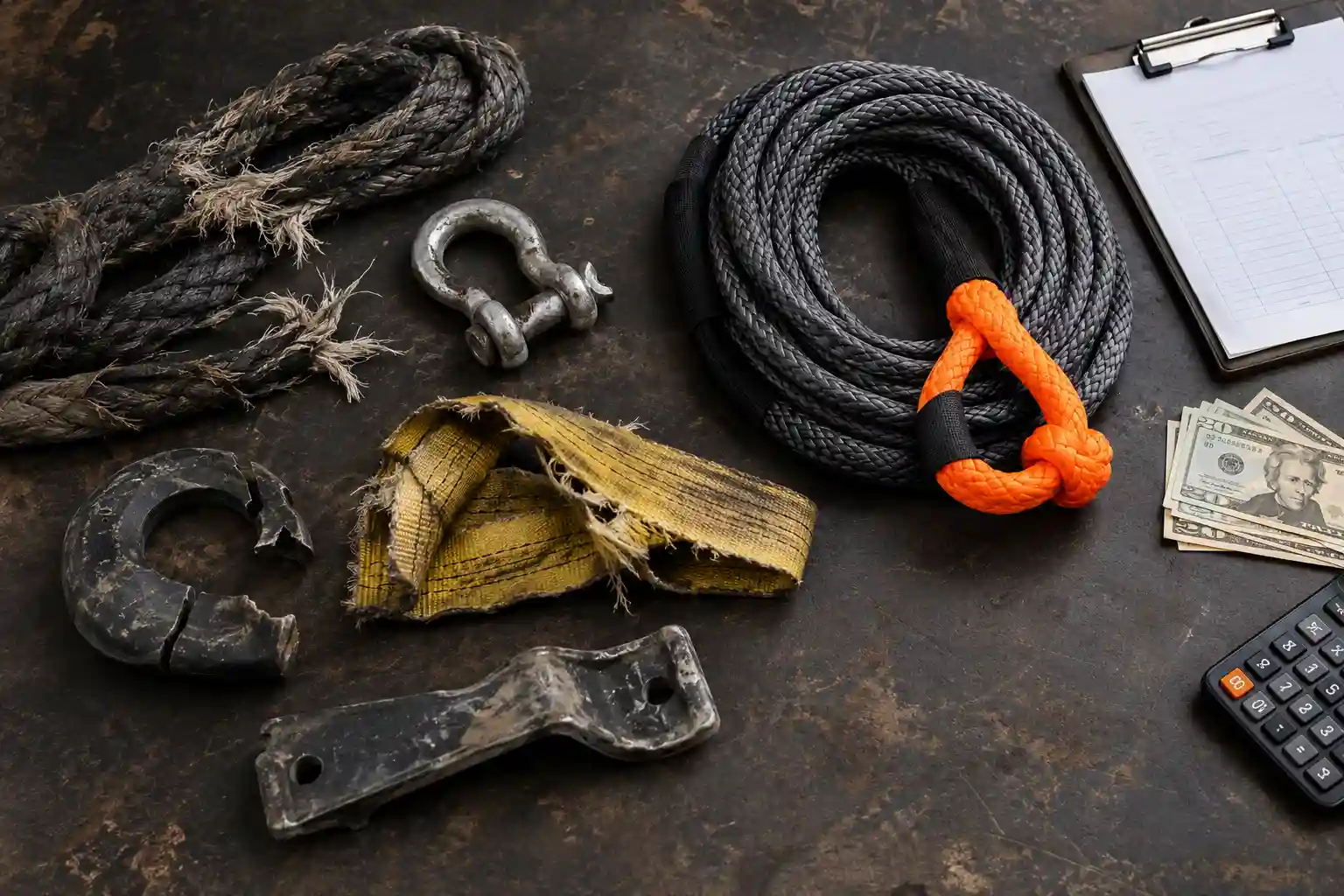
Arizona’s “Stupid Motorist Law” (ARS § 28-910) caps emergency rescue fines at $2,000 for drivers who bypass barricades into floodwaters, where just 2 feet of moving water can sweep away an SUV. This legal penalty is entirely separate from private towing and vehicle repair costs.
Commercial off-road recovery fees quickly surpass this fine, ranging from a $100 hookup fee plus $285 hourly up to a $450 call-out fee plus $750 hourly for extreme winching. When adding the costs of repairing bent bumpers, torn recovery points, or frame damage, carrying proper recovery gear is significantly cheaper than a professional extraction.
Read What Does Off-Road Recovery Mean.
When to Stop and Call a Pro
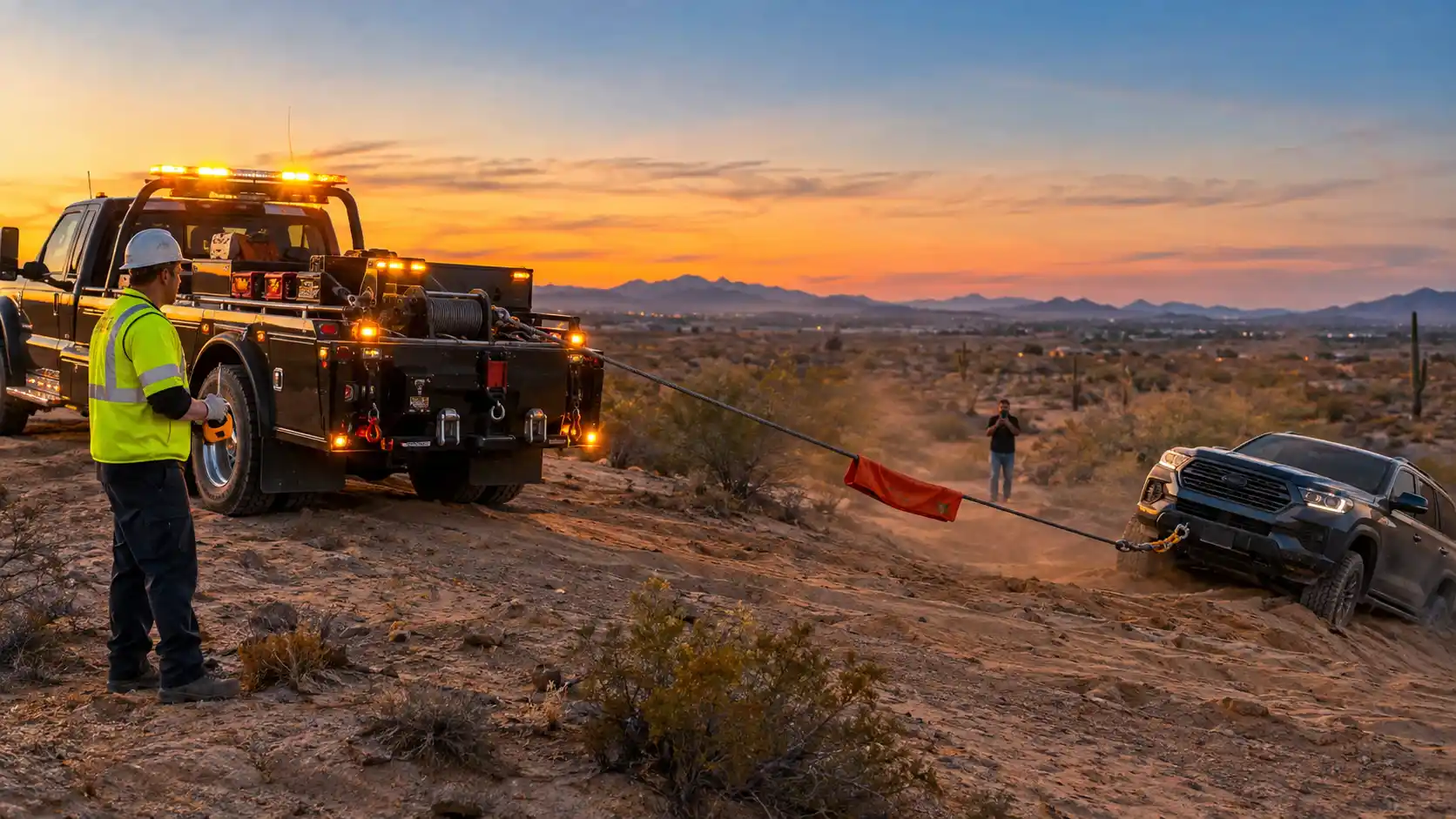
Stop when the truck sits on a slope, in water, or on its side. Stop in deep sand or mud with no anchor. Stop if you lack rated gear, if damage has started, or if no one has training.
When you call, give the dispatcher your GPS pin, the vehicle type and weight, any mods, how stuck you are, and whether anyone is hurt. A pro brings a flatbed and a heavy-duty winch and rigs the pull the right way.
Redline Roadside & Towing LLC runs an 24/7 Off Road Recovery Service across the West Valley. Stuck right now? Call (602) 549-8722 and send your GPS pin. We will roll a crew with the right gear. Don’t gamble on a snapped line. Call Redline today.
Conclusion
What are common mistakes during an off-road recovery? Wrong gear, weak points, rushed pulls, and bad positions top the list. Slow down, check every rating, and keep people out of the line. These off-road recovery mistakes to avoid can save your truck and maybe a life. If a job feels risky, contact Redline Roadside & Towing LLC. Call (602) 549-8722 for fast, safe off-road recovery.
FAQs
What are common mistakes during an off-road recovery?
The most common are using the wrong gear, hooking to a weak recovery point, rushing, and standing near the line. Weak anchors and skipped gear checks come next.
Can I use a tow strap instead of a kinetic rope?
No. A tow strap has little stretch and sends a hard jolt through the recovery points. Use a rated kinetic rope.
Can I pull from a tow ball?
No. A tow ball is not built for recovery loads. It can break off and fly.
How do I know my recovery gear is rated enough?
Read the tags for the WLL and MBS. Pick a kinetic rope with an MBS of two to three times your vehicle’s weight.
What should I do first when my 4×4 gets stuck?
Stop spinning the wheels. Get out and check the slope and surface. Then dig out, air down, and plan the pull.