Locking yourself out of your own car is one of those moments where your brain goes blank for a second. The first instinct for a lot of people is to call the police. Can police unlock your car actually depends almost entirely on why you’re locked out.
Police will show up and open a car when someone’s in real danger, a kid stuck inside, a dog panting in a hot back seat, someone who genuinely can’t get out on their own. A regular lockout, the kind where you just left your keys on the seat, usually doesn’t qualify. Officers in most cities will point you to a locksmith instead, and there’s a real policy reason for that, not just an excuse to skip the call.
When Police Will Unlock Your Car
Police respond fast when there’s a genuine emergency. That mostly means a child or pet locked inside the vehicle, especially in extreme heat or cold. A car’s interior can climb 20 degrees in about ten minutes, even with the windows cracked, so dispatchers treat these calls as urgent.
Other situations that count as emergencies include an elderly or disabled person locked inside, someone in active danger, or a welfare check where officers already suspect a person inside needs help. Call 911 for any of these. Dispatch sends the nearest available officer, and calls involving a trapped child or animal usually jump to the front of the line.
The Alexandria, Virginia Police Department spells this out in its official lockout policy: officers respond to a vehicle lockout only for a medical emergency, a child or disabled person locked inside, an animal in extreme heat or cold, or a situation where someone’s welfare is clearly at risk. Most departments follow a similar rule, even if the wording changes from city to city.
When Police Won’t Unlock Your Car (Non-Emergency Lockouts)
If you just locked your keys in the car with nothing else going on, don’t expect a squad car. Can a police officer unlock your car for a routine lockout? In most cities, no. Departments generally treat this as a civil matter, not a police one.
Two reasons drive that policy. First, liability. Officers aren’t trained locksmiths, and if one scratches your paint or cracks a window trying to get in, the department can end up covering the repair bill. Second, staffing.
Call a non-emergency line for a routine lockout, and expect the dispatcher to point you toward a locksmith or towing company instead.
Is It Free When Police Unlock Your Car?
Can the police unlock your car for free? In a genuine emergency, usually yes. Most departments don’t charge for emergency lockout response, since it falls under public safety.
There’s a bigger cost to watch for too. If an officer can’t open the door cleanly and has to break a window to reach a child or pet, you’re the one paying for that repair, not the department. A replacement window can run anywhere from $100 to $400 depending on the vehicle, plus the hassle of driving around with a broken window until it’s fixed.
Compare that to a locksmith. A standard car lockout from a licensed locksmith usually runs between $75 and $150, and there’s little to no risk of broken glass.
How Do Police Unlock a Car? (Methods and Limits)
Can the police unlock your car? It depends a lot on how old it is and what kind of locks it has. Older cars with manual locks are the easiest for officers to open. A slim jim, a thin strip of metal slid between the window and the weather-stripping, can reach the lock mechanism and pop it in a minute or two on many pre-2010 vehicles.
A wedge and a long rod work the same way, prying the door slightly and reaching in to trip the unlock switch. Modern cars are a different story. Keyless entry, electronic fobs, and immobilizer chips mean there’s often no simple mechanical lock left to trip.
Some newer models don’t even have a manual unlock button inside the door once the alarm is armed. If an officer’s basic tools can’t get past that, breaking a window becomes the only fast option in a real emergency. This is a big reason police lockout service has become rarer over the years.
It isn’t only about staffing. The tools officers used to carry simply don’t work on a lot of newer cars anymore.
Can Police Officers Unlock a Car Without a Key?
Can police officers unlock your car without a key? Sometimes, but it depends heavily on the vehicle and the department. Some patrol cars still carry basic lockout kits, wedges, long-reach tools, and slim jims, but plenty of departments have stopped issuing them altogether.
There’s a training gap behind that decision. Locksmiths spend years learning to open a lock without damaging it. A patrol officer might get a few minutes of instruction, if any at all. Add in the insurance risk of a scratched door panel or a bent lock mechanism, and a lot of departments decided the equipment wasn’t worth keeping around.
Add keyless systems into the mix, and the honest answer for most newer vehicles is that an officer without specialized tools can’t do much more than you could do yourself. A mobile locksmith with the right transponder equipment can.
Police vs. Locksmith vs. Roadside Assistance vs. Tow: Which Should You Call?
So can police unlock your car faster than the alternatives? Rarely, unless it’s a true emergency. Here’s how the main options actually compare.
| Option | Typical Response Time | Typical Cost | Works on Keyless Cars? | Damage Risk |
| Police (emergency only) | Fast, but only dispatched for emergencies | Usually free; some cities charge a small fee | Limited | Higher, may involve breaking a window |
| Mobile locksmith | Around 20–45 minutes | $75–$150 for a basic lockout | Yes | Low |
| Roadside assistance (insurance or membership plan) | Around 20–60 minutes | Often included with your plan | Yes, typically dispatches a locksmith | Low |
| Towing company | Around 20–45 minutes | Varies; some include lockout service | Yes | Low |
| Manufacturer app | Instant, if already set up | Free or subscription-based | Only if the app was linked before the lockout | None |
For most non-emergency lockouts, a mobile locksmith or a roadside plan beats calling the police on every measure that matters: speed, cost, and the odds your car comes out of it with a window still intact.
What to Do Instead of Calling the Police
If it isn’t an emergency, skip 911 and try these first.
Check your car’s manufacturer app. Many newer vehicles let you unlock the doors remotely once the app is linked to your phone, no locksmith required. It only helps if you set it up before the lockout, so this one rewards planning ahead.
Call your roadside assistance provider next. If you have coverage through your auto insurance, a credit card benefit, or a membership plan, lockouts are usually included at no extra charge.
No roadside plan? A mobile locksmith is your next best call. They come to you, open the door without damage, and can often cut a replacement key on the spot if you don’t have a spare.
If you’re in the West Valley area of Arizona, Redline Roadside & Towing LLC offers Lockouts Service in West Valley AZ, along with towing and recovery, so you’re not stuck waiting on a police response that might not even come. Save the number now, before you need it. Call Redline Roadside & Towing LLC any time you’re locked out and need a fast, damage-free way back into your car.
DIY Ways to Unlock Your Car (Use With Caution)
If you’re stuck and none of the above is available, a few old tricks sometimes work on older cars with manual locks. A wire coat hanger, straightened out with a small hook on one end, can sometimes catch the lock button through a gap in the door seal. A shoelace looped around the lock knob works on some older sedans. A plastic wedge paired with a long thin rod can pry the door slightly and reach the unlock switch.
None of these are guaranteed, and all carry some risk. You can scratch the paint, tear the weather-stripping, or bend something inside the door panel that costs more to fix than a locksmith would have charged in the first place. Treat these as a last resort, not a first move, and skip them entirely on a keyless or newer vehicle, where they usually won’t work anyway.
How to Avoid Getting Locked Out Again
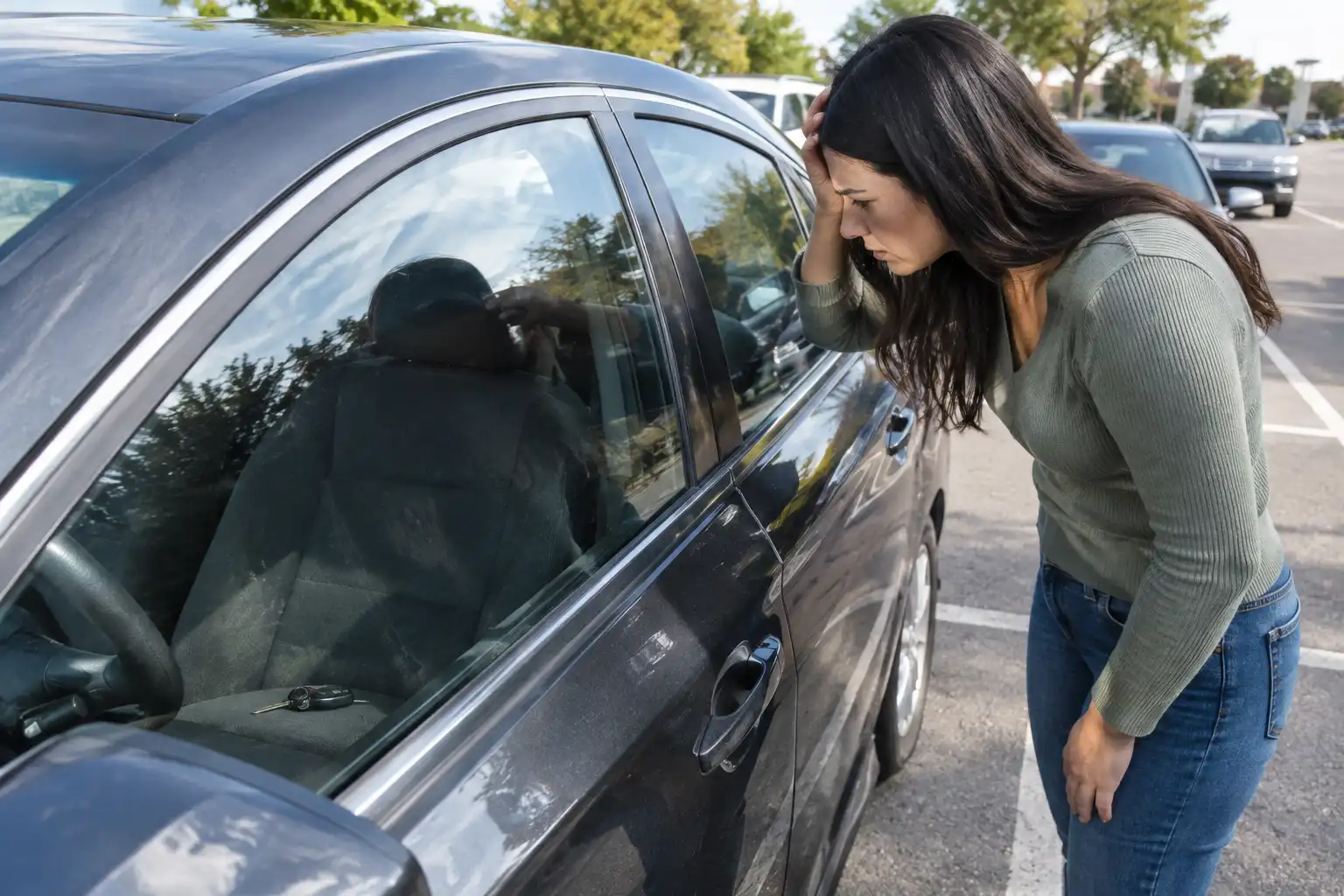
The easiest lockout to deal with is the one that never happens. A few habits go a long way.
Keep a spare key with a trusted friend, family member, or coworker nearby, not hidden on the car itself. Magnetic lockboxes seem convenient, but anyone looking for one can usually find it fast, and thieves know exactly where to check.
Clip your keys to a carabineer on your bag or belt loop so you feel them before you shut the door. Replace your key fob battery at the first sign it’s acting up. A dying fob is a common reason keyless cars end up locked with no easy way back in. And set up your manufacturer’s app now, before you need it, so remote unlock is one more backup if your key ever ends up on the wrong side of the door.
Conclusion
So, can police unlock your car? Sometimes, yes, but usually only in an emergency. If you’re simply locked out, don’t risk damaging your car or waiting around. Contact Redline Roadside & Towing LLC for fast, reliable lockout assistance and get back on the road safely.
FAQ
Can police officers unlock your car?
Yes, but usually only for emergencies like a child or pet locked inside. For a routine lockout, most departments will refer you to a locksmith instead.
Can a police officer unlock your car for free?
In most true emergencies, yes, there’s no charge. Some cities do charge a small fee for lockout calls, so it varies by where you live.
Can the police unlock your car for free?
Generally yes for real emergencies. If an officer has to break a window to reach someone inside, though, that repair cost is yours to cover, not the department’s.
Do police charge to unlock a car?
Some do. Most departments don’t charge for emergency lockouts, but a handful of cities charge a flat fee, sometimes around $25, even for legitimate calls. Check your local police department’s website for its specific policy.