How much are junk cars worth? Most junk cars sell for $100 to $1,500, though complete, running trucks and SUVs can reach $2,000 to $5,000+. The vehicle’s entire weight in scrap steel and aluminum determines the baseline price. If the car is a well-liked model, is still operational, or has valuable, undamaged parts like the engine, gearbox, and catalytic converter, payouts rise dramatically.
On the other hand, tiny automobiles that are severely corroded, waterlogged, or stripped are at the bottom of the price range. In the end, final quotes vary according on hauling distances, local yard competitiveness, and daily worldwide scrap metal pricing. Make sure you have the car title available and get quotations from many local salvage purchasers to optimize your return.
How Much Is a Junk Car Worth?
Depending on their weight, condition, and completeness, junk automobiles may be valued anywhere from $75 to more than $3,000. Instead of using a set chart, salvage purchasers assess each car separately depending on market demand.
Because purchasers may resale the complete automobile or its functional pieces, older cars that are still operational and driveable attract the largest payments, usually costing $500 to $3,000+. As long as they still contain important parts like the engine, gearbox, and catalytic converter, non-running but intact cars often make between $200 and $700 depending on parts demand and weight. Because they are evaluated only on the weight of raw scrap metal, vehicles that are non-running and lack these essential parts are in the lowest rung, averaging between $75 and $350.
What Determines How Much Your Junk Car Is Worth?
A handful of factors decide your final offer. Here’s how each one works.
Vehicle Condition
Running versus non-running is the biggest factor in your offer. A car with a working engine and transmission proves its mechanical condition to the buyer. A driveable vehicle can be resold or parted out, which raises the offer. A non-running car forces the buyer to guess what’s wrong, so they lower the price to cover that risk.
Vehicle Weight and Size
Heavier cars are worth more, because they hold more scrap metal. Curb weight sets the floor price at any scrap yard. Steel makes up most of that weight, so a big SUV or pickup truck almost always outweighs a small sedan and scraps for more, even in similar condition.
Completeness
A complete car has all its major components. That means the engine, transmission, catalytic converter, battery, wheels, tires, and body panels are still attached. Missing any of these lowers your offer, because the buyer has to source that part elsewhere or lose the resale value it would have brought.
Make, Model, and Parts Demand
Some vehicles hold stronger salvage demand than others. A Honda Civic, Toyota Camry, Ford F-150, or Chevrolet Silverado has parts that sell fast, because so many of them are already on the road. Buyers pay more for these, since they know the OEM parts and salvage parts will move quickly at a repair shop or parts counter.
Catalytic Converter
The catalytic converter can add real money to your offer, but it’s not a golden ticket. It contains small amounts of platinum, palladium, and rhodium, precious metals used to clean exhaust gases. A converter in good shape can add $50 to a few hundred dollars, depending on metal prices that week. A missing or stolen converter is one of the biggest deductions a buyer makes.
Title Status
A clean title gives the buyer full flexibility. They can resell the car, part it out, or scrap it, whatever pays the most. A salvage title or missing title limits those options, so most buyers lower their offer. If you lost your title, most states let you order a replacement from your local DMV for a small fee. In Arizona, you can apply for a title replacement through AZ MVD for just a few dollars.
Damage and Missing Parts
Collision damage, frame damage, flood damage, and fire damage all lower your offer. A car with frame damage from a wreck may still have good parts, but the buyer discounts for the labor to remove them safely. Flood and fire damage raise bigger concerns, since these can hide problems a buyer can’t see during a quick look.
Location and Pickup
Where you live changes what buyers can pay. Cities close to a junkyard, recycler, or steel processor usually see better offers, because towing costs less. In Phoenix, Arizona, drivers in the West Valley and central Phoenix often get quicker pickup and stronger offers than more remote areas, since fewer miles mean less cost for the tow truck.
How Much Do Junk Cars Sell For?
Junk car prices can vary a lot between buyers, even for the exact same vehicle. That’s normal. Different buyers value your car in different ways, based on what they plan to do with it.
A scrap buyer pays mostly for weight. They send your car straight to be crushed and shredded, so metal content drives their number.
A salvage buyer looks at resale parts. They’ll often pay more if your car has working components they can pull and sell.
An auto recycler sits in between. They weigh both the scrap value and the parts value before making an offer.
A junk-car buyer, like a company that offers pickup and cash on the spot, usually rolls all of this into one number, so you don’t have to shop each piece separately.
Scrap Value vs. Junk Car Value: What’s the Difference?
This is one of the most confusing parts of selling a junk car. Here’s the plain version.
What Is Scrap Value?
Scrap value is the price a buyer pays just for the metal in your car. It’s based on your car’s weight and the current price of steel per ton. This is the floor. Every car has scrap value, no matter its condition, because every car is mostly steel. You can check current scrap steel prices at sites like iScrap App to see how the per-ton rate moves week to week.
What Is Junk Car Value?
Junk car value is bigger than scrap value. It adds in anything the buyer can resell, like the engine, transmission, catalytic converter, and usable body parts. A complete car is worth more than its scrap weight, because those parts hold value on their own.
Why a Complete Car Can Be Worth More Than Scrap Metal
Here’s the simple math behind it:
Scrap value + usable parts + salvage demand = potential junk-car value
Two cars with the same weight can sell for very different prices, if one still has its engine and converter and the other doesn’t. That’s the real answer to how much are junk cars worth: it’s the sum of scrap value, usable parts, and demand for those parts.
How Much Does a Junkyard Pay for a Car?
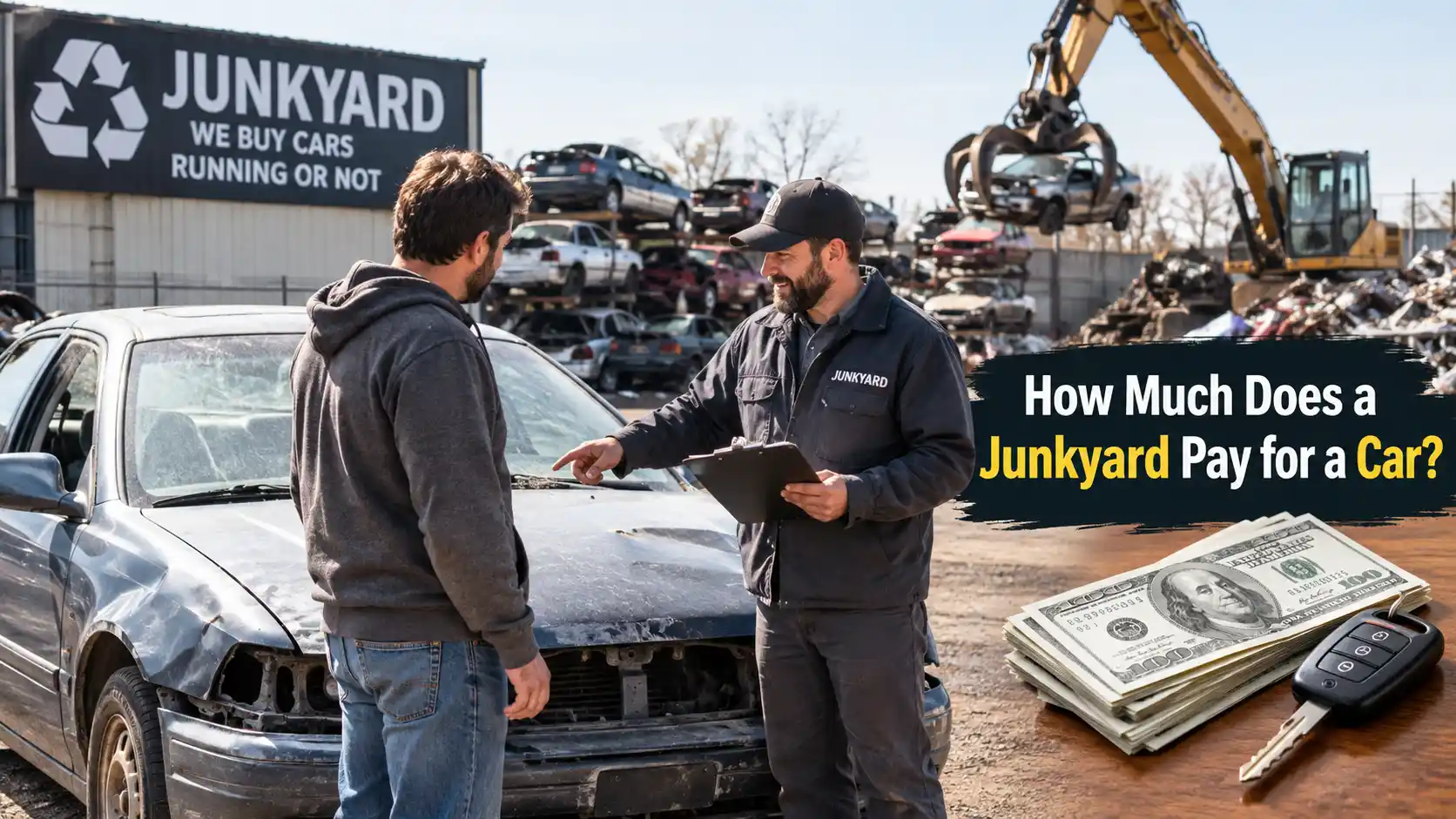
Junkyard offers swing widely because so many things factor in at once:
- Weight
- Condition
- Completeness
- Parts demand
- Current scrap rates
- Your location
- Towing cost
- Title status
- The junkyard’s own business model
Two junkyards down the street from each other can quote you $200 apart on the same car. Before you accept an offer, run through this checklist:
- Does the price include free towing?
- Is the offer guaranteed once they see the car, or can it drop at pickup?
- Do they need the title in hand, or can they work without one?
- How soon can they pick it up?
- Is the number they quote the number you actually get paid?
How Much Can I Get for My Junk Car?
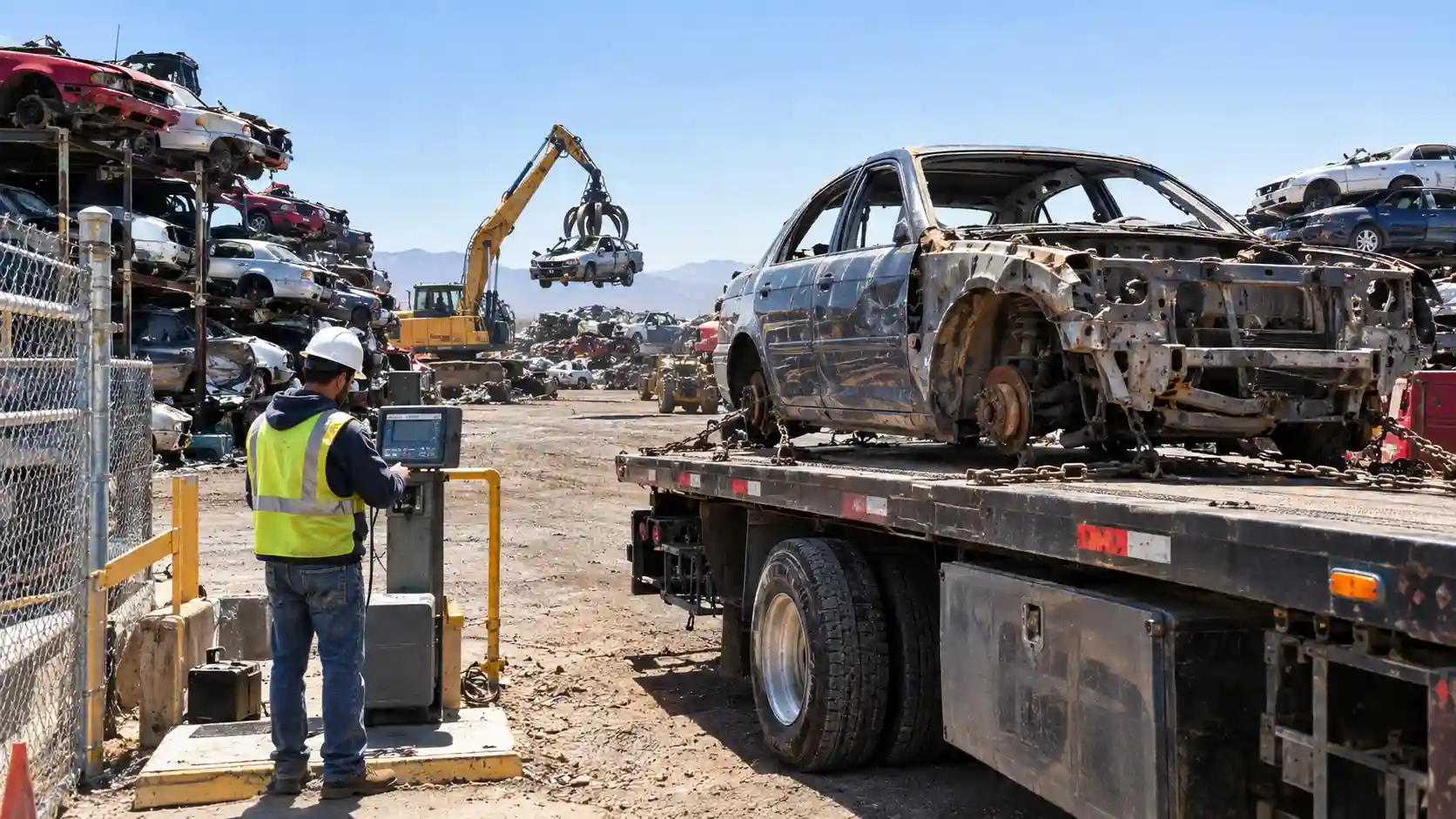
Your situation decides your price range. Match yours below.
If Your Car Still Runs
A running car is worth the most, even if it’s old or has cosmetic problems. Buyers can resell it whole or pull working parts, so expect offers well above scrap-only pricing.
If Your Car Does Not Run
A non-running car can still bring solid money if it’s complete. The engine, transmission, and catalytic converter still hold resale value, even if they need repair.
If Your Car Is Missing Parts
Missing components lower your offer, especially the engine, transmission, or catalytic converter. Expect a price closer to scrap-only rates, based mostly on weight.
If Your Car Was Wrecked
A wrecked car can still hold value, but a buyer will factor in frame damage and airbag deployment. Get a few quotes, since buyers weigh crash damage differently.
If You Don’t Have the Title
You can often still sell a car without a title, but expect a lower offer. Getting a replacement title first, usually a small DMV fee, can raise what you’re paid.
How to Estimate Your Junk Car’s Value Before Getting a Quote
Walk through these six steps before you call a buyer:
- Identify your car’s year, make, and model.
- Check whether it runs and drives.
- Note any major missing parts, like the engine or catalytic converter.
- Check your title status.
- Note any damage, like a wreck, flood, or fire.
- Compare final offers from at least two or three buyers.
What Information Do Junk Car Buyers Need?
Have this ready before you call or request a quote:
- Year
- Make
- Model
- Mileage
- Condition
- Damage
- Missing components
- Catalytic converter status
- Title status
- Location
- Accessibility, meaning whether a tow truck can reach the car easily
How to Get the Most Money for Your Junk Car
Keep the Vehicle Complete
Don’t let anyone strip parts before you sell, even a friend who wants the battery or wheels. A complete car brings a stronger offer than the sum of its missing pieces.
Be Honest About Its Condition
Tell the buyer exactly what’s wrong. Surprises at pickup almost always lower the final price, not raise it.
Have Your Title Ready
A title in hand speeds up the sale and avoids a title-related deduction.
Compare More Than One Offer
Call two or three buyers before you commit. Prices can differ by hundreds of dollars for the same car.
Ask Whether Towing Is Included
Free towing matters. Some buyers quote a higher price, then subtract a towing fee at pickup.
Compare the Final Amount You Receive
The number that matters is what lands in your hand, not the number in the ad. Ask for the final, all-in price before you agree to anything.
How Much Are Junk Cars Worth in Phoenix, AZ?
In Phoenix, AZ, intact junk cars are typically worth $250 to $900, while larger trucks and SUVs range from $600 to $2,200. Vehicles stripped down to raw scrap metal fetch a lower base value of $100 to $550 based on current steel prices. Valley recyclers offer the quickest payouts and free towing for complete vehicles, though missing high-value parts like the catalytic converter will reduce your quote.
To lock in an offer and close the sale on the spot, you must meet Arizona MVD requirements by providing a clean vehicle title. While local buyers easily accept cars with blown engines or failed A/C systems, having your paperwork organized beforehand is essential to fast-track the towing and cash-handover process.
Is It Better to Repair or Sell Your Junk Car?
Deciding whether to fix or sell a trash automobile entails weighing repair expenses against the consequent value rise, since spending more on repairs than the vehicle’s eventual market worth delivers a net loss. On the other hand, the vehicle’s market attractiveness and resale value may be greatly increased by completing small, low-cost repairs to restore drivability.
Vehicles with serious structural damage or failing internal systems should normally be sold as-is to a local salvage yard for scrap value rather than investing in expensive repairs. The most economical course of action is determined by comparing the vehicle’s specific repair estimates to its current operating condition.
Sell Your Junk Car in Phoenix and the West Valley
If your car is old, damaged, or not worth repairing anymore, you don’t have to let it sit in the driveway. Redline Roadside & Towing LLC buys junk cars across Phoenix and the West Valley, with free towing and a fair, upfront offer.
We buy junk cars in any condition, running or not, with or without a title. Whether you’re still wondering how much are junk cars worth or you’re ready to sell today, get in touch with Redline Roadside & Towing LLC now to find out what your car is worth and get it picked up fast.
Frequently Asked Questions About Junk Car Value
How much is a junk car worth?
Most junk cars are worth $100 to $1,500, based on weight, condition, and completeness. A running vehicle can bring more.
How much do junk cars sell for?
Prices vary by buyer and location, but most junk cars sell somewhere between $150 and $2,000, depending on parts demand and current scrap rates.
How much does a junkyard pay for a car?
Junkyard offers depend on weight, condition, completeness, and the junkyard’s own pricing model. Getting a few quotes helps you find the best number.
How much can I get for my junk car?
It depends on whether your car runs, how complete it is, and whether you have the title. A running, complete car with a clean title brings the most.
Is a non-running car still worth money?
Yes. A non-running but complete car still has scrap value plus the resale value of its major parts.
Does a missing catalytic converter reduce junk-car value?
Yes. A missing converter is one of the largest single deductions a buyer makes, since it’s a valuable, easily resold part.
Can I sell a junk car without a title?
In many cases, yes, but expect a lower offer. Getting a replacement title from your state DMV first can raise your payout.
Does free towing reduce the amount I receive?
It shouldn’t, with a straightforward buyer. Some buyers advertise a high price, then deduct a towing fee at pickup, so always confirm the final, all-in number before you agree.