What does towing and recovery mean? Towing moves a vehicle that sits on stable ground, like a car with a flat tire on the shoulder. Recovery pulls a stuck vehicle out of a bad spot first, like a ditch or soft sand, and then tows it. Redline Roadside & Towing LLC handles both across Phoenix and the West Valley.
The two jobs need different trucks, crews, and time on scene. A tow truck can often finish a simple tow alone. Vehicle recovery takes planning, rigging, and trained hands. This guide covers the gear, the costs, and how to tell which job you need before you call.
Towing and Recovery in One Quick Answer
Towing moves a vehicle that sits on stable ground, such as a car with a dead battery on a road. Recovery pulls a vehicle out of a bad spot first, like a ditch, then moves it. “Towing and recovery” is the industry term for both jobs.
| Job | Where the vehicle sits | Common call |
| Tow | Stable ground, on pavement | Breakdown, flat tire, dead battery |
| Recovery | Ditch, mud, sand, or off the road | Slide-off, stuck wheels, rollover |
| Recovery, then tow | Off the road, then moved to a shop | Crash scene |
Most roadside assistance plans send a tow truck for the first kind. When you call, dispatch asks where the vehicle sits. That answer decides the truck and the crew.
What Towing Means
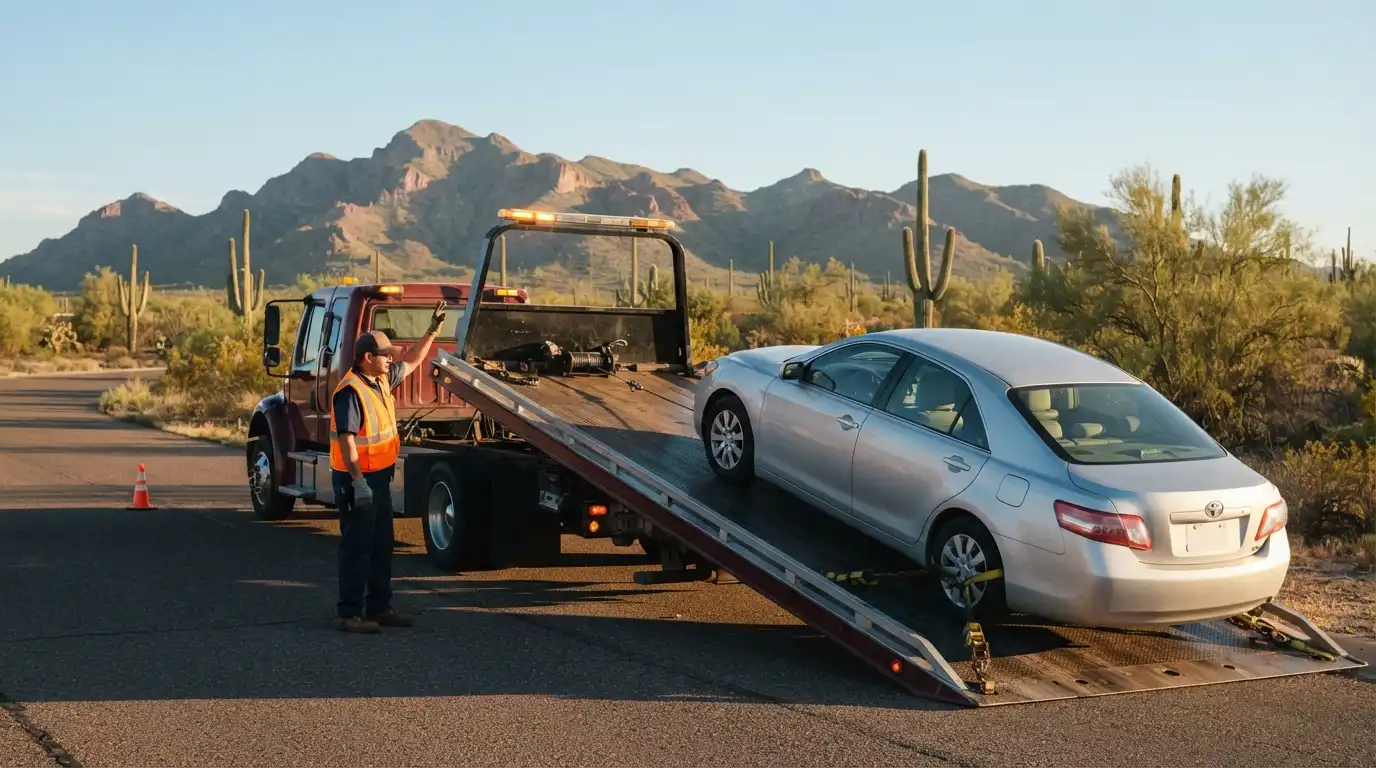
Towing is moving a vehicle that rests on stable ground and can roll or lift without a fight. The driver hooks up or loads the vehicle, then drives it to a shop, a home, or a lot. Common calls include a breakdown, a flat tire, a dead battery, or an impound relocation. Three trucks do most of the work:
- Flatbed: The bed tilts and the whole vehicle slides on. This suits all-wheel drive, low cars, and damaged vehicles.
- Wheel-lift: A metal yoke lifts two wheels. It works well for short tows and tight spots like parking garages.
- Integrated tow truck: A heavy truck with a built-in boom and wheel-lift. It handles larger trucks and buses.
Older hook and chain trucks still exist. They can scar bumpers, so careful drivers avoid them. For more truck types, see the tow truck overview on Wikipedia. New to the word itself? Read our page on what is the meaning of tow.
What Vehicle Recovery Means
Vehicle recovery means getting a vehicle back onto stable ground when it cannot drive or roll out on its own. The tow comes second. Here are five common scenarios:
- Ditch: A car slides off the road and sits below the road surface.
- Rollover: A vehicle lands on its side or roof.
- Mud: Tires spin and the frame sinks into soft ground.
- Sand or desert wash: Loose sand or a wash holds the wheels in place.
- Embankment: A vehicle hangs on a steep slope beside the road.
A recovery technician works in the same order each time:
- Assess. Check the ground, the slope, and the vehicle’s center of gravity.
- Secure the scene. Set cones and lights for traffic control.
- Anchor. Pick a strong anchor point, such as a heavy truck.
- Rig. Attach straps and cables at solid points and set the pull direction.
- Extract. A controlled extraction uses slow, steady force so the vehicle does not swing or roll.
- Tow. Once the vehicle sits on stable ground, load it and haul it away.
One note for readers abroad: in the UK, “recovery vehicle” means a tow truck.
How Towing and Recovery Differ
People who ask what does towing and recovery mean often hear the two words used as one. They are not the same job. This is how towing and recovery differ:
| Factor | Towing | Recovery |
| Vehicle position | On stable ground, wheels free | Off the road, stuck, or on its side |
| Equipment | Flatbed or wheel-lift | Winch, rigging, straps, heavy wrecker |
| Crew | One driver | Often two or more operators |
| Time on scene | Short | Longer, set by rigging time |
| Risk | Low | Higher, from cable tension and secondary damage |
| How it is billed | Hook-up plus mileage | Hourly, plus gear and crew |
The gap matters for your wallet. A recovery bills by the hour, while a tow bills by the mile. It also matters for safety. Pulling a stuck vehicle the wrong way can cause more damage than the first mistake.
What Equipment Is Used for Recovery
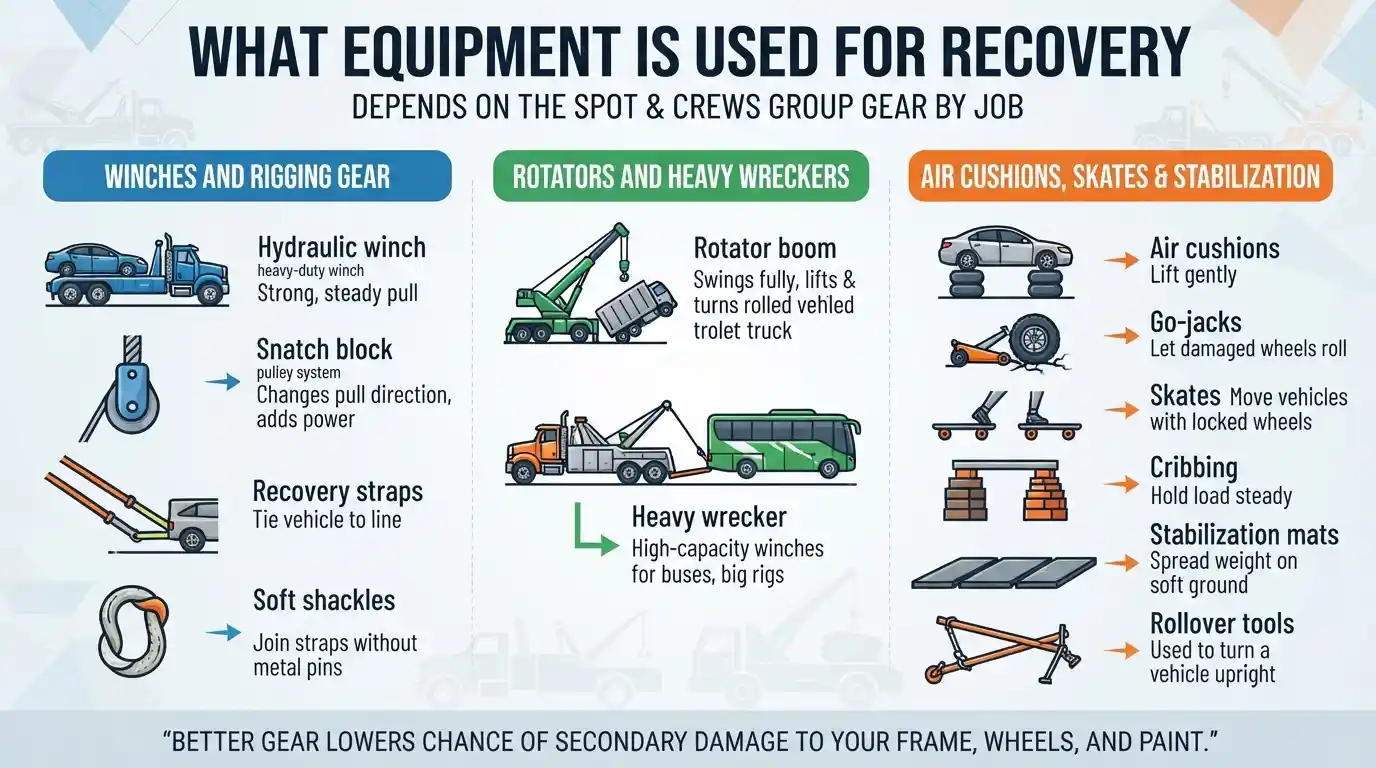
What equipment is used for recovery depends on the spot. Crews group gear by the job it does.
Winches and Rigging Gear
- Hydraulic winch: Pulls a vehicle with strong, steady force.
- Snatch block: A pulley that changes the pull direction or adds line power.
- Recovery straps: Wide straps that tie the vehicle to the line.
- Soft shackles: Rope links that join straps without metal pins.
Rotators and Heavy Wreckers
- Rotator boom: A boom that swings in a full circle to lift and turn a rolled vehicle.
- Heavy wrecker: A large truck with high-capacity winches for buses, box trucks, and big rigs.
Air Cushions, Skates, and Stabilization Gear
- Air cushions: Inflate under a vehicle to lift it gently.
- Go-jacks: Small wheeled jacks that let a damaged wheel roll.
- Skates: Wheeled platforms that move a vehicle with locked wheels.
- Cribbing: Stacked wood blocks that hold a load steady.
- Stabilization mats: Flat mats that spread weight over soft ground.
- Rollover tools: Rigging sets built to turn a vehicle upright.
Better gear lowers the chance of secondary damage to your frame, wheels, and paint.
When You Need Towing Versus Recovery
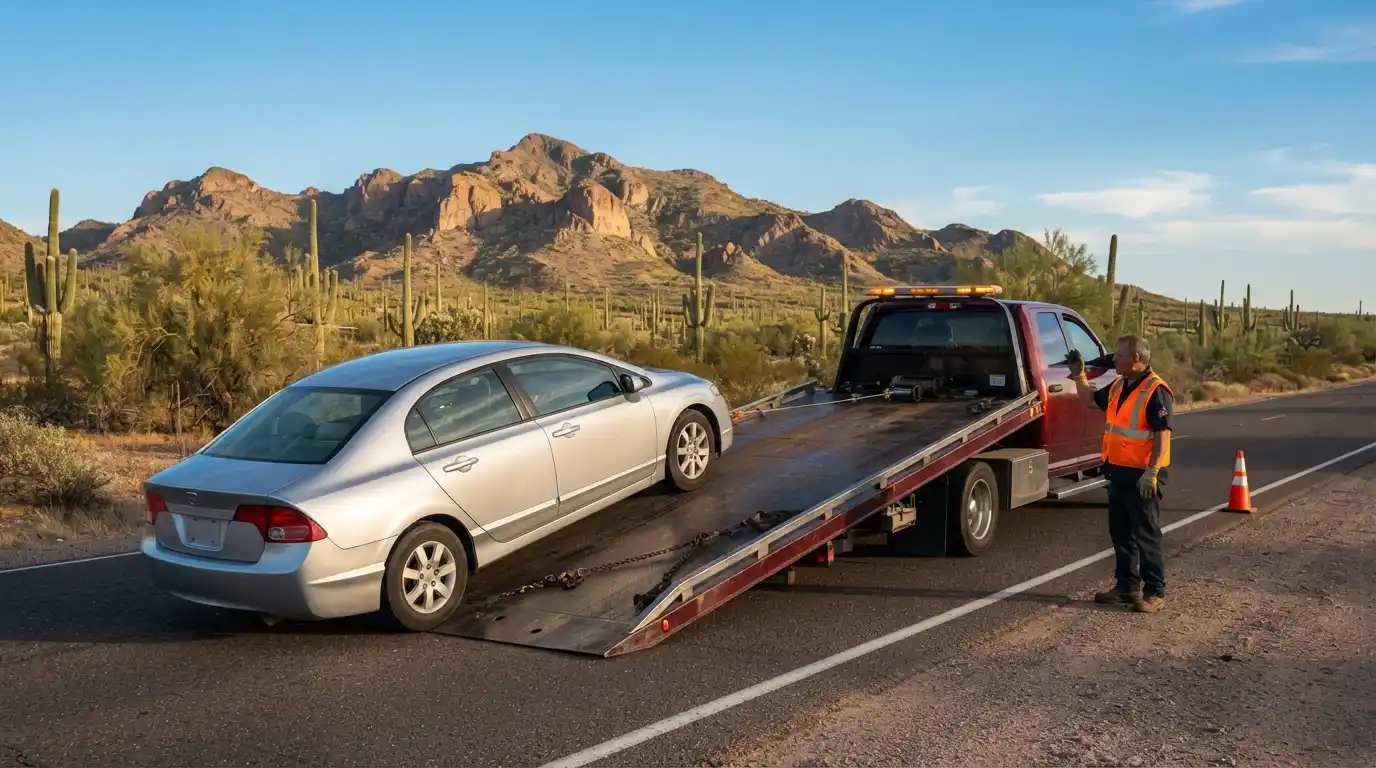
Knowing when they need towing versus recovery saves drivers time and money. Ask yourself three questions:
- Is the vehicle on pavement?
- Can it roll freely?
- Can a truck reach it safely?
Three yes answers mean a tow. Any no answer points to recovery.
When Towing Is Enough
A tow works when the vehicle sits on the road or a flat lot, the wheels turn, and a truck can pull up close. Flat tires, dead batteries, and engine trouble fit here.
When You Need Recovery
Call for recovery when the vehicle sits off pavement or below road grade. Loss of traction in mud or sand is a sign. So is rollover risk or an obstruction, like a fence or rock, that blocks the truck. Vehicle orientation and terrain type shape the plan. Directional winching pulls from a set angle so the vehicle moves straight instead of sideways.
When a Tow Becomes a Recovery
Some jobs start simple. The driver arrives and finds a soft shoulder, a locked wheel, or a car that sits lower than the road. The crew then adds gear and more hands, and the job becomes a recovery.
Here is what to tell dispatch:
- Your exact spot, with a cross street or mile marker.
- The ground under the vehicle: pavement, dirt, sand, or off the road.
- Which way the vehicle faces, and whether it sits on its side.
- The vehicle type and rough size: car, truck, or trailer.
- Whether it starts, steers, and rolls.
If your answers point to recovery, call a crew with the right gear. 24/7 Heavy Duty Towing in Phoenix AZ from Redline Roadside & Towing LLC covers heavy wreckers and recovery crews across Phoenix, Avondale, Tolleson, Laveen, and the West Valley. Most calls get a truck on the way in 10 to 25 minutes. Call (602) 549-8722 now and dispatch will send the right truck the first time. Stuck off the pavement?
What Towing and Recovery Cost and Who Pays
Five things set the price: mileage, hookup type, hourly rate, equipment used, and the number of operators. Terrain difficulty and after hours calls add more.
| Charge | What it covers | Estimated Cost |
| Hook-up | Loading or lifting the vehicle | $75–$125 |
| Per mile | Distance towed | $2–$5 per mile |
| Recovery, per hour | Crew, winch, and rigging time | $150–$350 per hour |
| After hours | Night, weekend, or holiday calls | $20–$50 extra |
Accident tow recovery with Redline runs $100 to $500, based on the vehicle and the scene.
For a public price check, the City of Phoenix lists its police-ordered tow contract rates. The June 2026 rate sheet shows $105 for the tow and $35 per day for storage. A storage fee grows every day, so move the vehicle fast.
Most roadside plans cover a tow up to a set mileage. Winching often has a time or dollar cap. Car insurance may pay for accident recovery through an insurance claim. Read your policy before you call.
Safety and Trust Checks Before You Call
Stay safe while you wait:
- Turn on your hazard lights.
- Exit on the side away from traffic.
- Stand well back from the road, and keep clear of any winch cable. A snapped cable can cause serious harm.
Arizona’s Move Over law tells drivers to slow down or change lanes for stopped tow trucks. Remind your passengers to stay out of the lane.
Before you hire a provider, ask four things:
- Do you hold the tow operator license my city requires?
- Do you carry liability insurance?
- Are your operators trained for recovery, such as WreckMaster courses?
- Do you answer 24/7?
A good company answers each one without a pause.
Stuck or Stalled? Call Redline Now
So what does towing and recovery mean for you? A tow moves a vehicle on solid ground, and recovery frees a stuck one first. Contact Redline Roadside & Towing LLC sends the right truck and crew across Phoenix and the West Valley, any hour. Call (602) 549-8722 now.
FAQs
What does towing and recovery mean?
It is the industry name for two linked jobs. Towing moves a vehicle that sits on stable ground. Recovery frees a vehicle from a ditch, mud, or a rollover first. Companies list both under one name because many calls need both.
Is vehicle recovery the same as towing?
No. Towing moves a vehicle that can roll on solid ground. Recovery gets a stuck or overturned vehicle back to solid ground, using winches, straps, and trained crews. A recovery job often ends with a tow to a shop.
Does recovery cost more than towing?
Yes, in most cases. A tow bills by hook-up and mileage. A recovery bills by the hour and adds crew and gear. A deeper ditch or harder terrain pushes the price up, so share the full scene with dispatch.
Can any tow truck do a recovery?
No. A basic flatbed or wheel-lift cannot pull a vehicle from a ditch or flip a rollover safely. Recovery needs winches, rigging, extra hands, and training. Ask the company what gear and crew it will send.
Does insurance cover recovery?
Often, yes. Auto policies with towing or collision coverage may pay for accident recovery. Roadside plans may cover short winch jobs only. Check your policy for limits, and ask the company for an itemized bill.