Stuck on the road and asking how long does it take for a tow truck to arrive? Most trucks reach you in 30 to 60 minutes under normal conditions. Rush hour, rural roads, and storms can push the wait past 90 minutes. Redline Roadside & Towing LLC wrote this guide to help you plan.
Below you get real response time numbers, what moves your ETA, and what a faster tow costs. You will also learn how dispatch works after a breakdown, and what to do if the truck runs late.
Average Tow Truck Arrival Time by Situation
So how long does it take for a tow truck to arrive in each case? The answer to how long do tow trucks take changes with place and time. Use these typical estimates, built from public data and common dispatch ranges, as a guide. They are not promises.
| Situation | Typical Estimate |
| City, normal traffic | 20 to 45 minutes |
| Suburb | 30 to 50 minutes |
| Rush hour | 45 to 75 minutes |
| Rural road | 60 to 90 minutes |
| Night | 30 to 60 minutes |
| Storm or holiday | 60 to 120 minutes |
| Highway emergency | 15 to 30 minutes |
Cities have more trucks and shorter drives, so urban waits run shorter than rural ones. Severe weather and holiday call volume push every number up. Even in the best case, plan for 30 to 60 minutes.
What the Data Says About Real Wait Times
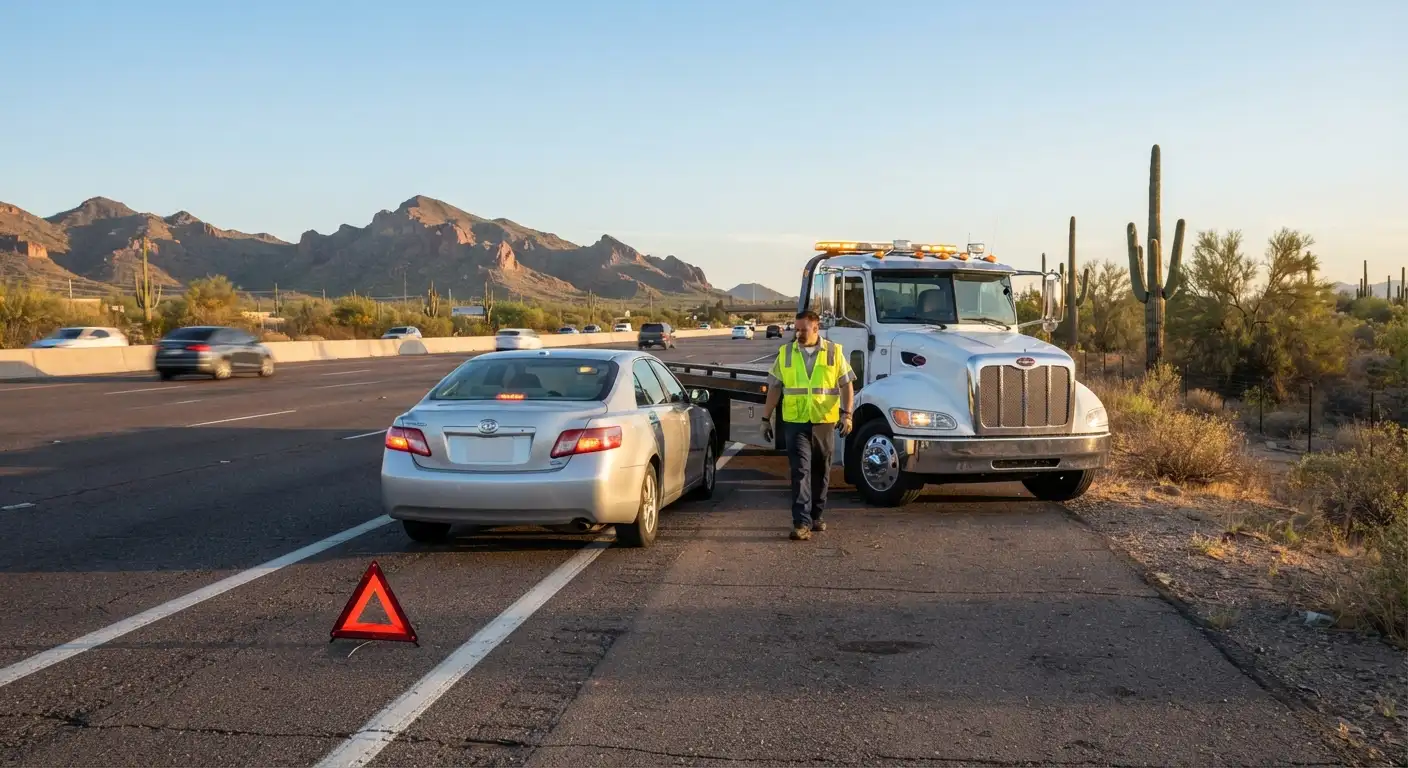
One government source sets a clear benchmark. The Massachusetts State Police requires its contracted tow companies to meet set response times for police-ordered tows. The limit is 10 to 20 minutes on limited access highways, 10 to 25 minutes in other urban areas, and 15 to 45 minutes in rural areas. That rule covers one state and one kind of tow. It shows what a tight standard looks like.
Network data adds a second view. One of the largest roadside networks in North America reported a 2024 median ETA of 60 minutes. The median actual arrival time was 47 minutes. So how long do tow trucks take to arrive in real life? Often less than the quote. Quoted ETAs run long because dispatch plans for traffic and for drivers who are finishing a job.
For private calls, a typical local range is 30 to 60 minutes.
When Does the Wait Start? From Call to Arrival
The clock starts when you ask for help. A truck is not moving yet, though. Here are the five stages, with typical time ranges:
- Request: The dispatcher takes your location, vehicle, and problem (2 to 5 minutes).
- Confirmation: Dispatch picks the right equipment and checks your area (1 to 5 minutes).
- Truck assigned: A driver accepts the job (5 to 15 minutes).
- Driver en route: The truck drives to you (15 to 45 minutes).
- Arrival: The driver finds you and checks the car (0 to 5 minutes).
The first three stages make up the dispatch time. A confirmed ETA is not the same as a truck already moving. Ask if a driver is assigned and if the truck is en route.
What Changes How Long Tow Trucks Take to Arrive
Five things decide how long tow trucks take to arrive. Some you control. Some you do not.
Distance and Location
Urban vs rural matters most. A city has trucks close by. A rural road has long gaps between them. On a limited access highway, the driver may need the next exit to reach you. Share your mile marker, exit number, and travel direction. A truck facing the wrong way can add a long detour.
Time of Day and Traffic
Rush hour slows every truck. Night shift crews are smaller, so the nearest driver may be farther away. Holiday demand adds more calls at once. Calls outside peak hours usually get the fastest response.
Weather
Rain brings crashes and stalls. A dust storm cuts sight and slows drivers. Extreme heat wears down batteries and tires. All of it raises call volume, and each driver can run only one job at a time.
Truck Type and Vehicle
A wheel-lift truck lifts two wheels. A flatbed carries the whole car. All-wheel drive cars, electric vehicles, and low clearance cars need a flatbed. Most fleets own fewer flatbeds, so you may wait longer. This overview of tow truck types explains more.
Direct Call vs Insurance or Club Dispatch
A direct call to a local company skips steps. A motor club or insurance call goes to a call center first. An agent checks your plan. The job then posts to a third-party contractor network, and a contractor accepts it. These extra steps can add 15 to 30 minutes.
Emergency vs Non-Emergency: Who Gets Priority?
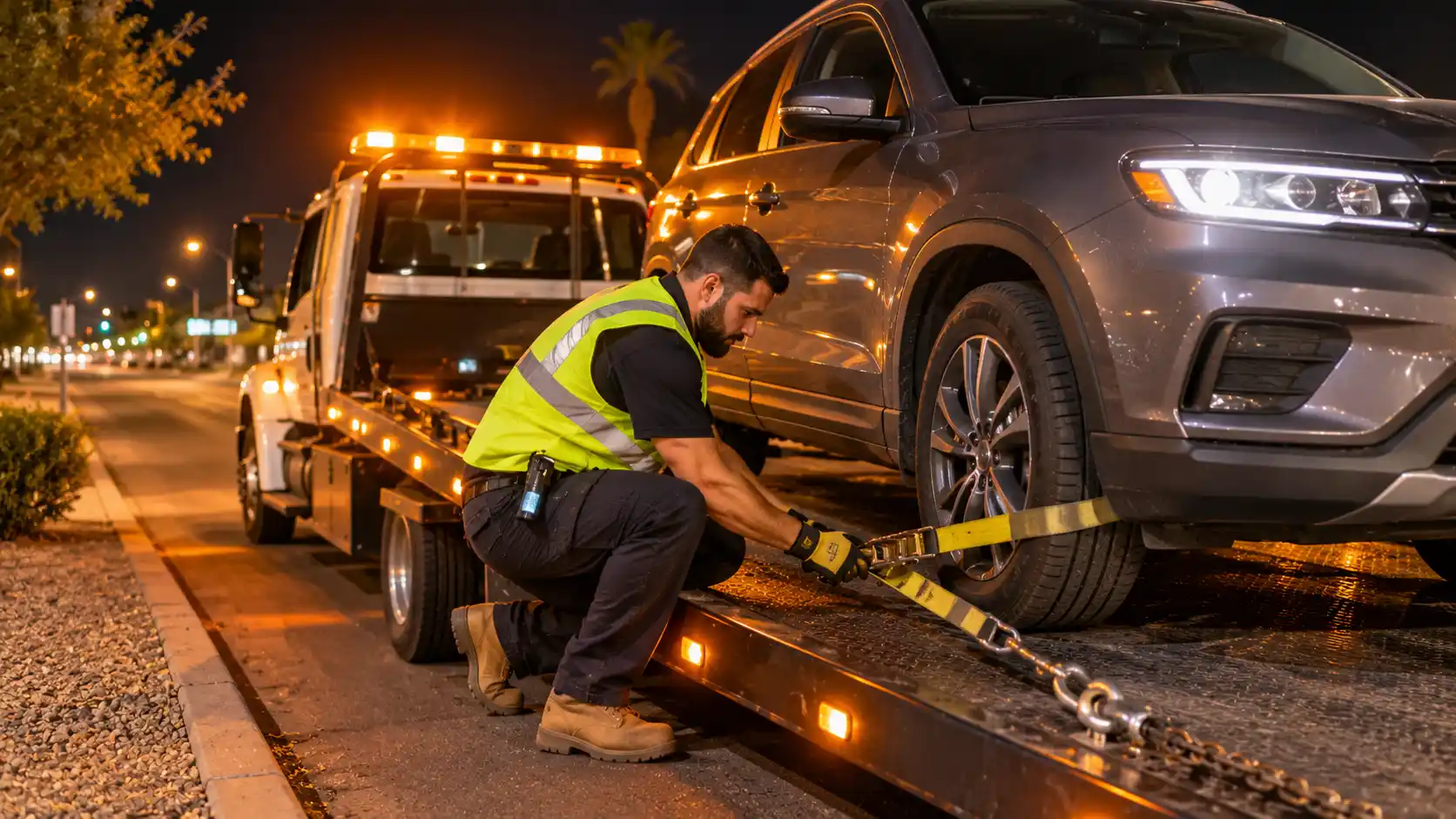
Dispatch ranks calls by danger, not by who called first. A call is an emergency when your car sits in a travel lane, blocks a ramp, or stops in an unsafe spot. It also counts when kids, older adults, or anyone who needs care are with you. A car in a safe driveway or lot is non-emergency, and it waits its turn.
Call 911 for real danger only. That means fire, injuries, or a car stuck in a live lane. 911 does not speed up a normal tow. If the car still runs, move to a safe shoulder first. The highway patrol can then guard the scene until help arrives.
Some states run highway assistance patrols. In Massachusetts, patrol vans change flat tires and bring gas on major roads. The state FAQ above shows a driver who paid nothing. In Arizona, ADOT runs an Incident Response Unit for freeway incidents. To find a patrol near you, search your state DOT site.
Does a Faster Tow Cost More?
Sometimes. Prices vary by company and city, but national cost guides give a fair picture. NerdWallet puts the average tow near $100. HomeGuide lists $75 to $125 for most tows. Here are the common fees:
- Hookup fee: about $35 to $100, before mileage.
- Per-mile rate: often $2 to $4 per extra mile for cars. Heavy trucks cost more.
- After-hours fee: $5 to $150 extra, often from 8 or 9 p.m. to early morning.
- Priority fee: some companies charge extra to jump the line. Ask first.
- Wait time fee: some public rate sheets list standby time near $55 an hour.
- Cancellation fee: some companies charge a trip fee if the driver already left.
These are national estimates. Ask any company for its exact rates. Before you say yes, ask these three questions:
- What is the total price, with mileage and fees?
- What is the ETA, and is a driver assigned?
- What type of truck are you sending?
How to Get a Tow Truck to Arrive Faster
Tell dispatch these six things, in this order:
- Exact location: street, cross street, mile marker, exit number, and direction.
- Vehicle: year, make, model, and color.
- Problem: flat tire, dead battery, crash, or will not start.
- Position: a safe spot or a travel lane.
- People: who is with you, including kids or anyone who needs help.
- Drivetrain: front, rear, all-wheel drive, electric, or lowered.
Then share a GPS pin by text or a map app. Have your key and your wheel lock key ready. Answer unknown numbers, since the driver may call from a new line. Make a direct call to a local company when you can.
What to Do While You Wait
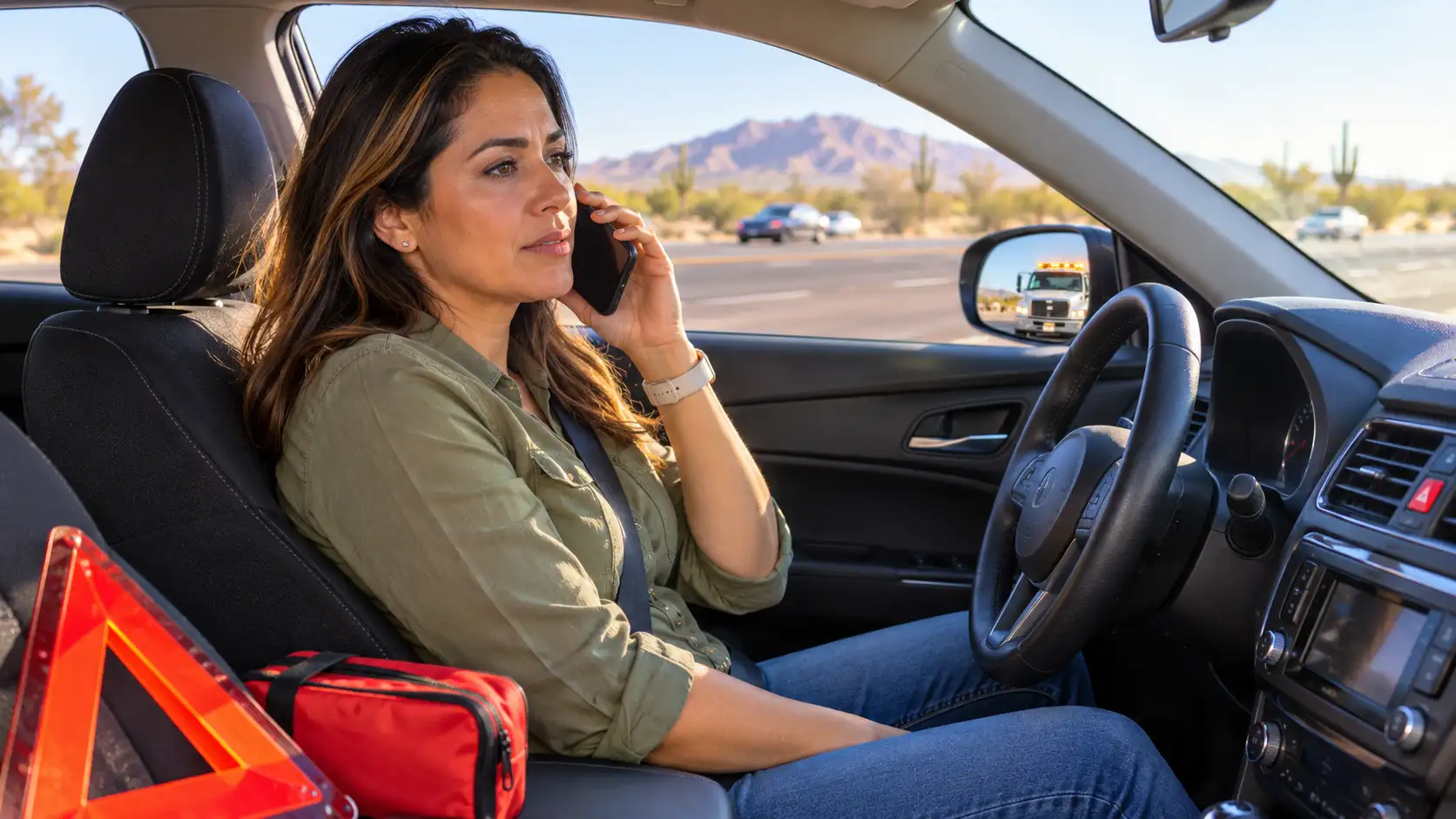
Here is one clear rule. On a busy road or highway shoulder, stay in the car with your seatbelt on. Your car is safer than the roadside. Leave only if there is fire, smoke, or other immediate danger. Then exit on the side away from traffic and move well off the road.
Turn on your hazard lights right away. Place reflective triangles behind the car only if you can do it away from moving traffic. Keep an emergency kit in the trunk with triangles, a flashlight, water, and a phone charger.
Heat adds risk. ADOT advises running the AC, or rolling down all windows if the AC fails. If the car gets too hot, ADOT says everyone, pets too, should step out and find shade far from the lanes.
Arizona’s Move Over law asks drivers to move over one lane, or slow down, near roadside workers and responders with flashing lights.
What If the Tow Truck Is Late?
Do these steps in order:
- Call dispatch when the ETA passes.
- Ask if a driver is assigned and where the truck is.
- Get a new arrival time in minutes.
- Confirm your location again, in case the driver cannot find you.
- Decide whether to keep waiting.
If you switch companies, cancel the first request and ask for a confirmation. This avoids duplicate dispatch, where two trucks show up for one car. Ask about any cancellation fee at the same time. If you are in danger, call 911 instead of waiting.
How Long Does the Tow Take After the Truck Arrives?
Many drivers ask how long does it take a tow truck to arrive. Fewer ask what happens next. Hookup time runs 15 to 30 minutes. Drive time depends on the distance to your destination, often 20 to 40 minutes for a local tow. Drop-off adds 10 to 15 minutes. From first call to drop-off, plan on 1.5 to 2 hours.
Tow Truck Response Times in Phoenix and the West Valley
People here ask how long does it take for a tow truck to arrive across the Valley. In normal conditions, expect 30 to 60 minutes as a typical estimate. West Valley cities like Glendale, Peoria, Avondale, and Goodyear sit miles apart. I-10, Loop 101, and Loop 303 jam at rush hour, and one crash can close lanes.
Heat and weather add calls. Extreme heat strains batteries and tires. Monsoon storms bring sudden rain. In a dust storm, ADOT tells drivers to pull aside, turn off all lights, keep the seatbelt on, and wait for it to pass. Delays follow.
Need a bigger truck? Redline Roadside & Towing LLC offers 24/7 Heavy Duty Towing in Phoenix AZ for trucks, RVs, and heavy loads. Call Redline Roadside & Towing LLC now and get a driver headed your way.
Final Thoughts
Now you know how long does it take for a tow truck to arrive. It is 30 to 60 minutes in most cases, and longer in rush hour, rural spots, and storms. Take three steps. Call early. Share your exact location. Ask for the ETA and the price. Then stay in your car with your seatbelt on until help comes.
Stuck right now? Contact us today and get a truck on the way.
Frequently Asked Questions
How long does a tow truck take to arrive at night?
Most night calls take 30 to 60 minutes. Fewer drivers are on shift, so the truck may come from farther away. A 24/7 company with night crews cuts the wait. Expect a possible after-hours fee. Ask for the total price when you call.
Does calling 911 make a tow truck arrive faster?
No. For a normal breakdown, 911 does not speed up a private tow. Call 911 for fire, injuries, or a car stuck in a live lane. Police can guard the scene. Then call your tow company for the truck.
Can I track my tow truck?
Often, yes. Many companies text a link with the driver’s live location. Others give updates by phone. Ask dispatch when you call. A tracking link also shows you that the truck is moving.
Why do flatbed tow trucks take longer?
Fleets own fewer flatbeds than wheel-lift trucks. All-wheel drive, electric, and low cars need a flatbed. Dispatch may wait for one to free up. That adds time. The delay comes from supply, not from the truck itself.
How long should I wait before calling another company?
Wait until the ETA passes, then call for an update. If dispatch cannot name a driver or a new time, cancel and call another company. Get the cancellation confirmed first. If you are in danger, call 911 instead.
Do I pay if I cancel because the truck is late?
It depends on the company. If no driver left yet, most charge nothing. If the driver was already en route, some charge a trip fee. Ask about cancellation fees when you cancel, and get the answer by text.