Redline Roadside & Towing LLC

Tow

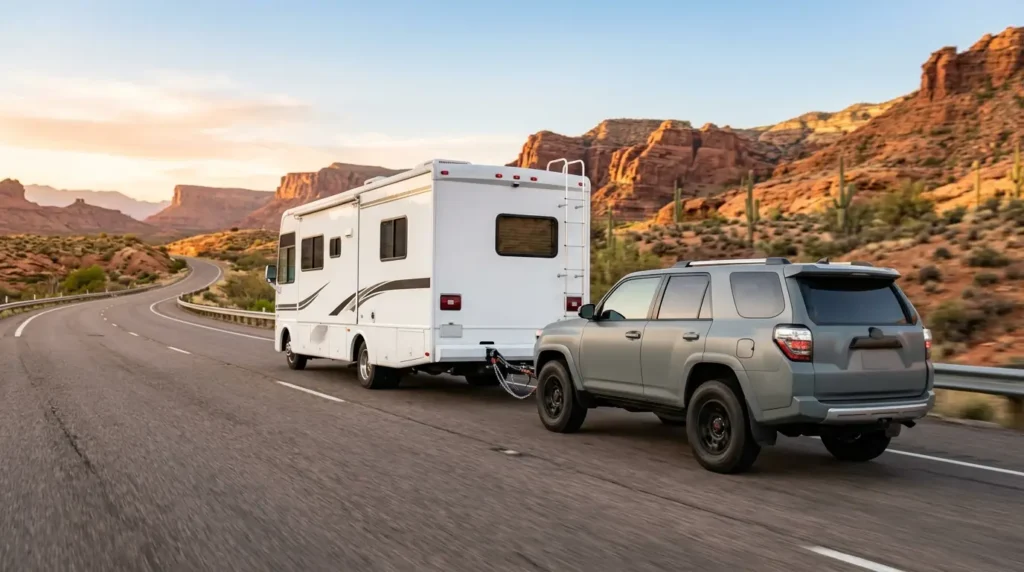
White motorhome towing a grey SUV on a scenic highway, illustrating what vehicles can be flat towed behind an RV.
Tow

What Vehicles Can Be Flat Towed? Check Yours in 2 Minutes

Only vehicles the maker approves for four-down towing can be flat towed. That is the short answer to what vehicles can be flat towed. Your owner’s manual and your model year decide it, not the brand. Some Jeeps, Chevy trucks, and small cars pass. Most front-wheel-drive automatics and most EVs do not. The wrong pick can ruin a transmission fast. Redline Roadside & Towing LLC put this guide together for motorhome owners. You get a quick list, four rules, a 2-minute check, real costs, and a backup plan if your vehicle fails the test. Quick List of Vehicles People Flat Tow Most These names show up often on approved lists. Model year changes the answer, so treat this as a starting point. Each year’s list is different, and many people wrongly assume a vehicle can be towed because a similar model was approved before. The yearly RV Life guide lists verified maker-approved vehicles with drivetrain rules and special limits. Cars: People ask what cars can be flat towed, and the short list is small. Select trims of the Chevy Trax and Nissan Versa have appeared on recent lists. Older small cars like the Chevy Sonic and Ford Fiesta show up on past lists. SUVs and 4x4s: The Jeep Wrangler, Jeep Grand Cherokee, and Ford Bronco are common picks. Trucks: Many people tow the Ford F-150, Chevy Colorado, and Ram 1500. Check the exact year, engine, and drive type. If you wonder which vehicles can be flat towed in 2026, the list is shorter than it used to be. The 2026 RV Life guide lists only specific approved vehicles, such as the Chevrolet Blazer AWD, with a 65 mph limit. The 4 Rules That Decide If a Vehicle Can Be Flat Towed Transmission Disconnect or Neutral Transfer Case A car in neutral is not enough. The transmission must truly disconnect, or fluid keeps moving without the engine running. Many 4x4s use a transfer case that shifts to neutral. A rear-wheel-drive or 4×4 vehicle with a manual transmission often works. Steering That Unlocks Most cars lock the wheel when the key is out. A vehicle cannot tow safely if the front wheels cannot turn. Many cars need the key in accessory mode. Some need a fuse pulled or the battery disconnected. Model Year, Not Just Model A Honda CR-V from 2015 may pass. A new one may not. Older CR-Vs can still be flat towed, but newer ones are no longer offered that way. Maker Approval in Writing If the manual does not say yes, the answer is no. A CVT is the most common reason for a no. A CVT can be damaged when towed with all four wheels down. How to Check Your Own Vehicle in 2 Minutes This is the fastest way to learn what vehicles can be flat towed in your own driveway. You only need your manual. Find the right page. Open the index and look under “R” for Recreational Towing. Some manuals say “Dinghy Towing” or “Flat Towing.” RV Life says to look for those same labels. Read the steps. Look for the words “four-down” or “all four wheels on the ground.” The manual lists the exact steps, speed limit, and any fuse or battery rule. No section means no. If the manual has no Recreational Towing section, the vehicle cannot be flat towed. Call the dealer if unsure. Give them your VIN. Ask for the answer in writing. Cars That Can Be Flat Towed Compact and subcompact cars are the lightest option. They are easy on your motorhome’s tow rating. Past picks include the Chevy Sonic, Ford Fiesta, and Ford Focus. Front-wheel-drive cars with a manual transmission often pass. A small used car usually costs less to buy than an SUV or truck. The setup costs about the same either way, so choose by what you need on the road. SUVs That Can Be Flat Towed Behind an RV Only a short list of vehicles can be flat towed behind an RV, but SUVs fill a good part of it. Pick an SUV if you carry gear or bring the family. Mid-size SUVs: The Chevy Equinox and Jeep Grand Cherokee are common choices. The Ford Explorer appears on past lists. Check your year. Full-size SUVs: The Chevy Tahoe and Suburban, GMC Yukon, and Ford Expedition offer lots of cargo space. They also weigh more, so check your motorhome’s limit first. Many of these SUVs can be flat towed only in 4×4 or AWD trim. Trucks and 4x4s That Can Be Flat Towed Jeep Wrangler and Gladiator These are the favorites for off-road use. A 4×4 with a transfer case that shifts to neutral is easy to set up. You can head onto trails once you park. Pickups The F-150, Colorado, Sierra, and Ram 1500 give you a bed for bikes and gear. Pickups weigh more than cars. Check the tow bar rating before you buy. The bar must handle your vehicle’s full weight. Can Hybrids and Electric Vehicles Be Flat Towed? Some hybrids can. Recent approved lists include hybrids like the Ford Maverick Hybrid. Hybrids and EVs drain the battery faster while towed. Almost all of them need a battery charger, and some brake systems need a special setting for them. Read the brake system’s guide before you tow. Most pure EVs cannot be flat towed. Ford, for example, says no flat towing for the Mustang Mach-E and F-150 Lightning, except for short emergency moves. Use a flatbed or trailer for an EV. Equipment and Real Costs to Flat Tow You need more than a bar. You also need a baseplate, a brake system, and lights. Prices below come from owner reports and retailer pages, so treat them as ranges. Tow bar and baseplate: Owners report about $800 for a tow bar and $500 for a baseplate. A premium bar costs only a little more overall. One maker says the gap between entry-level and premium bars may move the full installed price by just
Tow

What Is a Rollback Tow Truck? How It Works

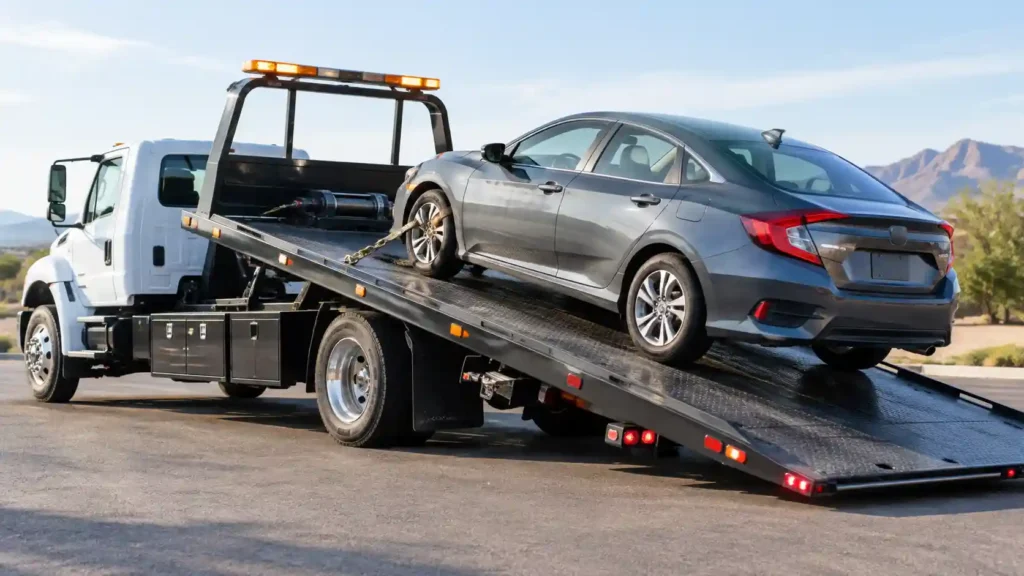
What is a rollback tow truck? A rollback tow truck creates a soft ramp by using a hydraulically powered flatbed that rolls backward and tilts lower to meet the ground. In order to fully shield the vehicle’s body and powertrain from road degradation, vehicles are pushed or winched onto the platform so that all four wheels ride off the surface. All-wheel-drive (AWD) vehicles, low-clearance sports cars, and seriously damaged automobiles need it because of its ultra-low loading angle, which makes it better to normal fixed-pivot flatbeds. Redline Roadside & Towing LLC runs these trucks, so every tip comes from real tow calls. What Is a Rollback Truck and Why Is It Called That? A rollback tow truck has a flatbed that hydraulically glides back and down to meet the ground, producing a gentle slope. The vehicles are driven or winched onto the platform so that all four wheels lift off the tarmac, fully preserving the vehicle’s powertrain and body from wear and tear of the road. This ultra-low loading angle puts it above typical fixed-pivot flatbeds and a must for all-wheel-drive (AWD) automobiles, low clearance sports cars, and seriously damaged autos. This setup makes vehicle recovery fast and safe. Your car does not hang from chains or hooks. It rides on top of the truck. Want to know where the word comes from? Read What Is the Meaning of Tow. How Does a Rollback Tow Truck Work? Step by Step A rollback tow truck works with hydraulics. The truck engine turns a power take-off, or PTO. The PTO runs a pump. The pump sends fluid into hydraulic cylinders, and those cylinders tilt and slide the deck. The driver runs it all from a remote or a side control station. Here is the order of a normal load: Position the truck. The driver parks in line with your car and sets warning lights. Tilt and slide the deck back. The deck lowers until it touches the ground. Run the winch cable out. The driver pulls the wire rope down the deck and sets the hook on a tow point. Pull the car up. The car goes in neutral with the parking brake off. The winch pulls it onto the deck. A car that runs can drive up. Level the deck. The deck slides forward and tilts flat. Secure with tie-downs. Wheel tie-down straps and ratchet straps hold each wheel. Safety chains add backup, and wheel chocks stop any roll. Drive. The driver checks the load one more time, then pulls out. Main Parts of a Rollback Tow Truck Each part has a job. Here are the main ones: Deck: The bed that carries your car. It tilts and slides. Headache rack: The wall behind the cab. It guards the cab from a shifting load. Winch: A powered drum with a cable and hook. It pulls a car up. Control station: Levers or a remote that move the deck and winch. Tie-down points: Rings and slots along the deck for straps and chains. Toolboxes: Steel or aluminum boxes that hold straps, chains, and gear. Deck lights: Lights that help the driver work at night. Bodies come in steel or aluminum. Steel is tough but heavy, and it can rust. Aluminum is lighter and fights rust, but it can crack under stress. Most decks run 19 to 22 feet long. The truck needs a strong chassis, often medium or heavy-duty, with a diesel or gas engine. What Is a Rollback Tow Truck Used For? A rollback can carry almost any car. Some cars need one. Here is who benefits most: Cars that do not run. A dead engine, a flat tire, or locked wheels will not stop a load. The winch does the pulling. AWD and 4WD cars. Dragging wheels can harm the drivetrain and transmission. All four wheels should stay off the road. EVs. Many makers say to use a flatbed. Check your owner’s manual. Low or luxury cars. The gentle angle protects the bumper and the undercarriage. Motorcycles. The driver straps the bike upright on the deck. Wrecked or stuck vehicles. Accident recovery and off-road recovery often start with a winch pull. Dealership, auction, and repossession moves. Cars arrive with no scrapes and no miles on the tires. Small equipment. Mowers, carts, and light machines ride the deck too. A rollback also works for roadside assistance calls, like a car with no keys or a bad tire. Need a rollback now? Redline Roadside & Towing LLC sends the right truck for your car. We also offer Medium Duty Towing Service for larger vehicles. Call us today. We give you a clear price and an arrival time before we roll. Rollback Tow Truck vs Flatbed: Is There a Difference? In towing, people use the two words for the same truck. A rollback has a deck that tilts and slides. A plain flatbed has a fixed deck with no tilt. You load a plain flatbed with ramps or a forklift. That works for cargo, but not for a dead car. When a tow company says flatbed, it almost always means a rollback. Here is how the main tow trucks stack up: Truck Deck How it loads Best for Rollback Tilts and slides Winch or drive up Most cars, AWD, EVs, low cars Plain flatbed Fixed, no tilt Ramps or forklift Cargo and drivable loads Wheel-lift No deck Lifts two wheels Short tows of simple cars Hook-and-chain No deck Chains lift one end Junk cars and scrap moves A wrecker is the older truck with a boom. An integrated tow truck is a heavy wrecker built for big rigs. A rotator is a heavy wrecker with a boom that turns in a full circle. Why a Rollback Is Gentler on Your Car Than Other Tow Trucks A rollback lifts the whole car. All four wheels stay off the road. Nothing drags and nothing swings behind the truck. Wheel-lift and hook-and-chain trucks keep two wheels on the road. That adds wear to tires, the

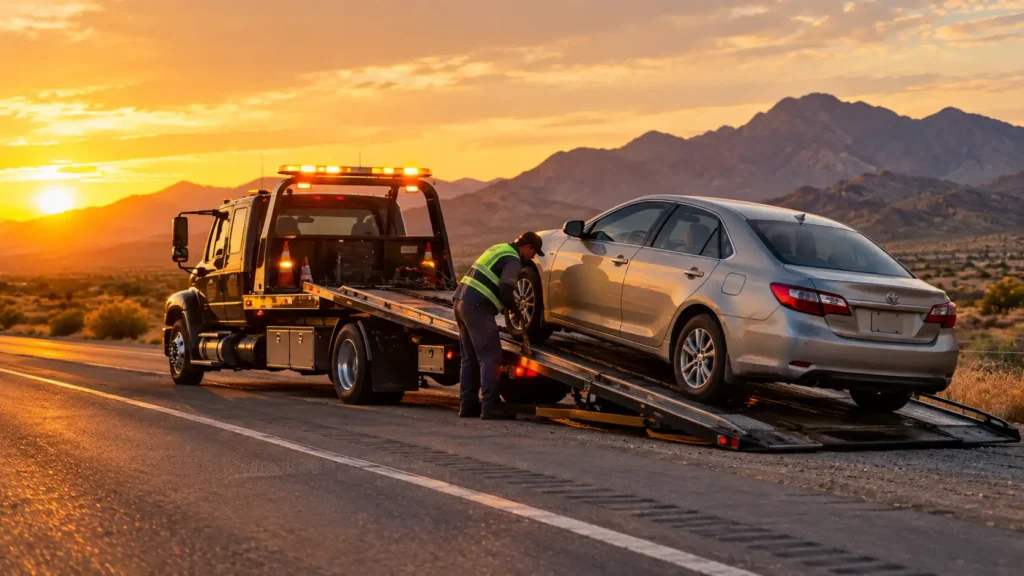
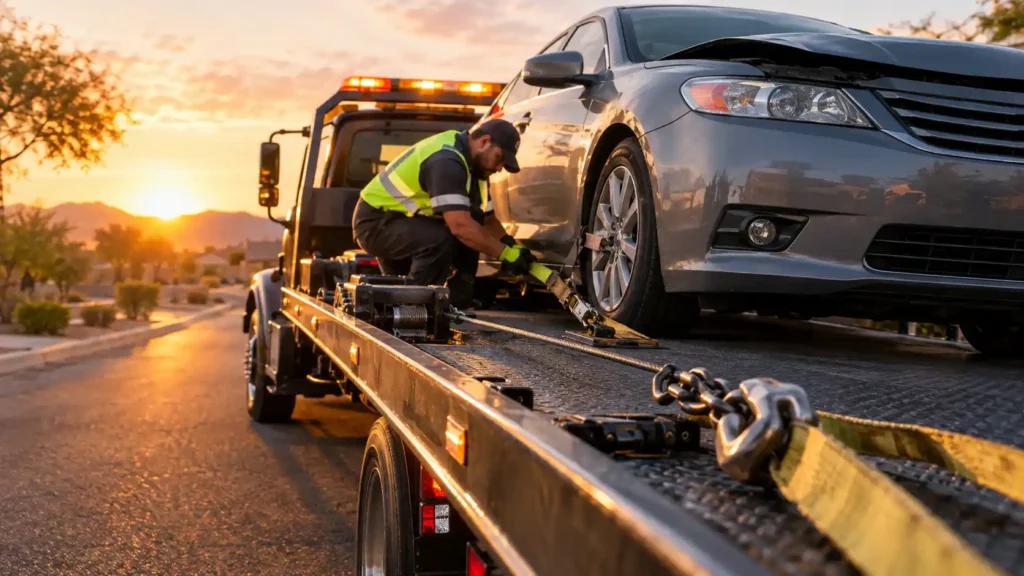
Tow truck operator securing a damaged sedan on a flatbed bed at sunset – what is the meaning of tow
Tow

What Is the Meaning of Tow? A Plain-English Guide for Drivers

What is the meaning of tow? Tow is to pull a vehicle, boat, or trailer behind another using a secure connection such as a rope, chain, or hitch, functioning as both a verb for the action and a noun for the service. In a driving context, the pulling vehicle is known as the tow vehicle, while an object being pulled behind it is considered in tow. This guide from Redline Roadside & Towing LLC covers the full tow meaning. You will learn what it means for your car, how towing works, and what it costs. You will also learn what to do when you need help. Tow Meaning and Definition in Simple Words “Tow” means to pull a vehicle, boat, or trailer behind another vehicle using a rope, chain, or hitch. It sounds exactly like the word “toe” (/toʊ/) and changes forms to tows, towed, or towing. As a verb, it always requires an object because you must tow something, such as a truck towing a stranded car. As a noun, it refers either to the act of pulling the vehicle or to the actual rope or chain used to get the job done. While close in meaning to other verbs, “tow” is highly specific compared to its synonyms. General pulling can apply to anything, hauling implies heavy effort, and dragging means sliding something directly along the ground. In contrast, you specifically use “tow” when one moving vehicle or boat is pulling another behind it. Here are two short examples: The truck will tow our boat to the lake. A tow truck came to tow my car to the shop. What Does Tow Mean in a Car? So, what does tow mean when you talk about cars? It has two sides. In the first, your car gets pulled. In the second, your vehicle does the pulling. Start with the first side. Your car breaks down and cannot move on its own. It is now a disabled vehicle. You call a tow truck. The driver hooks up your car and takes it to a shop or your home. People call this “getting a tow.” Some roadside help plans include a tow in their service. A tow-away zone is a spot where parked cars can be removed. Signs tell you the rules. Park there against the rules and your car may be towed. Now the second side. Your car can tow too. A tow hitch or tow bar on the back holds a trailer, boat or camper. Every vehicle has a tow rating. That is the top weight it can pull. You find it in the owner’s manual. Many drivers call it towing capacity. Stay under that number. Many drivers also keep a safety cushion below the limit. Our guide, What Is the 80/20 Rule for Towing, shows how it works. That is the tow meaning in a car. Either your car gets pulled, or it does the pulling. Tow as a Verb, a Noun, and in Common Phrases Tow does more than one job in a sentence. As a verb, it is transitive when it has an object: “She tows a camper.” It is intransitive when it stands alone: “This truck tows well.” As a noun, tow can be the act itself. You might ask a friend to give someone a tow. It can also be the rope or chain, or the thing being pulled. A few phrases are worth knowing: In tow means following close behind. “He arrived with his kids in tow.” Under tow means a car or ship is being pulled right now. On tow means the same thing. British speakers use it more. Take in tow means to start pulling a vessel. It can also mean to take someone under your care. Ski tow is a lift that pulls skiers up a slope. People can tow, too. “She was towing her son by the hand.” Oxford Learner’s Dictionaries lists this sense. On the water, a tugboat tows a barge. Towage is the act or fee for towing. Towable describes anything that can be towed, like a towable camper. Other Meanings of Tow You May Run Into Tow has a few rare uses. You can skip these if you only care about cars. In textiles, tow is the short, rough fiber of flax, hemp or jute. Makers spin it into yarn and rope. Tow can also mean man-made fibers before they are spun. In old Scots use, tow simply means rope. In capital letters, TOW is a U.S. Army antitank missile. The name comes from tube-launched, optically tracked, wire-guided. The missile is fired from a tube and steered by thin wires. In racing, a tow is the boost a driver gets from the slipstream behind another car. Tow vs Toe: Easy Ways to Tell Them Apart Tow and toe sound the same. They are homophones. Toe is the part of your foot. Tow means to pull. The mix-up shows up in one phrase. The correct phrase is “toe the line,” which means to follow the rules. Writing “tow the line” is a common error. Here is a memory trick. A tow truck rides the road. A toe rides in your shoe. How Towing Works: Types of Tow Trucks and Methods Towing has a few methods. Each one fits a different job. Flatbed: The whole vehicle rides on a flat bed. It is often the safest pick for AWD, low or damaged cars. A motorcycle tow also uses a flatbed with straps. Wheel-lift: The truck lifts two wheels. The other two roll on the road. It works well for short local moves. Dolly: A small trailer cradles two wheels of a car. Drivers often use one when they tow a car behind a truck or van. Heavy-duty wrecker: A big truck with a strong boom and winch. It moves buses, semis and RVs. Trucks are classified into light, medium, and heavy-duty categories based on the specific vehicle weights and sizes they are built to transport, ranging from small

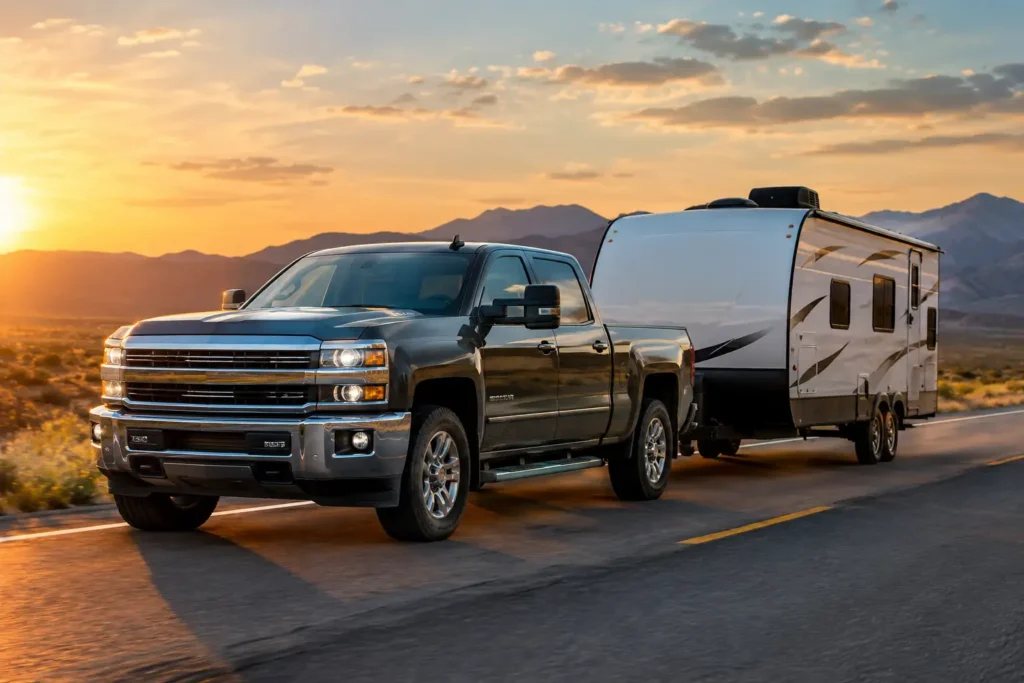
Pickup truck towing a travel trailer camper on the highway explaining what is the 80/20 rule for towing.
Tow

What Is the 80/20 Rule for Towing? A Straight Answer With Real Numbers

What is the 80/20 rule for towing? Means keeping your trailer’s weight at or under 80% of your tow vehicle’s rated towing capacity. The leftover 20% acts as a safety buffer. It does not replace your GVWR, GCWR, payload, or hitch ratings. Those numbers still come first. Redline Roadside & Towing LLC sees this question a lot from new trailer owners. This guide breaks down the math, shows where the 80% figure comes from, and tells you exactly what to do if your setup is already over the limit. What Is the 80/20 Rule for Towing Here’s the formula. Take your vehicle’s rated towing capacity and multiply it by 0.8. That number is your target ceiling for Gross Trailer Weight (GTW). Example: a truck rated to tow 10,000 pounds should stay under 8,000 pounds of actual loaded trailer weight. A truck rated for 7,000 pounds should stay under 5,600 pounds. This isn’t about your trailer’s empty weight. It’s about GTW, meaning the trailer plus everything inside it: water, propane, gear, food, and anything else you loaded before hitting the road. Most owners underestimate this number by hundreds of pounds. Where the 80% Number Actually Comes From Manufacturers test towing capacity using SAE J2807, a standardized set of performance tests. These tests measure acceleration, braking, and grade climbing with a specific configuration. That configuration usually assumes one driver, no passengers, and no extra cargo. Your real trip almost never looks like that. The 80% rule grew out of the RV and trailer community as a practical way to account for that gap. It’s not printed in any owner’s manual. It’s a buffer that experienced towers pass down because it works in practice, not because a regulator wrote it into law. Why the Buffer Exists (What Eats Into Your 80%) Real-world towing conditions are rarely ideal. A full fresh water tank alone can add over 400 pounds. Stack on a loaded fridge, camp chairs, coolers, and gear, and your trailer’s actual weight climbs fast. Passengers and cargo inside your tow vehicle also count against your GCWR, even though they’re not on the trailer itself. Then add the conditions you can’t control: headwinds, steep grades, high elevation, and summer heat. All of these increase strain on your engine, transmission, and brakes. A vehicle towing at 100% of its rating on a flat, calm day is already working hard. Add a mountain grade in 100-degree heat, and that margin disappears fast. Tongue Weight Has Its Own Rule Too Staying under 80% of GTW is only half the picture. Tongue weight, the downward force your trailer places on the hitch, needs its own check. A good rule of thumb is keeping tongue weight between 10% and 15% of your trailer’s total loaded weight. Too little tongue weight causes trailer sway, where the trailer starts fishtailing behind you. Too much overloads your rear suspension and lifts weight off your front axle, cutting into steering and braking control. A weight-distribution hitch helps here. It spreads tongue weight across both axles of your tow vehicle instead of dumping it all on the rear. If you’re towing a heavier trailer, this piece of equipment matters as much as the 80/20 rule itself. How to Check If Your Trailer Fits the 80/20 Rule Start with your tow vehicle’s numbers. You’ll need GVWR, GCWR, curb weight, and payload capacity. These are usually printed on a sticker inside the driver’s door jamb, and always listed in your owner’s manual. For a full breakdown of what each of these terms means and how they work together, check out our guide on What Is Towing Capacity. Once you know your numbers, the most reliable way to confirm your actual loaded weight is a public scale. A CAT Scale weigh-in typically runs around $12 to $15 for the first weigh, with a small fee for a reweigh. That’s a small price for knowing your real numbers instead of guessing. What to Do If You’re Over 80% If your math puts you over the 80% mark, you have a few real options. Cut cargo weight first. Water tanks, tools, and extra gear are the easiest places to trim pounds without changing your setup. Add a weight-distribution hitch if tongue weight is the issue. These typically run $300 to $900 depending on capacity and features, and they can noticeably improve control even if your GTW stays the same. If neither of those closes the gap, you’re looking at a bigger change: downsizing your trailer or upgrading to a tow vehicle with a higher rating. Neither is cheap, but both beat finding out the hard way on a steep grade with a full load. Is the 80/20 Rule Always Enough? Not always. Some experienced tow-vehicle owners argue that 80% doesn’t leave enough margin for heavy fifth wheels, especially once you add a family’s worth of cargo and a full pin weight. A truck rated to tow 16,800 pounds and following the 80% rule would target 13,440 pounds. But once you factor in passengers, cargo, and a loaded pin weight, some owners find their real safe capacity is closer to 9,000 to 11,000 pounds, well under that 80% number. The takeaway: treat 80% as a starting point, not a finish line. Heavier rigs and bigger families need to run their own numbers, not just the shortcut. What Happens If You Ignore It Towing too close to your vehicle’s limit puts real strain on your rig. Tires run hotter and are more likely to fail. Brakes lose stopping power faster, especially on long downhill grades. Steering response gets mushy right when you need control the most. Beyond the mechanical risk, overloaded trailers can also mean citations, insurance headaches after an accident, and a breakdown that leaves you stranded. If that happens, Redline Roadside & Towing LLC is ready to help. Our Light Duty Towing service covers trailers, campers, and everyday tow setups that run into trouble on the road. Don’t wait until you’re stuck on the shoulder. Call us

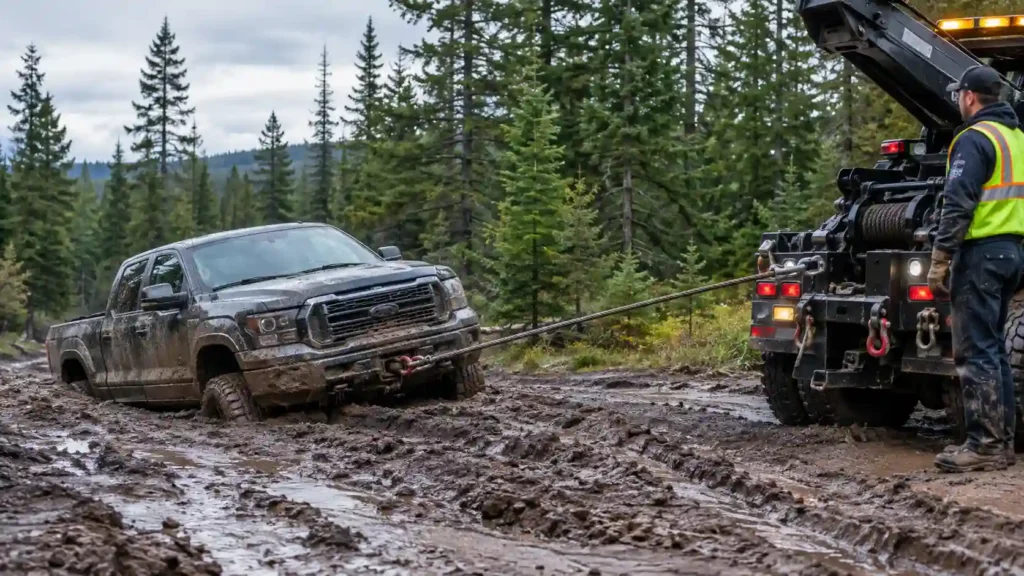
A tow truck winching a pickup truck out of deep mud to demonstrate what does off-road recovery mean.
Tow

What Does Off-Road Recovery Mean? Straight Answer

Off-road recovery utilizes heavy-duty winches, kinetic straps, and traction boards to safely extract stuck vehicles from mud, sand, snow, or rocks, whereas traditional towing simply transports disabled vehicles on stable pavement. At Redline Roadside & Towing LLC, we specialize in both services, deploying advanced rigging techniques and mechanical leverage to rescue stranded drivers from challenging terrain without causing frame or structural damage. If you have ever asked what does off-road recovery mean while staring at a truck buried past its axles, this guide covers it all. You will learn the techniques, the gear, the real costs, and when to call a professional instead of digging yourself in deeper. What Does Off-Road Recovery Mean, Exactly? Off-road recovery frees vehicles physically trapped in rugged terrain like mud, sand, snow, or loose rocks. While standard towing simply transports a disabled vehicle along paved roads, recovery focuses on extricating a sunken or wedged vehicle and safely returning it to stable ground. This complex process requires specialized tools including winches, kinetic straps, snatch blocks, and traction boards to pull vehicles free without causing structural damage. Because of the unique environmental challenges and advanced rigging techniques required, off-road recovery is more resource-intensive and costly than traditional towing. Off-Road Recovery vs. Towing: What’s the Real Difference? Towing vs recovery comes down to one question: can the vehicle move under its own power, or is it stuck? A standard tow uses a flatbed tow truck or a wheel-lift tow truck to move a car that has a dead battery, a flat tire, or engine trouble. The truck lifts or loads the vehicle and drives it somewhere else. It is a routine job with predictable steps. Off-road recovery is a different kind of work. The vehicle is not broken. It is buried, wedged, or trapped by terrain. A crew may need a winch, recovery straps, or even a second vehicle to pull it free before any towing can happen. Recovery jobs also carry more safety risk, since a strap or cable under heavy load can snap and cause serious injury if it is rigged wrong. In short, towing is about transport. Off-road recovery is about extraction. Many stuck-vehicle calls need both: recovery first to get the vehicle unstuck, then a tow if it cannot be driven out afterward. Why Vehicles Get Stuck Off-Road Most off-road recovery calls come down to a handful of common causes. Mud: Tires spin and dig deeper instead of gripping, especially after rain. Sand: Loose, shifting ground swallows tires and drops the frame onto the surface. Snow: Deep or drifted snow packs under the vehicle and kills traction. Rocks: Uneven rock beds can trap a wheel or scrape the undercarriage. Water crossings: What looks like a shallow creek can hide a deep rut or soft bottom. Ditches and steep inclines: A wrong turn off the shoulder can drop a vehicle into a ditch or leave it stuck nose-down on a grade. Loose gravel: Gravel shifts under tire weight the same way sand does, especially on a slope. Knowing the cause matters because each one calls for a different fix. Pulling a truck out of deep mud takes different gear than lifting a car off a rock. Off-Road Recovery Techniques Used by Professionals Off-road recovery techniques vary by how stuck the vehicle is and what caused it. Single-Line Winching Single-line winching is the most basic method. A winch cable runs from the stuck vehicle to a solid anchor, like a tree or another truck, and pulls the vehicle straight out. Double-Line Winching Double-line winching adds a snatch block, a type of pulley, to double the pulling force. Crews use this when a single line does not have enough power or a solid anchor point sits too close. Snatch Strap Recovery Snatch strap recovery uses a stretchy nylon strap between a moving vehicle and the stuck one. The strap stores energy as it stretches, then releases it in a controlled pull. This works well for lighter, less severe stuck situations. Kinetic Recovery Rope Kinetic recovery rope works on the same idea as a snatch strap but stretches further and absorbs more shock, making it a safer choice for tougher pulls. Recovery Boards Recovery boards are ramps placed under the tires to rebuild traction in sand, mud, or snow. They are often the fastest fix, since no second vehicle is needed. Air Cushions Air cushions lift a vehicle that has rolled or is stuck at an odd angle, without adding more stress to the frame. Crane Recovery Crane recovery comes into play for heavy trucks, RVs, or equipment that is too large or too unstable for a standard winch pull. Professionals choose the right technique based on the terrain, the vehicle’s weight, and how deeply it is stuck. Using the wrong method, like a snatch strap on a vehicle buried in deep mud, can waste time or damage the vehicle further. Off-Road Recovery Equipment, Explained Simply You do not need to be an expert to understand off-road recovery equipment. Here is what each tool actually does. Winch: A motorized spool that pulls the vehicle using a steel cable or synthetic rope. D-ring: A metal loop used to connect a strap or rope to a rated recovery point on the vehicle. Bow shackle: A U-shaped connector that links a winch cable to a strap, rope, or anchor. Hi-lift jack: A tall manual jack that lifts a vehicle out of a rut or holds it steady during repairs. Ground anchor: A device buried in soil to create a pull point when no tree or vehicle is nearby. Recovery boards: Traction ramps placed under tires to help a vehicle climb out of soft ground. Tree strap: A wide strap wrapped around a tree trunk to protect it while anchoring a winch cable. Each piece of gear plays a specific role. A winch provides the pulling power, while D-rings, shackles, and straps make sure that power connects safely to the vehicle. Should You Try Self-Recovery or Call a Professional? Some stuck

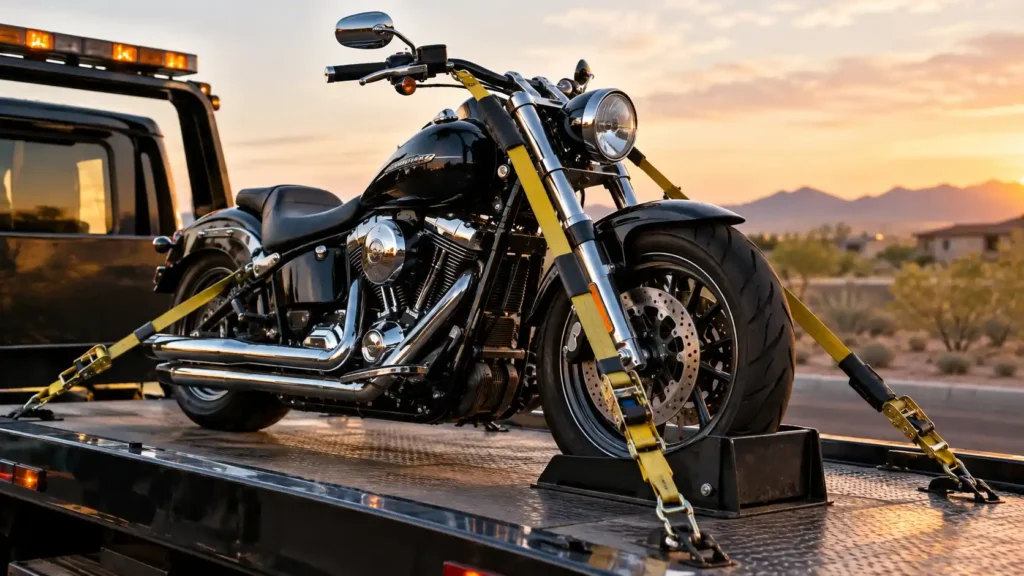
A cruiser motorcycle secured with yellow tie-down straps on a flatbed tow truck, demonstrating how to tow a motorcycle safely.
Tow

How to Tow a Motorcycle: Pick the Right Method

How to tow a motorcycle safely, load it onto a trailer, flatbed, or hitch carrier, and secure it at four separate points using heavy-duty ratchet straps. Start by placing a sturdy ramp on level ground and using a helper to guide the bike forward until the front tire locks firmly into a center wheel chock. Attach the first two straps to a structural frame point, like the lower triple trees, pulling them forward and outward at a 45-degree angle. Crank these front straps down evenly until the front forks compress by roughly 50%, which eliminates bouncing and keeps the hooks from slipping out over road bumps. Start With What Shape Your Bike Is In Your bike’s condition picks the method. A bike that rolls and steers can go on almost any rig. A bike that leaks or won’t roll needs a flatbed. Rideable means you can ride or walk it up a ramp. Non-rideable means it needs a push or a winch. Bike’s condition Best method Why Rides fine Trailer, hitch carrier, or flatbed It steers and rolls, so loading is simple. Starts but feels unsafe Trailer or flatbed Bad brakes or tires make a ramp ride risky. Walk it up with a helper. Won’t start (dead battery, breakdown) Trailer or motorcycle tow truck The wheels still turn. Two people can push it, or a winch can pull it. Crashed or leaking (crash damage, fuel leak) Flatbed tow truck Bent parts and fuel leaks need a pro. Fuel near heat is a fire risk. Locked or seized wheel (seized engine) Flatbed with a winch The wheel won’t turn. Never drag it, and skip the dolly. A dead battery alone is the easy case, since the bike still rolls. If a wheel won’t turn, check for a disc lock before you blame a seized engine. Motorcycle Transport Methods Compared Method Best For Weight Capacity Cost Ease of Use Tow Vehicle Requirements Motorcycle Trailer Long trips & any bike type ~1,530 lbs Varies by location/dates Medium Hitch receiver, correct ball, working lights Hitch-Mounted Carrier Light bikes & dirt bikes ~600 lbs Less than a trailer Medium Strong hitch receiver with a high tongue rating Tow Dolly Short trips & small bikes ~800 lbs Varies by brand Harder Hitch; bike must fit dolly; rear wheel must spin safely Flatbed Tow Truck Broken or damaged bikes Fits most bikes $85–$150 hook-up + $4.50–$5/mile Easy (Pro does it) None Gear and Bike Prep Before You Load Gather this gear first: Loading ramp: Length sets the angle, so a longer ramp gives a gentler climb. Pick one with a weight capacity above your bike’s weight, plus yours if you ride up. Wheel chock: It holds the front wheel upright. Ratchet straps: Bring four, rated well above the bike’s weight. Soft loops: Loop them around solid parts so hooks never touch paint. Cam buckle straps: These work as backups on light bikes. They pull less than ratchets. Gloves: Straps and ramps bite. Then prep the bike: Read the owner’s manual. It says whether to leave the bike in gear or in neutral. Follow it. Set tire pressure to the number on the sticker. Firm tires keep the bike upright. Remove bags and loose items. Tighten the windshield and fold in the mirrors. Turn off the fuel valve, also called the fuel petcock, if your bike has one. Tighten the gas cap. Look under the bike for leaks. A leak means you need a flatbed and should tell the driver. Pull the key. Keep the handlebars free while you load, since the straps hold them later. Flip the kickstand up once the straps take the weight. Loading and Unloading Without Dropping the Bike Park on flat, firm ground. Lock the ramp to the deck so it can’t slide. On a flatbed, slide the deck out to its full length. A longer deck gives a flatter ramp angle. Line the bike up straight with the ramp. If the bike starts and you have a spotter, ride it up slowly in first gear. If not, keep the engine off and push with a helper. Keep a hand on the front brake the whole way up. Squeeze to stop any roll. Stop in the middle of the deck, near the cab or trailer nose. This keeps the center of gravity low and forward. Roll the front wheel into the wheel chock. Use the kickstand until the straps take over. To unload, go in reverse. Hold both grips and squeeze the front brake before you undo the last strap. Feather the brake as you walk the bike down. On a tilting flatbed, the bike wants to roll back, so stay ready. Put the kickstand down only on flat ground. Where to Strap It, Which Angle, and How Tight Use at least four straps: two in front and two in back. That is a four-point tie-down. Heavy bikes may need six. Best spots: The frame and solid mounts come first. The triple tree is next, which is the clamp that holds the fork tubes at the top. Use soft loops around it. Handlebar: It works on many bikes with soft loops. On clip-ons, use the triple tree instead. Skip these: One fork tube alone, brake lines, mirrors, and plastics. They bend or snap. Strap angle: Aim for about 45 degrees, so straps pull down and out. Straight-down straps do less to stop a sideways slide. Tension: Tighten until the front suspension compresses. Stop before it bottoms out. Snug is enough. Rear wheel: Add a strap over it, or chock it, so the tail can’t swing. Recheck: Stop after the first few miles. Straps settle. Pull each one and tug the bike. Driving With a Bike in Tow Hitch class: Your hitch, ball, and tow vehicle must handle the trailer plus the bike. Tongue weight: This is the downward push on the hitch. Aim for 9 to 15 percent of the loaded trailer’s weight. Too little causes trailer sway. U-Haul tells renters to

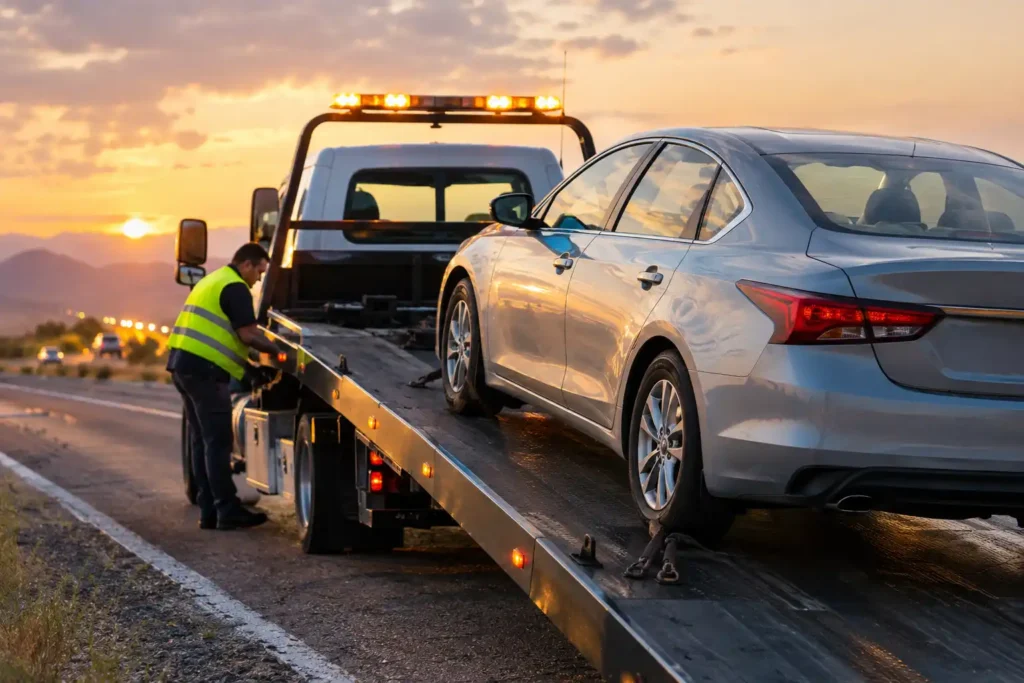
A tow truck driver securing a silver sedan on a flatbed bed towing truck on the highway, illustrating how much does a tow truck cost.
Tow

How Much Does a Tow Truck Cost? (2026 Price Guide)

Most neighborhood tows are $75 to $250. That includes a hook-up cost and a few miles down the road. Long distance tows, large duty trucks or a tow at 2 a.m. might run the charge to $300 or more. So how much does a tow truck cost for your exact situation? Depends on your car, your distance and why you need the tow in the first place. Here’s the whole breakdown, with real numbers you can use. Quick Answer: Tow Truck Cost at a Glance Hook-up fee (national average): $50 to $125 Per-mile rate after hook-up: $2 to $5 per mile Typical local tow (under 10 miles): $75 to $250 Long-distance tow (50+ miles): $200 to $800 or more Heavy-duty tow (truck, van, RV): $125 to $350+ for hook-up alone These are national ranges. Your local tow rate depends on your city, your state’s towing rules, and the type of truck the job needs. What Actually Goes Into Your Tow Bill A tow bill is not one flat number. It is built from three parts stacked together. The hook-up fee. This covers the driver showing up and connecting your car to the truck. Most companies charge $50 to $125 for this, no matter how far you’re going. The per-mile rate. Once your car is hooked up, you pay for the miles it travels. This is usually $2 to $5 per mile for a standard car. Surcharges. These get added on top when your situation isn’t a simple, daytime, easy-access tow. Common ones include: After-hours surcharge (nights, weekends, holidays) Storage fee, if your car sits in a tow yard overnight Winching fee, if the car needs to be pulled from a ditch or tight spot Heavy-duty fee, if your vehicle needs a bigger truck Add these three pieces together and you get your final bill. A simple daytime tow might just be hook-up plus mileage. A midnight tow from a ditch could include all three. How Much Does a Tow Truck Cost Per Mile? Towing costs vary considerably with the length of the trip. Here’s exactly what you will get: Local Tows: You’re looking at $2 to $5 per mile in addition to the base hook-up fee. A five mile tow at $ 3 / mile tacks on $ 15 to your account. Long-Distance Tows (50+ miles): The charge normally reduces to between $1.50 and $3 per mile because of the lengthier single journey. But it adds up fast, 100 mile tow at $2.50/mile adds $250 in mileage alone. Tow Truck Cost by Vehicle Type Bigger and heavier vehicles need bigger trucks, and bigger trucks cost more to run. Here’s what to expect by vehicle type. Vehicle Type Typical Tow Method Estimated Cost Range Sedan or small car Flatbed or wheel-lift $75 – $200 SUV or minivan Flatbed $85 – $225 Pickup truck Flatbed $100 – $250 Motorcycle Flatbed with straps $75 – $150 Electric vehicle (EV) Flatbed only $100 – $275 Heavy-duty (box truck, RV, bus) Heavy-duty wrecker $150 – $500+ Electric vehicles must be towed on a flatbed truck because their motors are permanently linked to the wheels without a true mechanical neutral. Towing an EV with its wheels rolling on the ground generates unmanaged electricity that causes catastrophic battery and inverter failures, resulting in $8,000 to $18,000 in damages. Because EVs are exceptionally heavy, they require specialized flatbed transport, “Transport Mode” activation to unlock the electronic brakes, and secure wheel straps instead of chassis hooks—services that typically add a $20 to $80 premium over standard towing. You may read this What Is Towing Capacity for more about tow. Tow Truck Cost by Situation Your bill also depends on why you’re calling for a tow. Here’s how five common situations compare. Breakdown on The Road This is the simplest and usually cheapest case. Your car is upright, accessible, and just needs a lift onto a flatbed. Expect a standard hook-up fee plus mileage. Accident Recovery If your car was in a crash, it may be damaged, off the road, or blocking traffic. Accident recovery often costs more because it can involve winching, debris cleanup, and coordinating with police on scene. Illegal Parking or Impound If your car gets towed for parking violations, you’re not calling the truck. The city or property owner is. These impound tows come with their own fee schedule, plus a daily storage fee that adds up fast if you don’t retrieve the car quickly. This category also covers repossession tows, where a lender arranges pickup of an abandoned vehicle or one behind on payments. Ditch or Off-road Recovery A car stuck in a ditch, mud, or snowbank needs winching before it can even be hooked up. This adds time and equipment, which adds cost. Off-road recovery is one of the more expensive standard calls because of the extra labor involved. Long Distance Relocation Moving a car across the state or across the country is priced differently than an emergency tow. Companies that do long hauls often quote a flat rate based on total mileage rather than the standard hook-up-plus-per-mile formula. What Makes a Tow More Expensive A few factors push any tow toward the high end of its price range. Time of day. Calling at 2 a.m. costs more than calling at 2 p.m. Most companies add a night, weekend, or holiday surcharge, sometimes called peak-hour pricing. Distance to your location. If the tow company has to drive 30 minutes just to reach you, some charge for that travel time separately. This matters more in rural pricing areas, where the nearest available truck might be far away. Hookup difficulty. A car parked in a tight garage, wedged against a curb, or stuck in mud takes longer to hook up safely. Harder hookups mean more time on the clock. Weather and terrain. Ice, snow, steep grades, and off-road conditions slow everything down and raise the risk for the driver and the truck. Companies factor that risk into the price. Will Insurance or Roadside Assistance Cover It? Often,

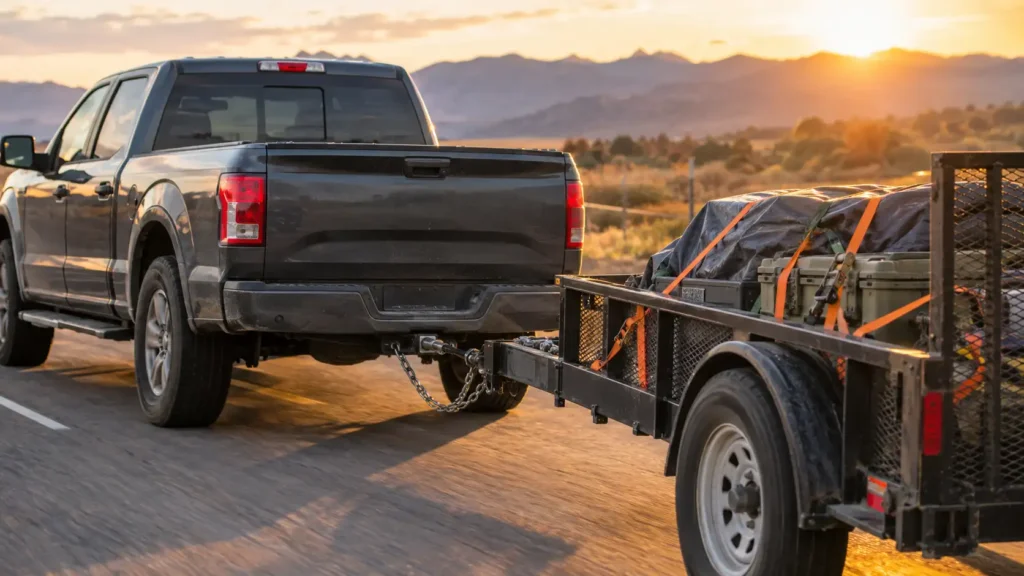
Dark pickup truck learned how to tow a trailer safely for beginners on an open road during sunset.
Tow

How to Tow a Trailer Safely for Beginners

Bringing along a trailer may seem intimidating at first, so this how to tow a trailer safely for beginners breaks it all down into simple steps that any novice can follow. Here, you won’t find an overt sales pitch instead you will find an easy checklist-style guide designed specifically to assist real drivers who wish to connect their trailer and travel without hassles or stress. Know Your Vehicle’s Towing Capacity First Before attaching anything, the most crucial number you require is your vehicle’s towing capacity – this indicates how much weight can safely be pulled by it. Towing capacity depends on a range of variables, from engine power and transmission strength to brake performance and frame design. Automakers conduct tests on every vehicle model they manufacture in order to set this limit and rate each one accordingly. Gross Combined Weight Rating (GCWR), or the total weight of your vehicle with passengers and cargo inside it plus what it tows as cargo trailer, and payload capacity are two related numbers you need to know before towing with any trailer. Mixing them up is one of the more frequent beginner mistakes and must not happen. Where to Find Your Real Towing Capacity Check your owner’s manual first. It lists exact numbers for your trim and engine. Look at the sticker inside the driver’s door jamb for GCWR and payload figures. Find your VIN and call the dealer if you bought the vehicle used and lost the manual. Do not estimate a truck’s towing capability by looking at what another similar one can tow; even small differences in engine, axle ratio or trim level could alter this number by thousands of pounds. As a rule of thumb, aim for keeping your vehicle around 20% under its maximum rated capacity. So if it can handle up to 8,000 pounds, keep its load closer to 6,400 pounds to provide ample breathing room for cargo, passengers and hot weather which reduce engine performance. Read more What Is Towing Capacity Choose and Attach the Right Hitch Once you know what your vehicle can handle, you need towing equipment that matches it. Hitches come in five classes, based on weight. Hitch Class Max Trailer Weight Common Use Class I Up to 2,000 lbs Small utility trailers, bike racks Class II Up to 3,500 lbs Light campers, small boats Class III Up to 5,000 lbs Mid-size boats, travel trailers Class IV Up to 7,500 lbs Larger campers, car trailers Class V Up to 10,000+ lbs Heavy equipment, large RVs Your hitch ball size also has to match your trailer coupler exactly. Common sizes are 1 7/8″, 2″, and 2 5/16″. A mismatched ball and coupler can pop apart on the road, even if it looks connected. For heavier loads, a weight distribution hitch spreads the trailer’s tongue weight across both the tow vehicle and trailer axles. This keeps the back of your vehicle from sagging and improves steering control. How to attach safety chains the right way: Cross the chains under the trailer tongue in an X pattern. Leave enough slack for turns, but not so much that the chains drag. Hook each chain to a solid point on the vehicle frame, not the bumper. Check that both hooks are fully latched before you move. The crossed pattern matters. If the hitch fails, the X shape catches the tongue and keeps it from hitting the ground. Load the Trailer the Right Way How you load a trailer affects its handling just as significantly as how it’s hitched; an uneven distribution of weight being one of the major sources of trailer sway. Use the 60/40 rule when loading cargo onto your trailer: place roughly 60% in front near axles, leaving 40% for back storage – this way your load stays balanced without placing undue stress on your hitch and axles. Create the appropriate tongue weight by attaching your trailer properly, which measures its downward force on your hitch ball and should account for 10-15 percent of total trailer weight. Too little tongue weight causes sway while too much can push down on the rear tires of the tow vehicle while lifting front tires up, impairing steering and braking capability. Spread weight equally across both sides. A trailer that leans too heavily toward one side makes controlling and wearing tires unevenly much more challenging, leading to uneven tire wear and tire replacement costs. Pre-Drive Safety Checklist Run through this checklist every single time before you tow, even on short trips. Tires Check pressure on both your vehicle and trailer tires against the recommended PSI. Look for cracks, bulges, or uneven wear. Confirm lug nuts on the trailer wheels are tight. Lights and signals Plug in the trailer wiring and test brake lights, turn signals, and running lights. Check that hazard lights work on both the vehicle and trailer. Hitch and chains Confirm the coupler is fully latched and locked onto the ball. Recheck that safety chains are crossed and hooked securely. Make sure any electric brake controller is connected and working. Tie-downs and cargo Test that straps or tie-downs are tight. Confirm nothing can shift, slide, or fall out during the drive. Mirrors Adjust side mirrors so you can see down both sides of the trailer. Add extended towing mirrors if your factory mirrors do not give a clear view. Pull over after the first few miles and check everything again. Straps loosen and connections settle once you’re actually moving. Practice Before You Hit the Road Trailer towing tips for beginners always mention practice, and for good reason. An empty parking lot is the safest place to learn. Backing up: Put one hand at the bottom of the steering wheel. Move that hand in the direction you want the back of the trailer to go. Turn in small amounts. A little steering input moves the trailer a lot. Turning: The trailer follows a tighter path than your vehicle. Swing wider than feels natural so the trailer clears curbs and corners.

What Is Towing Capacity
Tow

What Is Towing Capacity? A Clear, Simple Guide

Towing capacity is the maximum weight your vehicle can safely pull behind it. That number covers your trailer, plus everything loaded inside it. So what is towing capacity in real terms? It’s the line between a safe tow and a strained engine, worn brakes, or a dangerous trailer sway. If you’ve ever hooked up a trailer and wondered can my truck actually handle this, you’re asking the right question. This guide breaks it down in plain language, with a real example, a comparison chart, and the safety numbers most guides skip. What Is Maximum Towing Capacity? (Is It Different From Towing Capacity?) Here’s the short answer. Maximum towing capacity and towing capacity are the same thing. Manufacturers use both terms to describe the heaviest trailer weight your vehicle can pull when it’s set up correctly, with the right engine, axle, and towing package. So if you’ve searched what is the maximum towing capacity, you’re not missing a separate number. You’re looking for the same rating, usually tested against the SAE J2807 standard, which sets consistent rules for how automakers measure and report that figure. That standard is why a 2026 half-ton truck rated for 13,000 pounds can be compared fairly against a rival brand’s truck rated for 12,500 pounds. How Towing Capacity Is Calculated (With a Real Example) Every automaker starts with three numbers: Gross Combined Weight Rating (GCWR), curb weight, and payload. The formula is simple. Towing Capacity = GCWR − (Curb Weight + Payload) Let’s walk through a real example. Say a mid-size truck has a GCWR of 16,000 pounds. Its curb weight, meaning the truck alone with fuel and fluids but no people or cargo, is 4,900 pounds. You’re loading 500 pounds of gear, tools, and passengers into the cab and bed. Here’s the math: 16,000 minus (4,900 plus 500) equals 10,600 pounds. That’s your usable towing capacity for this trip, once passengers and cargo are already accounted for. This is exactly what is towing capacity in practice. It’s not a fixed sticker number you can ignore once you load the truck. Every bag, tool, and passenger you add reduces the trailer weight you can safely pull. Two identical trucks with different cargo loads will have two different real-world towing numbers, even though the factory rating stays the same. Towing Capacity vs. GVWR vs. Payload: Know the Difference These terms get mixed up constantly, so here’s a quick side-by-side reference. Term What It Means Applies To Towing Capacity Max weight the vehicle can pull behind it The trailer and its cargo GVWR (Gross Vehicle Weight Rating) Max weight the vehicle itself can carry, including passengers, cargo, and tongue weight The tow vehicle only GAWR (Gross Axle Weight Rating) Max weight one axle can support, front and rear rated separately Each individual axle GTW (Gross Trailer Weight) Total weight of the loaded trailer, fuel and cargo included The trailer only Payload Weight of people, gear, and cargo the vehicle carries inside it Cab and bed, not the trailer Tongue Weight Downward force the trailer places on the hitch Should sit between 10 and 15 percent of loaded trailer weight The easiest way to remember it: GVWR is about what your truck carries. Towing capacity is about what your truck pulls. Mixing these two up is the single most common mistake first-time tow buyers make. What Affects Your Vehicle’s Towing Capacity A few mechanical factors set the ceiling on how much a vehicle can pull. None of these factors work alone. A powerful engine paired with weak brakes still limits your safe capacity, since the whole system has to work together under load. How to Find Your Vehicle’s Exact Towing Capacity Don’t guess based on what a similar model can tow. Check your own vehicle these ways. Two trucks with the same badge can have very different numbers depending on engine choice, cab size, and factory options. Always check your specific build. What Happens If You Tow at Max Capacity? Towing at max capacity is legal, but it leaves you with zero margin for error. A common rule among experienced tow operators is to stay around 80 percent of your rated capacity, not the full number on the sticker. Here’s why that margin matters. When you’re towing at max capacity, your brakes work harder to stop the added weight, which raises stopping distance and heat buildup. Trailer sway becomes more likely, especially in wind or on uneven pavement. Hills strain the engine and transmission more, since there’s no reserve power left. Tongue weight has to sit right in that 10 to 15 percent range, or the whole rig becomes unstable at speed. A properly installed weight-distribution hitch helps spread the load across both axles and reduces sway, but it doesn’t raise your actual towing capacity. It just makes towing closer to that limit safer. If your trip regularly pushes you near the max, it’s worth stepping up to a vehicle with a higher rating instead of living at the edge every time. Towing Capacity by Vehicle Type Here’s a quick-reference chart by vehicle class, using FHWA weight categories as the baseline. Vehicle Type Typical Towing Range Hitch Class Subcompact/Compact SUV 1,500 to 3,500 lbs Class I–II Midsize SUV 3,500 to 6,000 lbs Class III Full-Size SUV 6,000 to 9,600 lbs Class III–IV Half-Ton Truck 8,000 to 13,500 lbs Class IV–V Heavy-Duty Truck 15,000 lbs and up (often 20,000+ with a gooseneck) Class V Light Duty Towing generally covers vehicles under 10,000 pounds GVWR, like SUVs and half-ton trucks. Medium Duty Towing covers the 10,001 to 26,000 pound range, common for box trucks and larger work vehicles. Heavy-Duty Towing applies above that, where semis, RVs, and construction equipment live. You can see the full federal breakdown on the Department of Energy’s Alternative Fuels Data Center. If your load falls outside your vehicle’s rated range, or you’re not sure which category your rig lands in, don’t guess on the highway. Redline Roadside & Towing LLC handles Light Duty Towing, Medium

Scroll to Top