Off-road recovery utilizes heavy-duty winches, kinetic straps, and traction boards to safely extract stuck vehicles from mud, sand, snow, or rocks, whereas traditional towing simply transports disabled vehicles on stable pavement. At Redline Roadside & Towing LLC, we specialize in both services, deploying advanced rigging techniques and mechanical leverage to rescue stranded drivers from challenging terrain without causing frame or structural damage.
If you have ever asked what does off-road recovery mean while staring at a truck buried past its axles, this guide covers it all. You will learn the techniques, the gear, the real costs, and when to call a professional instead of digging yourself in deeper.
What Does Off-Road Recovery Mean, Exactly?
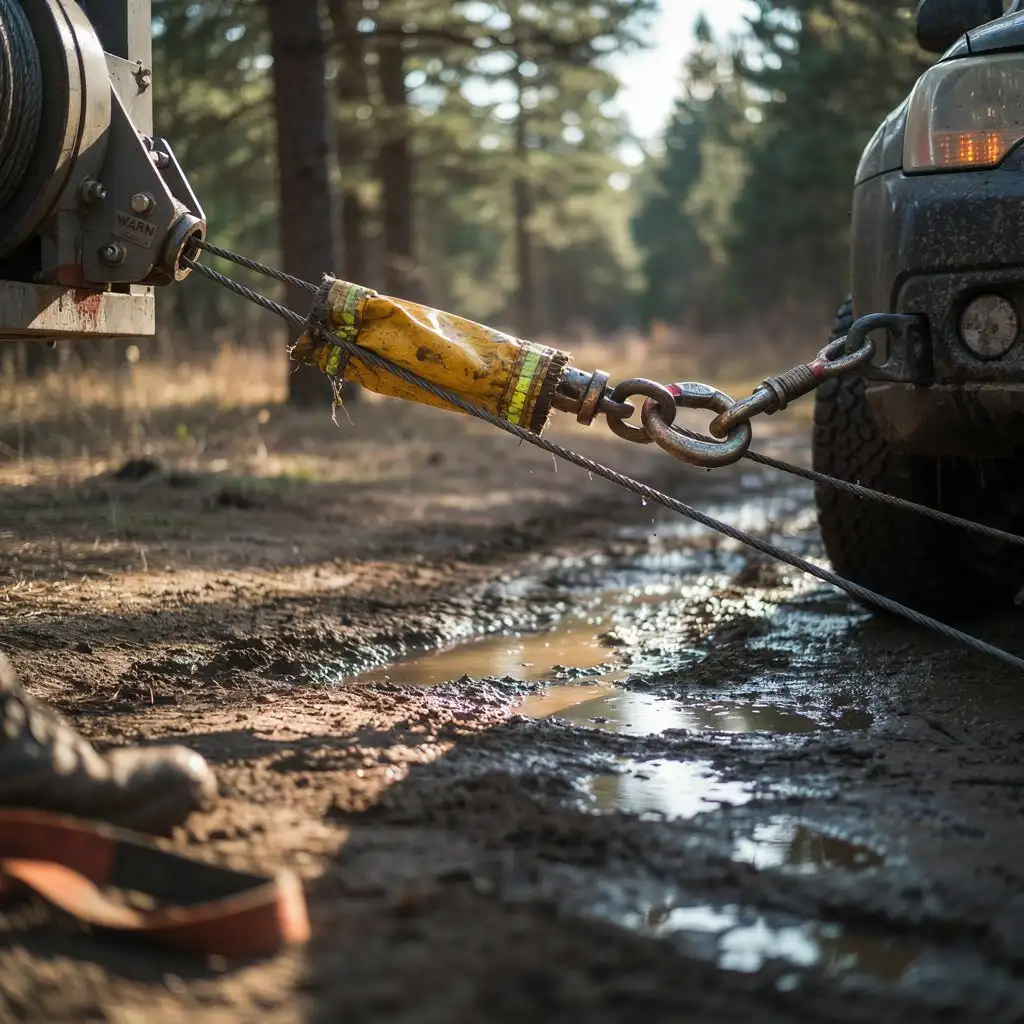
Off-road recovery frees vehicles physically trapped in rugged terrain like mud, sand, snow, or loose rocks. While standard towing simply transports a disabled vehicle along paved roads, recovery focuses on extricating a sunken or wedged vehicle and safely returning it to stable ground.
This complex process requires specialized tools including winches, kinetic straps, snatch blocks, and traction boards to pull vehicles free without causing structural damage. Because of the unique environmental challenges and advanced rigging techniques required, off-road recovery is more resource-intensive and costly than traditional towing.
Off-Road Recovery vs. Towing: What’s the Real Difference?
Towing vs recovery comes down to one question: can the vehicle move under its own power, or is it stuck?
A standard tow uses a flatbed tow truck or a wheel-lift tow truck to move a car that has a dead battery, a flat tire, or engine trouble. The truck lifts or loads the vehicle and drives it somewhere else. It is a routine job with predictable steps.
Off-road recovery is a different kind of work. The vehicle is not broken. It is buried, wedged, or trapped by terrain. A crew may need a winch, recovery straps, or even a second vehicle to pull it free before any towing can happen. Recovery jobs also carry more safety risk, since a strap or cable under heavy load can snap and cause serious injury if it is rigged wrong.
In short, towing is about transport. Off-road recovery is about extraction. Many stuck-vehicle calls need both: recovery first to get the vehicle unstuck, then a tow if it cannot be driven out afterward.
Why Vehicles Get Stuck Off-Road
Most off-road recovery calls come down to a handful of common causes.
- Mud: Tires spin and dig deeper instead of gripping, especially after rain.
- Sand: Loose, shifting ground swallows tires and drops the frame onto the surface.
- Snow: Deep or drifted snow packs under the vehicle and kills traction.
- Rocks: Uneven rock beds can trap a wheel or scrape the undercarriage.
- Water crossings: What looks like a shallow creek can hide a deep rut or soft bottom.
- Ditches and steep inclines: A wrong turn off the shoulder can drop a vehicle into a ditch or leave it stuck nose-down on a grade.
- Loose gravel: Gravel shifts under tire weight the same way sand does, especially on a slope.
Knowing the cause matters because each one calls for a different fix. Pulling a truck out of deep mud takes different gear than lifting a car off a rock.
Off-Road Recovery Techniques Used by Professionals
Off-road recovery techniques vary by how stuck the vehicle is and what caused it.
Single-Line Winching
Single-line winching is the most basic method. A winch cable runs from the stuck vehicle to a solid anchor, like a tree or another truck, and pulls the vehicle straight out.
Double-Line Winching
Double-line winching adds a snatch block, a type of pulley, to double the pulling force. Crews use this when a single line does not have enough power or a solid anchor point sits too close.
Snatch Strap Recovery
Snatch strap recovery uses a stretchy nylon strap between a moving vehicle and the stuck one. The strap stores energy as it stretches, then releases it in a controlled pull. This works well for lighter, less severe stuck situations.
Kinetic Recovery Rope
Kinetic recovery rope works on the same idea as a snatch strap but stretches further and absorbs more shock, making it a safer choice for tougher pulls.
Recovery Boards
Recovery boards are ramps placed under the tires to rebuild traction in sand, mud, or snow. They are often the fastest fix, since no second vehicle is needed.
Air Cushions
Air cushions lift a vehicle that has rolled or is stuck at an odd angle, without adding more stress to the frame.
Crane Recovery
Crane recovery comes into play for heavy trucks, RVs, or equipment that is too large or too unstable for a standard winch pull.
Professionals choose the right technique based on the terrain, the vehicle’s weight, and how deeply it is stuck. Using the wrong method, like a snatch strap on a vehicle buried in deep mud, can waste time or damage the vehicle further.
Off-Road Recovery Equipment, Explained Simply
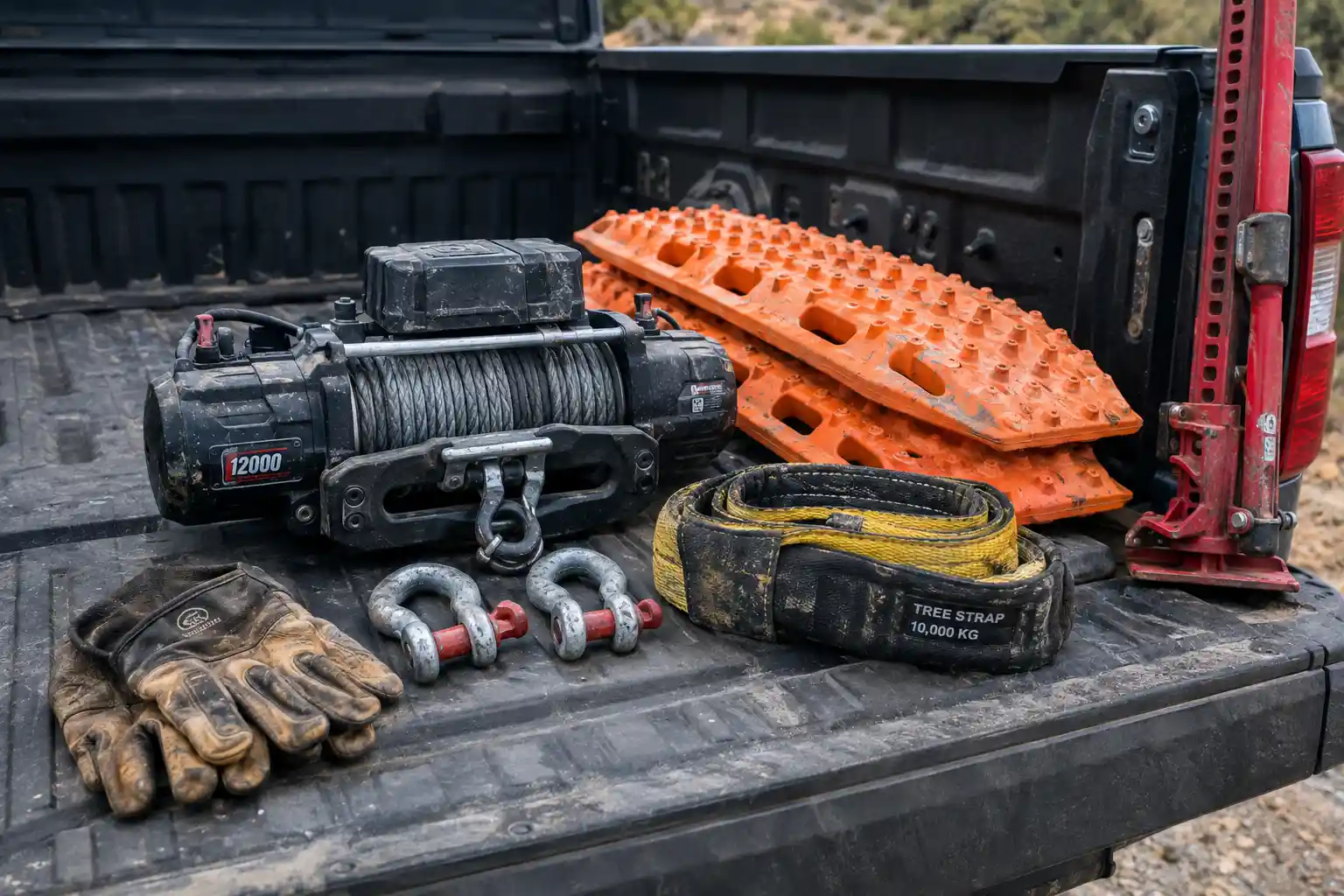
You do not need to be an expert to understand off-road recovery equipment. Here is what each tool actually does.
- Winch: A motorized spool that pulls the vehicle using a steel cable or synthetic rope.
- D-ring: A metal loop used to connect a strap or rope to a rated recovery point on the vehicle.
- Bow shackle: A U-shaped connector that links a winch cable to a strap, rope, or anchor.
- Hi-lift jack: A tall manual jack that lifts a vehicle out of a rut or holds it steady during repairs.
- Ground anchor: A device buried in soil to create a pull point when no tree or vehicle is nearby.
- Recovery boards: Traction ramps placed under tires to help a vehicle climb out of soft ground.
- Tree strap: A wide strap wrapped around a tree trunk to protect it while anchoring a winch cable.
Each piece of gear plays a specific role. A winch provides the pulling power, while D-rings, shackles, and straps make sure that power connects safely to the vehicle.
Should You Try Self-Recovery or Call a Professional?
Some stuck situations are simple enough to handle yourself. If your vehicle has a winch, rated recovery points, and you are only lightly stuck in mud or sand, a slow, steady self-recovery can work.
Call a professional when any of these apply:
- The vehicle is buried past the frame or axles.
- You do not have rated recovery points or proper gear.
- The terrain includes water, a steep slope, or unstable ground.
- You are recovering alone with no one to spot for safety.
- The vehicle shows signs of damage that a rough pull could make worse.
Self-recovery carries real injury risk. A snapped strap or a cable under load can move fast enough to cause serious harm. Pulling from the wrong point on the frame can also cause expensive vehicle damage. When in doubt, a professional off-road vehicle recovery service has the right gear and training to get you out without adding a second problem to the first one.
How Much Does Off-Road Recovery Cost?
Off-road recovery pricing depends on how deep the vehicle is stuck, how far the crew has to travel, and what kind of equipment the job needs. Based on typical rates from towing and recovery companies across the country, here is what to expect.
| Situation | Typical Cost Range |
| Basic winch-out, easy access | $100 to $250 |
| Off-road or difficult-access recovery | $150 to $350 per hour |
| Remote location surcharge | $50 to $250 added |
| Heavy vehicle or equipment recovery | $350 to $1,250+ per hour |
| Air cushion or specialized lift | $280 to $500+ per hour |
Most standard winch-outs for a car or truck stuck in mud or sand land between $100 and $350 total, depending on distance and how long the job takes. Heavy trucks, RVs, and construction equipment cost more, since they need stronger winches, larger crews, and sometimes a rotator truck or crane. Remote locations almost always add a distance or access fee on top of the base rate, since crews spend more time getting to and from the site.
Getting a quote before the crew arrives, when possible, helps you avoid surprises on the final bill.
Off-Road Recovery by Vehicle Type
Not every stuck vehicle needs the same approach.
Passenger Vehicles
Passenger vehicles, like cars and small SUVs, are lighter and usually need only a winch or strap to pull free from mud, sand, or a shallow ditch.
Trucks and Larger SUVs
Trucks and larger SUVs carry more weight and often sit higher, which can mean a longer straight-line pull or a double-line winch setup for extra force.
RVs
RVs are heavy and long, which makes recovery slower and riskier. Crews often need reinforced winches and careful positioning to avoid damaging the frame or undercarriage.
Heavy Equipment
Heavy equipment, like tractors, excavators, and construction machinery, gets stuck often in soft or muddy job sites. Recovery here usually calls for heavy-duty winches, cranes, or specialized rigging built for extreme weight.
Knowing your vehicle type helps set realistic expectations for both time and cost before a crew arrives.
Common Mistakes That Make a Stuck Vehicle Worse
A few habits turn an easy recovery into a harder one.
- Spinning the wheels. This digs the vehicle deeper into mud, sand, or snow instead of freeing it.
- Pulling from the wrong point. Attaching a strap to a tow ball, bumper, or non-rated spot can snap it off and cause damage.
- Skipping a dampener. Not placing a blanket or dampener over a strap or cable means more risk if it snaps under load.
- Using the wrong gear for the job. A snatch strap will not safely free a vehicle buried deep in mud. That situation calls for a winch.
- Improper strap use. Standing near or stepping over a strap under tension is one of the most common causes of injury during recovery.
Avoiding these mistakes keeps both the vehicle and the people around it safe during the pull.
Redline Roadside & Towing LLC Off-Road Recovery Service
Getting stuck off the beaten path is stressful, but you do not have to handle it alone or guess at the right technique. Redline Roadside & Towing LLC offers full Off-Road Recovery service in Arizona and its surrounding areas , with the winches, straps, and experience to pull your vehicle free without causing more damage.
Whether you are stuck in mud, sand, snow, or rocks, our crew shows up ready with the right gear for the job. Contact us now for fast, safe off-road recovery you can count on.
FAQs
What does off-road recovery mean in simple terms?
It means using tools like winches or straps to pull a vehicle out of mud, sand, snow, or rocks when it gets stuck away from a paved road.
Is off-road recovery the same as towing?
No. Towing moves a vehicle that runs but cannot drive itself. Off-road recovery frees a vehicle that is physically stuck in terrain.
How long does off-road recovery take?
A simple winch-out can take 30 minutes to an hour. Heavy vehicles or remote locations can take two hours or more.
Do I need a professional for off-road recovery, or can I do it myself?
Light situations with proper gear can be self-recovered. Deep, remote, or heavy vehicle situations are safer left to a professional crew.
What is the most common off-road recovery technique?
Winching is the most common method, since it works on almost any terrain and gives controlled, steady pulling power.
How much does off-road recovery usually cost?
Most jobs run between $100 and $350 for a standard car or truck, with heavy vehicles and remote locations costing more.