
Your car won’t start, the dashboard lights are barely on, and you’re not sure what’s wrong. Knowing what to do if car battery dies to three quick moves: check the warning signs, try a jump-start, and know when to call for help. If your battery dies, check for warning signs first, like dim lights or a clicking sound.
Then try a jump-start using jumper cables and a car with a healthy battery, connecting the positive and negative terminals in the right order. If the engine still won’t turn over, call for roadside assistance. Redline Roadside & Towing LLC handles this every day.
First: Which Situation Are You In?
Not every dead battery looks the same, and the right fix depends on where you are when it happens.
If your car is parked and simply won’t start, you’re in the easiest spot. You likely have time, space, and maybe jumper cables or a neighbor nearby. If it died while you were driving, that’s a different problem and a more urgent one. Skip ahead to the safety steps below before you try anything else.
You’re stranded with no tools, no other car, and no one nearby, you’ll want the section on calling for help. There’s no shame in that. It’s often the fastest and safest option anyway.
Figure out which situation matches yours, then jump to that section. That’s really what do you do when your car battery dies: match your situation to the right response instead of guessing at steps that don’t apply.
Is It Actually the Battery? (10-Second Check)
If you’re standing in a parking lot thinking car battery died what do I do, the first move is a ten-second check, not the jumper cables. A dead starter or an empty gas tank can look almost identical to a dead battery at first.
Turn the key or press the start button and pay attention to what happens.
- Dashboard lights come on but look dim or flicker: likely a weak battery.
- You hear a rapid clicking sound: the battery probably doesn’t have enough charge left to turn the starter.
- Nothing happens at all, no lights and no sound: could still be the battery, but check that the car is actually in park or neutral first.
- The radio and interior lights work fine, but the engine won’t crank: that points to the starter, not the battery.
- The engine cranks slowly, like it’s struggling to turn over: the battery has some charge left, just not enough.
Dim lights, a slow crank, or that clicking sound all mean the battery is your problem. Move on to the jump-start steps below. If everything else is dead too, including the radio, the issue might be bigger than a dead battery, and a jump-start likely won’t fix it.
If It Died While You Were Driving
This is the moment that matters most, and it’s the part most guides skip completely.
Turn on your hazard lights right away. Ease off the gas and steer toward the shoulder or the nearest safe spot, away from moving traffic. Don’t slam the brakes.
Once you’re stopped, shift into park and set the parking brake. Stay inside the car if you’re on a busy road, and get out only once it’s safe to do so.
Here’s something worth knowing. If your car actually died while driving, rather than just failing to start in the first place, the battery usually isn’t the real cause. A healthy battery keeps the engine running once it’s already on. When a car stalls mid-drive, the alternator or the charging system is the more likely culprit. A jump-start might get you moving again for a few minutes, but get the charging system checked before you drive very far.
How to Jump-Start It Safely (Cables)
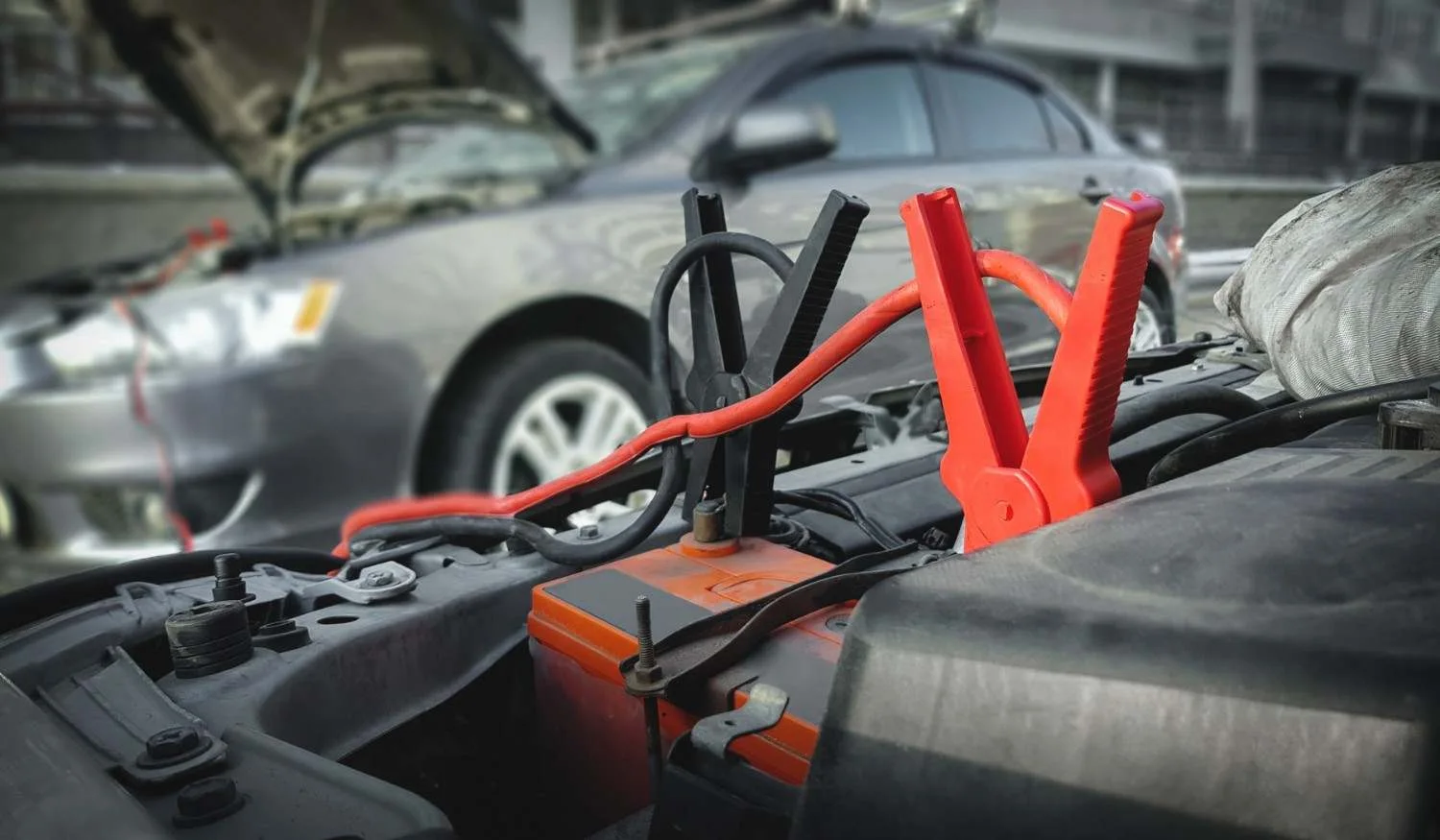
If your car won’t start and you suspect the battery is dead, a jump-start may get you back on the road. Before starting, make sure you have a set of jumper cables and another vehicle with a working battery. Park the vehicles close enough for the cables to reach, but never let the two vehicles touch.
Follow these steps carefully:
- Park both vehicles safely. Put both cars in Park or Neutral, turn off the engines, and apply the parking brakes.
- Open both hoods and locate the batteries. Check the positive (+) and negative (–) terminals before connecting anything.
- Connect the red clamp to the dead battery. Attach the red positive (+) clamp to the positive terminal of the dead battery.
- Connect the other red clamp. Attach it to the positive (+) terminal of the working battery.
- Connect the black clamp to the working battery. Attach the black negative (–) clamp to the negative terminal of the good battery.
- Ground the final black clamp. Attach it to a clean, unpainted metal part of the dead vehicle, such as a suitable engine bolt or bracket. Avoid connecting it directly to the dead battery’s negative terminal when the vehicle manufacturer’s instructions recommend a remote ground.
- Start the working vehicle. Let it run for a few minutes to allow some charge to reach the dead battery.
- Try starting the vehicle with the dead battery. If it starts, leave the engine running and follow the vehicle manufacturer’s guidance on how long to keep it running or whether to drive it to recharge the battery.
Common Jump-Start Mistakes to Avoid
Jump-starting a car is straightforward, but the connections need to be made carefully. Never allow the jumper clamps to touch each other while they are connected to a battery, as this can create sparks. Connecting the cables incorrectly can also damage sensitive electrical components.
It’s also important to keep sparks, cigarettes, flames, and other ignition sources away from the battery. Car batteries can release hydrogen gas and contain corrosive acid, so use caution throughout the process.
If the vehicle still won’t start after a proper jump-start attempt, the battery may be completely discharged, damaged, or there may be another issue with the starting or charging system. In that situation, roadside assistance can help diagnose the problem and provide a safe jump-start or towing service if needed.
How to Disconnect Jumper Cables Safely
Once the vehicle has started, remove the jumper cables in the reverse order of connection. Start by removing the black clamp from the previously dead vehicle, followed by the black clamp from the working battery. Then remove the red clamp from the working battery and finally the red clamp from the vehicle that had the dead battery.
Taking your time when removing the cables helps prevent accidental contact between the clamps and reduces the risk of sparks or electrical damage.
No Second Car? Use a Portable Jump Starter
A jump pack is a small battery pack you keep in your trunk, and it doesn’t need a second vehicle at all. Clip it on the same way you would jumper cables, positive to positive and negative to a metal ground point, then switch it on. A fully charged jump pack can often start a completely dead battery in under a minute.
A cigarette-lighter charger works differently. It plugs into your car’s 12-volt outlet and trickles a small amount of power into the battery over time. That’s fine for a battery that’s only a little weak, but it usually can’t revive one that’s fully dead, since the outlet itself needs some power just to work.
If you’re wondering what to do if your car battery dies and you don’t own a jump pack, it’s a solid $30 to $60 investment to keep in the trunk for next time.
No Cables, No Jump Pack? Here’s What Else Works
Here’s what to do if car battery dies and you have zero tools on hand.
If you drive a manual transmission, you can try a push start, sometimes called a bump start. You’ll need a slight downhill slope or a couple of people to push. Turn the key to the “on” position, shift into second gear, hold the clutch down, and get pushed to a rolling speed of about 5 to 10 mph. Release the clutch quickly and the engine should turn over. This trick doesn’t work on automatic transmissions at all.
If that’s not an option, or you drive an automatic, roadside assistance is the next call. Most insurance policies and auto club memberships cover a jump-start, and a technician usually shows up within 30 to 60 minutes depending on your location.
If you’re standing next to your car with genuinely nothing, no cables, no pack, no membership, call a local towing company directly and ask for a mobile jump-start. Most can send a truck the same way roadside assistance does, just without the membership requirement.
Started, But Something’s Still Off?
If you’re troubleshooting what to do if car battery died and the jump-start worked, but the car dies again five or ten minutes later, the battery probably isn’t your real problem. That pattern usually points to the alternator or the charging system failing to keep the battery topped up while you drive.
A mechanic or auto parts store can run a load test on the battery and check the alternator’s output with a multimeter in a few minutes, often for free. A healthy charging system should read somewhere around 13.5 to 14.5 volts with the engine running. A reading well below that means the alternator isn’t doing its job, and a new battery won’t fix that on its own.
When to Call for a Tow Instead of Jump-Starting
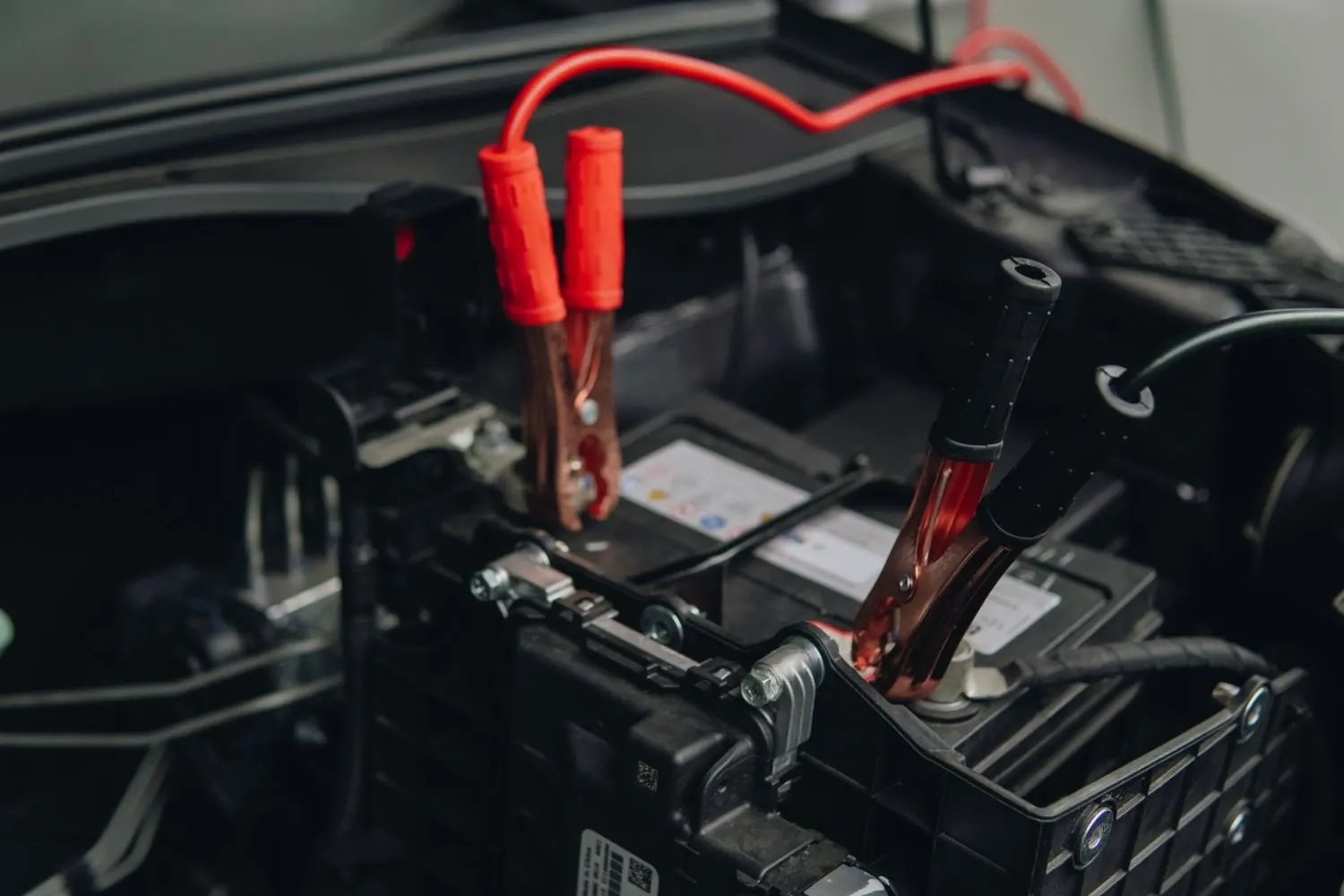
Some situations call for a tow truck instead of another attempt at jump-starting.
Skip the jump-start entirely if the battery case looks swollen, cracked, or is leaking anything. That’s a safety issue, not just an inconvenience. The same goes if you’ve already tried jump-starting twice and it won’t hold a charge, or the battery is more than five years old and clearly at the end of its life.
Cost is usually what decides it for most drivers. A basic mobile jump-start typically runs somewhere between $50 and $150, depending on location and time of day. A local tow usually adds a hookup fee plus a per-mile charge, often landing between $75 and $250 for a short trip.
If you’re in the West Valley area and your battery just won’t cooperate, Redline Roadside & Towing LLC offers Jump Starts Service in West Valley, AZ with a technician who can also tow your car straight to a shop if the jump doesn’t take. Call us and we’ll get you moving again, day or night.
Why Did the Battery Die in the First Place?
Once you know what to do if car battery dies in the moment, it helps to understand why it happened. A handful of causes explain most dead batteries:
- Age. Most batteries last three to five years. Past that, they lose the ability to hold a full charge.
- Parasitic drain. Something stayed on after you left the car, like an interior light or a phone charger, and it slowly emptied the battery overnight.
- Corrosion. A white or greenish crust on the terminals blocks the connection and weakens the charge getting through.
- Extreme temperature. Both freezing cold and extreme heat wear down a battery’s internal chemistry faster than mild weather does.
- Lights left on. Headlights or interior lights left running for even an hour can drain a battery enough to cause trouble.
- A dead key fob battery. On some newer cars, a dead fob battery can stop the car from recognizing the key at all, which looks like a dead car battery but isn’t.
- The wrong battery type. AGM and EFB batteries handle higher electrical loads than standard batteries. Installing the wrong type for your vehicle can cause repeat failures even with a brand-new battery.
How to Avoid This Next Time
A few habits go a long way toward preventing a repeat of this whole situation.
Clean the terminals every few months. A mix of baking soda and water, scrubbed on with an old toothbrush, clears off corrosion before it becomes a real problem.
Get the battery tested once or twice a year, especially before summer and winter. Most auto parts stores will test it for free in a few minutes.
Keep an eye on the battery’s age. Once it’s past the four-year mark, ask for a test even if it seems fine, since batteries can fail without much warning after that.
Park in a garage or shaded spot when you can, particularly in extreme heat, since that alone can add real years to a battery’s life.
What to Do If Your Car Battery Dies: Final Takeaway
Knowing what to do if car battery dies can help you handle the situation safely. If a jump-start doesn’t work or you don’t have the right equipment, professional help is the safest option.
If you’re stranded in West Valley, AZ, contact Redline Roadside & Towing LLC for reliable Jump Start Service. We’ll help get your vehicle started and get you back on the road.
FAQs
Can a dead battery come back on its own?
Not usually. A battery that’s completely drained needs an outside charge, either from a jump-start or a battery charger, to come back. Letting it sit rarely fixes anything and can shorten its remaining life.
How long do I need to drive after a jump-start?
Give it at least 15 to 20 minutes of driving or idling, so the alternator has time to put charge back into the battery. A short trip around the block usually isn’t enough.
Is it safe to jump-start a hybrid or EV?
It depends on the model. Hybrids and EVs run a small 12-volt battery alongside the main high-voltage battery, and it’s usually the 12-volt one that dies. Many hybrids have dedicated jump-start terminals for this, but some manufacturers warn against jump-starting altogether and recommend roadside assistance instead. Check your owner’s manual before you try.
How do I know if it’s the battery or the alternator?
If the car won’t start at all but runs fine once it’s going, that’s usually the battery. If it starts fine but stalls or dies while you’re driving, that points to the alternator or the charging system instead.