Most neighborhood tows are $75 to $250. That includes a hook-up cost and a few miles down the road. Long distance tows, large duty trucks or a tow at 2 a.m. might run the charge to $300 or more.
So how much does a tow truck cost for your exact situation? Depends on your car, your distance and why you need the tow in the first place. Here’s the whole breakdown, with real numbers you can use.
Quick Answer: Tow Truck Cost at a Glance
- Hook-up fee (national average): $50 to $125
- Per-mile rate after hook-up: $2 to $5 per mile
- Typical local tow (under 10 miles): $75 to $250
- Long-distance tow (50+ miles): $200 to $800 or more
- Heavy-duty tow (truck, van, RV): $125 to $350+ for hook-up alone
These are national ranges. Your local tow rate depends on your city, your state’s towing rules, and the type of truck the job needs.
What Actually Goes Into Your Tow Bill
A tow bill is not one flat number. It is built from three parts stacked together.
- The hook-up fee. This covers the driver showing up and connecting your car to the truck. Most companies charge $50 to $125 for this, no matter how far you’re going.
- The per-mile rate. Once your car is hooked up, you pay for the miles it travels. This is usually $2 to $5 per mile for a standard car.
- Surcharges. These get added on top when your situation isn’t a simple, daytime, easy-access tow. Common ones include:
- After-hours surcharge (nights, weekends, holidays)
- Storage fee, if your car sits in a tow yard overnight
- Winching fee, if the car needs to be pulled from a ditch or tight spot
- Heavy-duty fee, if your vehicle needs a bigger truck
Add these three pieces together and you get your final bill. A simple daytime tow might just be hook-up plus mileage. A midnight tow from a ditch could include all three.
How Much Does a Tow Truck Cost Per Mile?
Towing costs vary considerably with the length of the trip. Here’s exactly what you will get:
Local Tows: You’re looking at $2 to $5 per mile in addition to the base hook-up fee. A five mile tow at $ 3 / mile tacks on $ 15 to your account.
Long-Distance Tows (50+ miles): The charge normally reduces to between $1.50 and $3 per mile because of the lengthier single journey. But it adds up fast, 100 mile tow at $2.50/mile adds $250 in mileage alone.
Tow Truck Cost by Vehicle Type
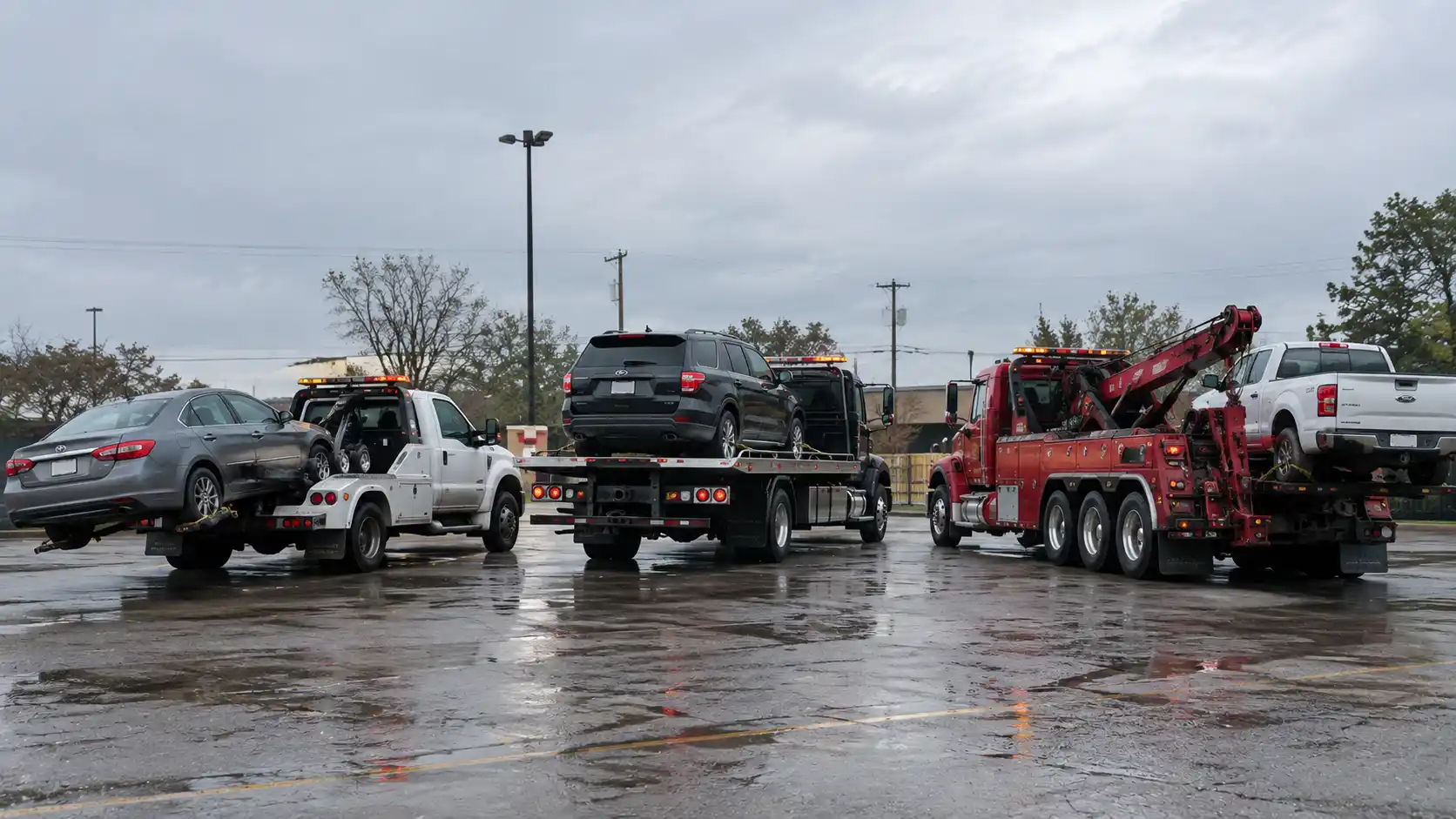
Bigger and heavier vehicles need bigger trucks, and bigger trucks cost more to run. Here’s what to expect by vehicle type.
| Vehicle Type | Typical Tow Method | Estimated Cost Range |
| Sedan or small car | Flatbed or wheel-lift | $75 – $200 |
| SUV or minivan | Flatbed | $85 – $225 |
| Pickup truck | Flatbed | $100 – $250 |
| Motorcycle | Flatbed with straps | $75 – $150 |
| Electric vehicle (EV) | Flatbed only | $100 – $275 |
| Heavy-duty (box truck, RV, bus) | Heavy-duty wrecker | $150 – $500+ |
Electric vehicles must be towed on a flatbed truck because their motors are permanently linked to the wheels without a true mechanical neutral. Towing an EV with its wheels rolling on the ground generates unmanaged electricity that causes catastrophic battery and inverter failures, resulting in $8,000 to $18,000 in damages.
Because EVs are exceptionally heavy, they require specialized flatbed transport, “Transport Mode” activation to unlock the electronic brakes, and secure wheel straps instead of chassis hooks—services that typically add a $20 to $80 premium over standard towing.
You may read this What Is Towing Capacity for more about tow.
Tow Truck Cost by Situation
Your bill also depends on why you’re calling for a tow. Here’s how five common situations compare.
Breakdown on The Road
This is the simplest and usually cheapest case. Your car is upright, accessible, and just needs a lift onto a flatbed. Expect a standard hook-up fee plus mileage.
Accident Recovery
If your car was in a crash, it may be damaged, off the road, or blocking traffic. Accident recovery often costs more because it can involve winching, debris cleanup, and coordinating with police on scene.
Illegal Parking or Impound
If your car gets towed for parking violations, you’re not calling the truck. The city or property owner is. These impound tows come with their own fee schedule, plus a daily storage fee that adds up fast if you don’t retrieve the car quickly. This category also covers repossession tows, where a lender arranges pickup of an abandoned vehicle or one behind on payments.
Ditch or Off-road Recovery
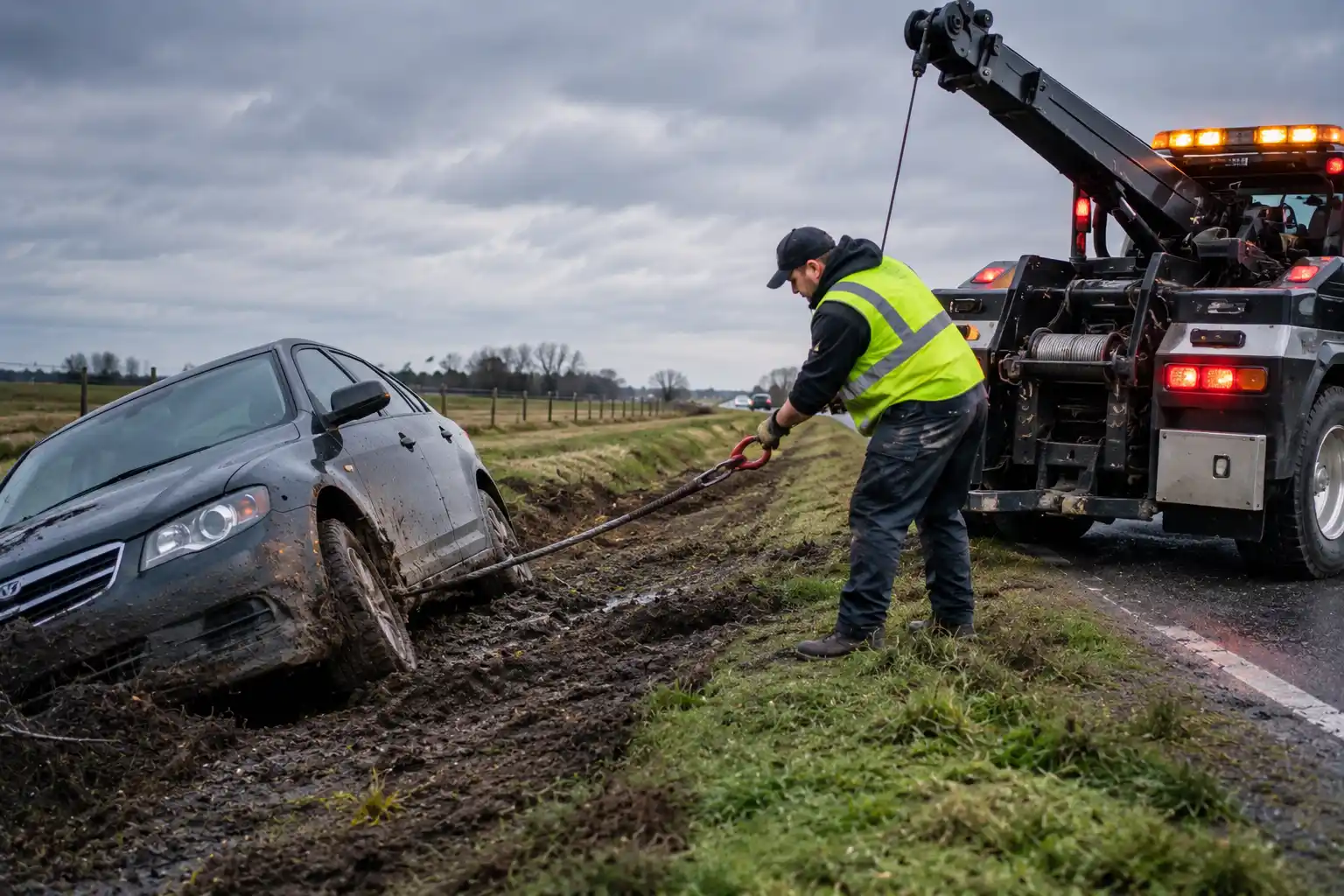
A car stuck in a ditch, mud, or snowbank needs winching before it can even be hooked up. This adds time and equipment, which adds cost. Off-road recovery is one of the more expensive standard calls because of the extra labor involved.
Long Distance Relocation
Moving a car across the state or across the country is priced differently than an emergency tow. Companies that do long hauls often quote a flat rate based on total mileage rather than the standard hook-up-plus-per-mile formula.
What Makes a Tow More Expensive
A few factors push any tow toward the high end of its price range.
Time of day. Calling at 2 a.m. costs more than calling at 2 p.m. Most companies add a night, weekend, or holiday surcharge, sometimes called peak-hour pricing.
Distance to your location. If the tow company has to drive 30 minutes just to reach you, some charge for that travel time separately. This matters more in rural pricing areas, where the nearest available truck might be far away.
Hookup difficulty. A car parked in a tight garage, wedged against a curb, or stuck in mud takes longer to hook up safely. Harder hookups mean more time on the clock.
Weather and terrain. Ice, snow, steep grades, and off-road conditions slow everything down and raise the risk for the driver and the truck. Companies factor that risk into the price.
Will Insurance or Roadside Assistance Cover It?
Often, yes. Here’s how the main options break down.
Comprehensive auto insurance sometimes includes towing coverage, but usually only after an accident, and only up to your deductible. Check your policy for a specific towing or roadside line item.
Credit card benefits. Some credit cards include roadside assistance as a card perk. It’s worth checking your card’s benefits guide before you pay out of pocket.
If none of these apply, you’re paying the standard rate directly, so it helps to know the numbers above before the truck arrives.
How to Avoid Getting Overcharged
This is where most drivers lose money, and it’s avoidable.
Ask for a quote before hookup, not after. A legitimate company will tell you the hook-up fee and per-mile rate on the phone before the truck shows up. If a driver won’t give you a number until the job is already done, that’s a warning sign.
Watch for predatory towing. This shows up most with impound and parking-related tows, where a company knows you have little choice but to pay. Signs include vague pricing, cash-only demands, and refusal to provide an itemized receipt.
Know your local rate caps. Many cities and states set maximum rates for non-consensual tows, like the ones for illegal parking or impound. The FTC’s consumer protection resources outline what to do if you believe you’ve been overcharged or misled by a towing company.
Get it in writing. A written or texted quote protects you if the final bill doesn’t match what you were told.
Conclusion
If you’re in the Phoenix or West Valley area and want a straight answer before any truck rolls out, that’s exactly how Redline Roadside & Towing LLC operates. We quote hook-up fees and mileage rates upfront, every time, so there are no surprises on your bill.
Need something bigger than a standard tow? Our Heavy-Duty Towing in West Valley AZ service covers trucks, RVs, and commercial vehicles with the right equipment and a crew that knows how to handle the weight safely. Whether it’s a simple breakdown, an accident, or a vehicle stuck off-road, contact us first and get a real number before you agree to anything.
FAQs
How much does a tow car cost?
Most tows for local jobs less than 10 miles are $75-$250. The ultimate value depends on your car size, mileage, and time of day.
How much does it cost for a tow truck if I break down at night?
Expect $20 to $50 more than a daytime tow, due to the after-hours premium most providers apply between late evening and early morning.
How much does a towing truck cost for a long-distance move?
Long hauls are often quoted as a flat rate instead of hook-up plus mileage. For a 100-mile tow, estimate anything between $200 and $400, depending on car size.
How much does a tow truck cost per mile once I’m hooked up?
Local tows run $2 to $5 per mile. Long-distance tows frequently drop to $1.50 to $3 per mile since the excursion covers more ground in one pass.
Why did my impound tow cost so much more than a regular tow?
Impound tows include storage fees that add up daily, plus city-set fees that are often higher than a standard roadside call. Picking up your car quickly keeps the storage cost down.