What is the 80/20 rule for towing? Means keeping your trailer’s weight at or under 80% of your tow vehicle’s rated towing capacity. The leftover 20% acts as a safety buffer. It does not replace your GVWR, GCWR, payload, or hitch ratings. Those numbers still come first.
Redline Roadside & Towing LLC sees this question a lot from new trailer owners. This guide breaks down the math, shows where the 80% figure comes from, and tells you exactly what to do if your setup is already over the limit.
What Is the 80/20 Rule for Towing
Here’s the formula. Take your vehicle’s rated towing capacity and multiply it by 0.8. That number is your target ceiling for Gross Trailer Weight (GTW).
Example: a truck rated to tow 10,000 pounds should stay under 8,000 pounds of actual loaded trailer weight. A truck rated for 7,000 pounds should stay under 5,600 pounds.
This isn’t about your trailer’s empty weight. It’s about GTW, meaning the trailer plus everything inside it: water, propane, gear, food, and anything else you loaded before hitting the road. Most owners underestimate this number by hundreds of pounds.
Where the 80% Number Actually Comes From
Manufacturers test towing capacity using SAE J2807, a standardized set of performance tests. These tests measure acceleration, braking, and grade climbing with a specific configuration.
That configuration usually assumes one driver, no passengers, and no extra cargo. Your real trip almost never looks like that.
The 80% rule grew out of the RV and trailer community as a practical way to account for that gap. It’s not printed in any owner’s manual. It’s a buffer that experienced towers pass down because it works in practice, not because a regulator wrote it into law.
Why the Buffer Exists (What Eats Into Your 80%)
Real-world towing conditions are rarely ideal. A full fresh water tank alone can add over 400 pounds. Stack on a loaded fridge, camp chairs, coolers, and gear, and your trailer’s actual weight climbs fast.
Passengers and cargo inside your tow vehicle also count against your GCWR, even though they’re not on the trailer itself.
Then add the conditions you can’t control: headwinds, steep grades, high elevation, and summer heat. All of these increase strain on your engine, transmission, and brakes. A vehicle towing at 100% of its rating on a flat, calm day is already working hard. Add a mountain grade in 100-degree heat, and that margin disappears fast.
Tongue Weight Has Its Own Rule Too
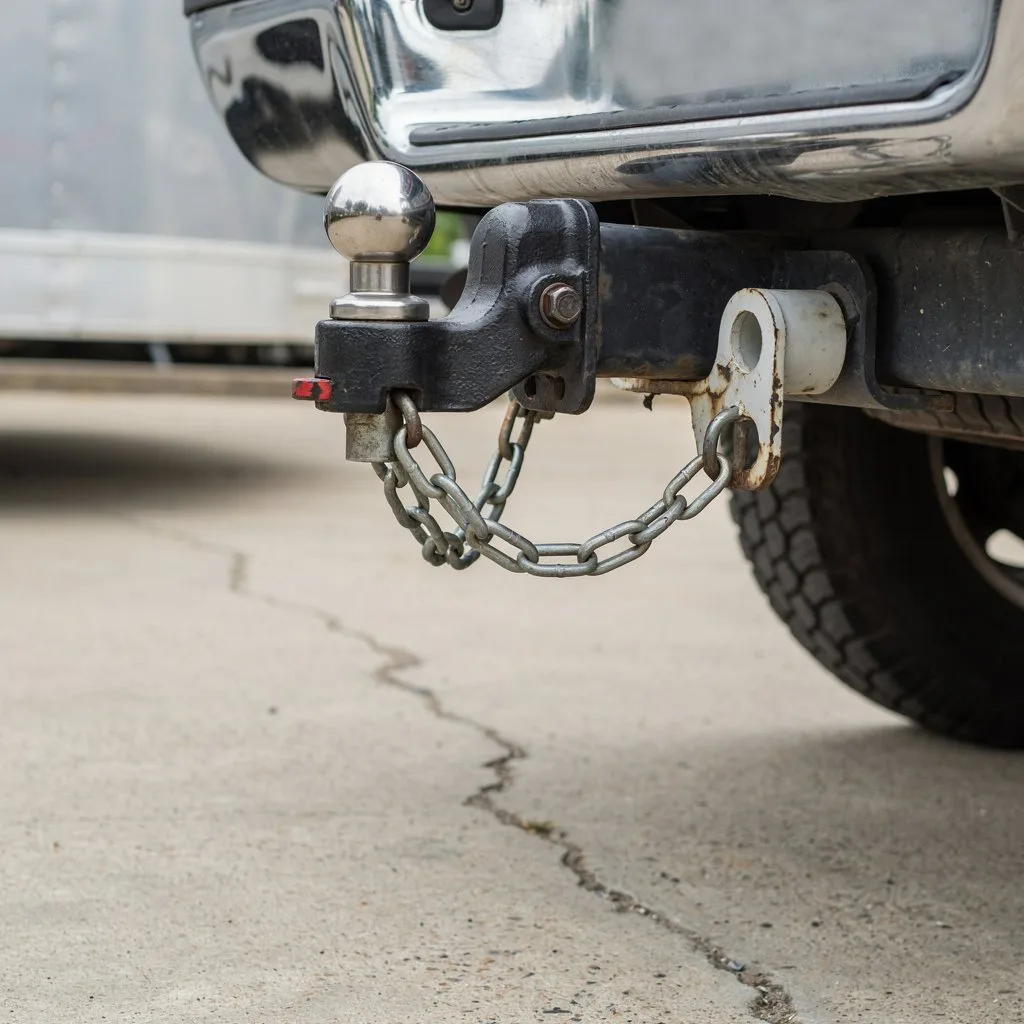
Staying under 80% of GTW is only half the picture. Tongue weight, the downward force your trailer places on the hitch, needs its own check.
A good rule of thumb is keeping tongue weight between 10% and 15% of your trailer’s total loaded weight. Too little tongue weight causes trailer sway, where the trailer starts fishtailing behind you. Too much overloads your rear suspension and lifts weight off your front axle, cutting into steering and braking control.
A weight-distribution hitch helps here. It spreads tongue weight across both axles of your tow vehicle instead of dumping it all on the rear. If you’re towing a heavier trailer, this piece of equipment matters as much as the 80/20 rule itself.
How to Check If Your Trailer Fits the 80/20 Rule
Start with your tow vehicle’s numbers. You’ll need GVWR, GCWR, curb weight, and payload capacity. These are usually printed on a sticker inside the driver’s door jamb, and always listed in your owner’s manual.
For a full breakdown of what each of these terms means and how they work together, check out our guide on What Is Towing Capacity.
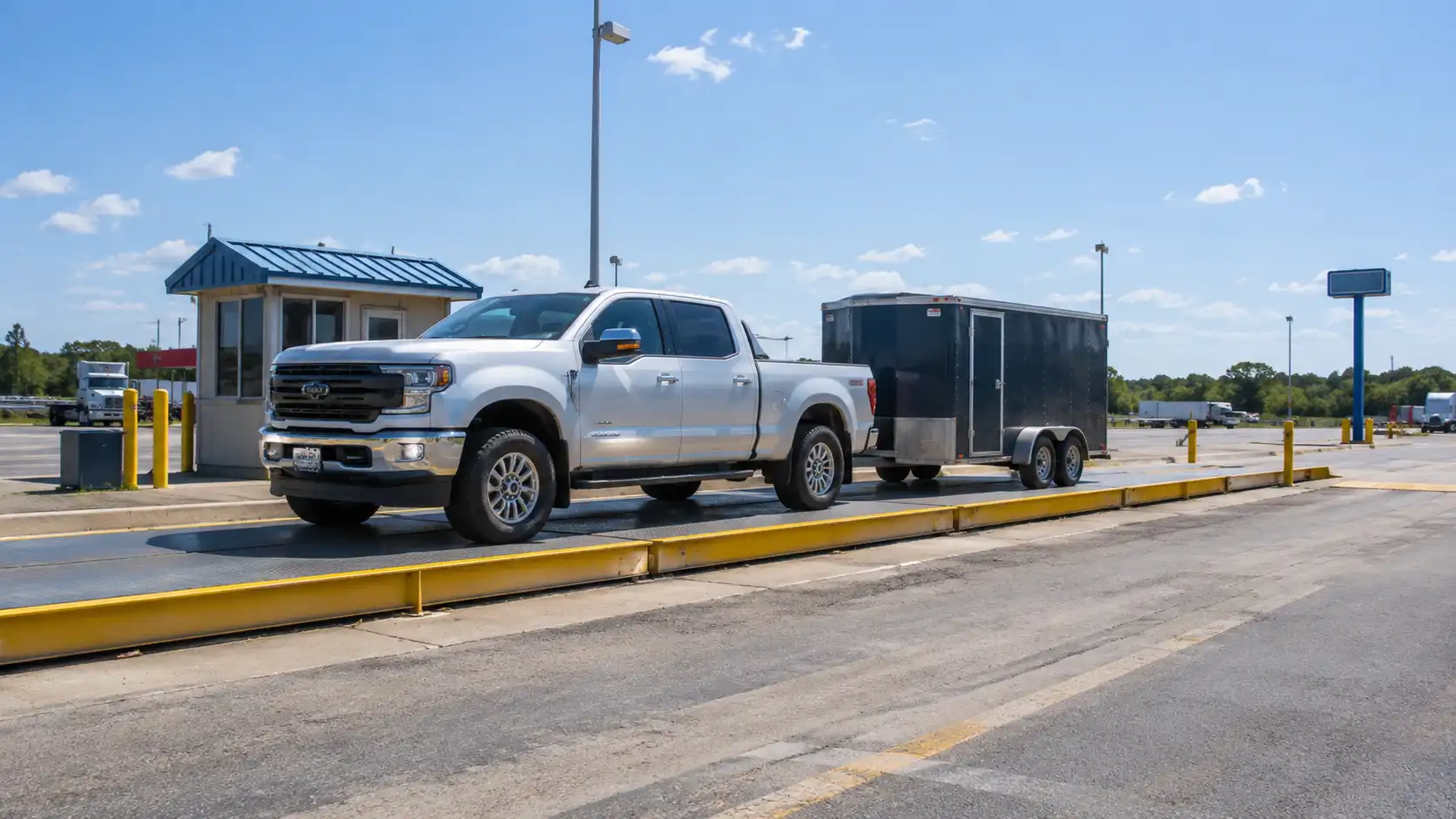
Once you know your numbers, the most reliable way to confirm your actual loaded weight is a public scale. A CAT Scale weigh-in typically runs around $12 to $15 for the first weigh, with a small fee for a reweigh. That’s a small price for knowing your real numbers instead of guessing.
What to Do If You’re Over 80%
If your math puts you over the 80% mark, you have a few real options.
Cut cargo weight first. Water tanks, tools, and extra gear are the easiest places to trim pounds without changing your setup.
Add a weight-distribution hitch if tongue weight is the issue. These typically run $300 to $900 depending on capacity and features, and they can noticeably improve control even if your GTW stays the same.
If neither of those closes the gap, you’re looking at a bigger change: downsizing your trailer or upgrading to a tow vehicle with a higher rating. Neither is cheap, but both beat finding out the hard way on a steep grade with a full load.
Is the 80/20 Rule Always Enough?
Not always. Some experienced tow-vehicle owners argue that 80% doesn’t leave enough margin for heavy fifth wheels, especially once you add a family’s worth of cargo and a full pin weight.
A truck rated to tow 16,800 pounds and following the 80% rule would target 13,440 pounds. But once you factor in passengers, cargo, and a loaded pin weight, some owners find their real safe capacity is closer to 9,000 to 11,000 pounds, well under that 80% number.
The takeaway: treat 80% as a starting point, not a finish line. Heavier rigs and bigger families need to run their own numbers, not just the shortcut.
What Happens If You Ignore It
Towing too close to your vehicle’s limit puts real strain on your rig. Tires run hotter and are more likely to fail. Brakes lose stopping power faster, especially on long downhill grades. Steering response gets mushy right when you need control the most.
Beyond the mechanical risk, overloaded trailers can also mean citations, insurance headaches after an accident, and a breakdown that leaves you stranded.
If that happens, Redline Roadside & Towing LLC is ready to help. Our Light Duty Towing service covers trailers, campers, and everyday tow setups that run into trouble on the road. Don’t wait until you’re stuck on the shoulder. Call us before your next trip if you’re unsure about your setup, or call us the moment something goes wrong.
Conclusion
The 80/20 rule for towing is a simple, practical guideline: keep your trailer’s loaded weight at or under 80% of your vehicle’s rated towing capacity. It’s not a law, but it’s a buffer that accounts for real-world conditions your manufacturer’s rating doesn’t fully capture. Pair it with a real check of your tongue weight, payload, and GCWR, and you’ll have a much clearer picture of what your rig can actually handle.
If you’re ever unsure about your numbers, or you need help after towing trouble on the road, Redline Roadside & Towing LLC is here for you. Reach out to our team for a straight answer and dependable help, whether you’re planning a trip or dealing with a breakdown right now.
Quick Answers
Is the 80/20 rule official?
No. It’s not a law or an SAE standard. It’s a widely used safety buffer that RV owners and towing pros recommend.
What if I’m at exactly 80%?
You’re following the guideline correctly, but you should still check tongue weight and payload separately. Weight at 80% of GTW does not guarantee everything else is within limits.
Does the 80/20 rule apply to fifth wheels too?
Yes, the same math applies. Heavy fifth wheels often eat through that 20% buffer faster because of pin weight and onboard gear.
Is the 80/20 towing rule the same as the 80/20 Pareto rule?
No. The Pareto principle is a business idea about outcomes and effort. The towing version is a weight safety guideline. They just share a number.