What is 24/7 roadside assistance? It is a service that sends a live dispatcher and a real service truck to your stalled car at any hour, any day of the year. In Phoenix, that call often comes on a 110 degree afternoon, when a dead battery or a blown tire cannot wait.
At Redline Roadside & Towing LLC, we answer those calls all day and all night across the West Valley. This guide covers the services, the real costs, and a clear verdict on whether it is worth paying for.
What 24/7 Roadside Assistance Means
24/7 roadside assistance means help is available whenever your car breaks down, day or night.
The Short Answer
So what is 24/7 roadside assistance in plain words? It is a service that sends a trained tech to fix or tow your vehicle at any hour. The tech can jump a battery, change a tire, unlock a door, bring fuel, or tow you to a shop.
What “24/7” Really Promises
The label means 24 hours a day, 7 days a week, 365 days a year. A true around-the-clock provider keeps a live dispatcher on the phone at 3 a.m., on Sunday night and on Christmas Day. You talk to a person, and that person sends a driver.
A phone line is not the same as a truck on the road. Some companies answer at night but only start trucks in the morning. One question tells you the truth: is a driver on duty right now? A real service call starts with a yes.
24 Hour vs 24/7 vs Emergency Roadside Assistance
24 hour roadside assistance, 24/7 roadside assistance and emergency roadside assistance all describe the same service. Companies pick the wording they like. The truck, the tech and the tools stay the same.
The word “emergency” matters when you are in danger. Think of a stall on a freeway shoulder, kids in the car in 108 degree heat, or a breakdown on a dark road at night. Say so to the dispatcher right away. Safety calls should come first.
What Services Does It Include?
| Service | What the tech does | When it is not enough |
| Jump start | Restarts the engine with cables or a booster pack | The battery is old or the alternator is bad, so the car dies again |
| Battery test | Checks if the battery can hold a charge | The test fails and you need a new battery, which costs extra |
| Flat tire | Swaps the bad tire for your spare | No spare, a flat spare, or a damaged wheel |
| Fuel delivery | Brings a few gallons of gas or diesel | The fuel itself costs extra, and a bad fuel pump needs a shop |
| Lockout | Opens the door without damage | A lost or broken key needs a locksmith |
| Tow | Loads the car and hauls it to a shop or home | The trip is longer than your plan’s tow limit |
Core Services
Most calls fall into six jobs: jump start, battery test, flat tire, fuel, lockout and tow. The tech fixes the problem where you stopped. If the fix fails, the tech tows the car.
Towing comes in two styles. A flatbed carries the whole vehicle on its bed. A wheel-lift raises two wheels and rolls the rest. Flatbeds are safer for low cars, all-wheel-drive models and anything that will not roll.
Extra Services Some Providers Add
Not every company stops at the basics. Some add winching, which pulls a stuck vehicle out of sand, mud or a ditch. Some carry batteries and replace yours on the spot. A few tow motorcycles and RVs with the right gear. Ask before you need it, because these extras differ from company to company.
How It Works, Step by Step
Request Help
Call, text or use an app. Then give the dispatcher four facts:
- Your exact location. Share your GPS pin from your phone, or name the freeway, exit and mile marker.
- Your vehicle: make, model, color and year.
- The problem: won’t start, flat tire, keys inside, out of gas.
- Whether you are in a safe or unsafe spot, such as a freeway shoulder.
Good details save time. The dispatcher can send the right truck with the right gear on the first trip.
What Happens on Arrival
The tech checks the car and tells you the plan and the price. Most jobs end on the spot. A jump start or a tire swap takes minutes. If the fix fails, the tow fallback kicks in and the tech loads your car for the ride to a shop or home.
How Fast Should Help Arrive?
At Redline, drivers in Phoenix usually see a tech in 10 to 25 minutes. Directory listings for other Phoenix providers show average waits from about 18 to 38 minutes. Heat, rush hour and storms can add time, so always ask for an ETA. Ask for an update if the clock runs past it.
Membership vs Pay-Per-Call
| Membership | Pay-per-call | |
| Billing | Yearly fee | You pay when you use it |
| Who is covered | A person or a vehicle, based on the plan | The vehicle on the call |
| Call limit | 4 calls a year on typical plans | None |
| Tow-mile cap | 5, 100 or 200 miles by plan | None. You pay by distance |
| Activation wait | Some plans have a wait after you join | None |
| Best for | Frequent calls and older cars | Rare breakdowns and newer cars |
Membership Plans
National auto club plans in Phoenix run from $64.99 to $124.99 a year. Most give you 4 calls a year. Tow caps change by tier: 5 miles on the base plan, then 100 or 200 miles on higher plans. Some plans cover the person in any car. Others cover only one vehicle. Read that line before you pay.
Pay-Per-Call Service
On-demand service has no yearly fee. You pay nothing until you need help, and there is no call limit. Two breakdowns in one month cost the same as two calls spread over a year. This works well for drivers who rarely call.
Roadside Help You May Already Have
Check these three before you buy anything:
- Your car maker. Many include roadside help for the warranty period.
- Your credit card. Some cards add a few calls a year.
- Your auto club. You may already hold a plan and forgot.
You can pay twice for the same help without knowing it.
Is 24/7 Roadside Assistance Worth It?
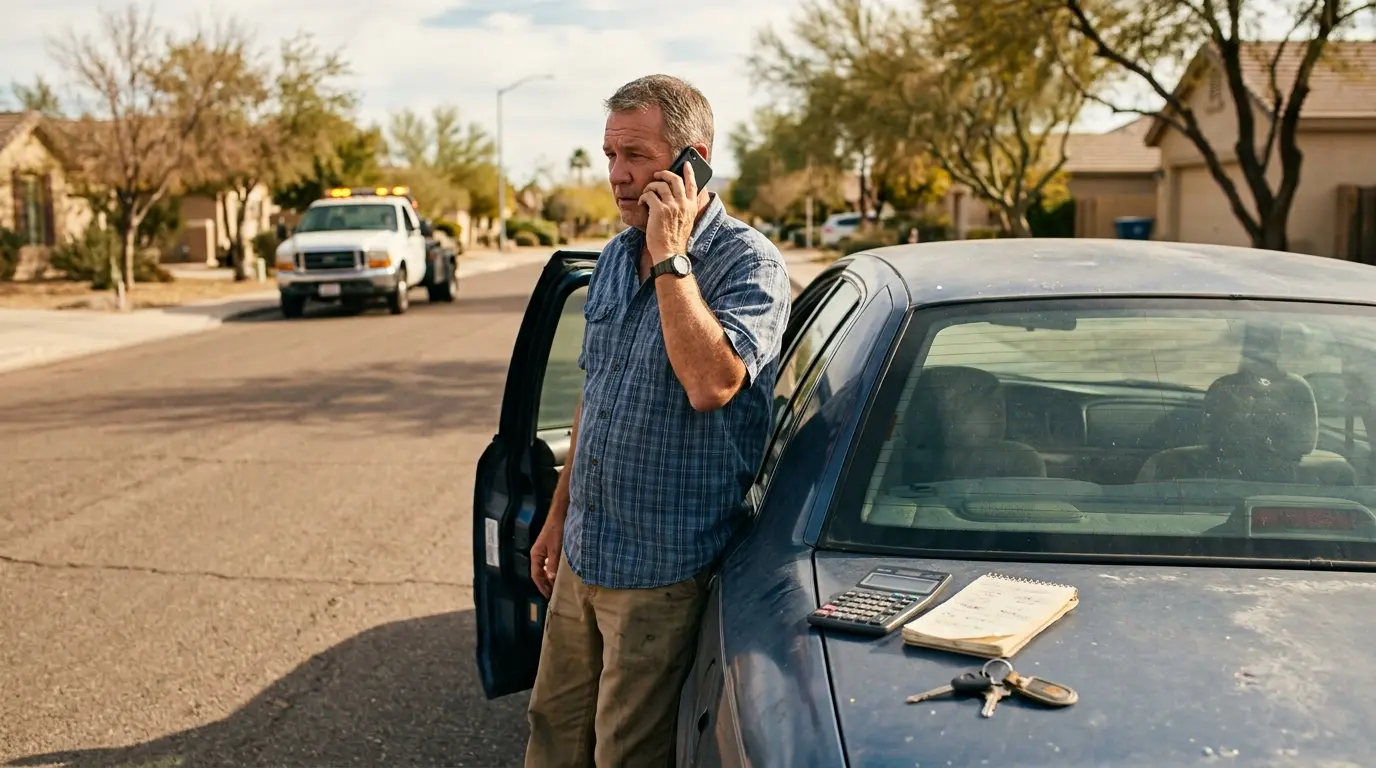
| Driver type | Verdict | Reason |
| Older car | Worth it | Old batteries, belts and tires fail more often, so calls add up |
| Long commuter | Worth it | More miles mean more chances to break down, and a high tow cap helps |
| Teen driver | Worth it | New drivers lock keys inside and leave lights on, and parents get peace of mind |
| Family with kids | Worth it | Waiting in Phoenix heat with kids is risky, so fast help matters most |
| New car under warranty | Maybe not | The maker often covers roadside help already |
Worth It If
You call for help more than once a year. Your battery is 3 to 5 years old, or your tires are worn. You drive a long way to work. In these cases, a plan can pay for itself fast.
May Not Be Worth It If
You drive little, your car is new, or a card or car maker already covers you. A second plan on top of that adds cost and little else. In that case, pay per call and save the yearly fee.
Quick Break-Even Check
Divide the annual fee by the average price of one call. Say a call costs $75. A $64.99 plan breaks even at 0.87 calls, so one call pays it back. A $124.99 plan breaks even at 1.67 calls, so two calls cover it. If you expect fewer calls than that, pay per call. Count your mileage and your battery age when you guess.
Roadside Assistance in Phoenix AZ
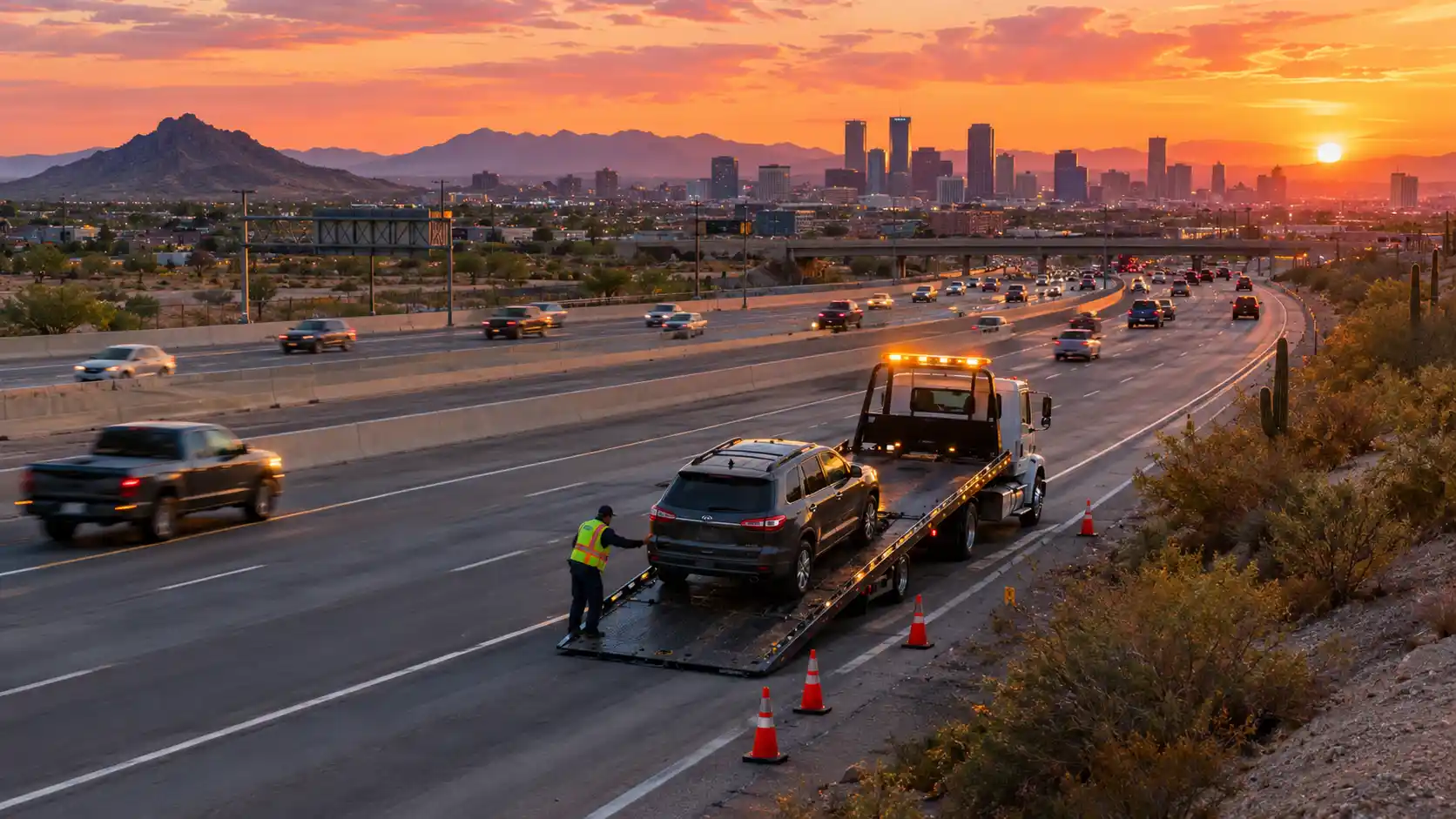
Why Summer Breakdowns Hit Harder
Heat kills batteries. A battery that lasts 5 years in a mild place can quit in 2 or 3 here. Hot pavement also raises tire pressure and weakens rubber, so blowouts rise in summer. The risk grows once you stop. NHTSA says the inside of a closed car can climb almost 20 degrees in 10 minutes. Read the NHTSA vehicle heatstroke page before summer starts.
Most Common Phoenix Calls
- Dead battery. Heat wears the battery down, and the car won’t start.
- Flat tire. Hot roads and worn tread lead to blowouts on the freeway.
- Lockout. Keys end up on the seat or in a hot trunk.
- Overheated engine. Turn the engine off and wait. Do not open a hot radiator cap. Call for a tow if it will not cool.
Where Help Reaches
Redline covers Phoenix, Avondale, Tolleson, Laveen and the rest of the West Valley. That includes calls on I-10, Loop 101, Loop 202 and Loop 303. If you break down near a ramp or on a shoulder, tell the dispatcher the nearest exit.
What to Do While You Wait
Get Safe First
Turn on your hazard lights. Pull onto the shoulder as far right as you can. On a freeway, stay in the car with your seat belt on unless a fire or smoke forces you out. Standing next to traffic is more dangerous than sitting in a stopped car.
Heat Safety
Run the AC if the engine works. If not, open the windows and sit in shade if you can reach it safely. Drink water. Watch for dizziness, nausea and heavy sweat, which are signs of heat illness. Never leave kids or pets in a parked car, not even for a minute.
When to Call 911 Instead
Call 911 for an injury, a fire, or a car blocking a lane. Roadside techs cannot treat people or put out fires. Arizona drivers must also move over or slow down for any vehicle with flashing lights on the shoulder. Read the Arizona Move Over law on azleg.gov and check the current statute for updates. ADOT also explains it in a short Move Over guide.
How to Choose a Provider
| Check | What good looks like |
| Live dispatch | A person answers 24/7 and gives updates |
| Honest ETA | A real window, like 10 to 25 minutes, and a call if it changes |
| Upfront price | A quote on the phone before the truck rolls |
| Licensed and insured | Proof on request, which protects your car |
| Flatbed on hand | A safe tow for low, all-wheel-drive and dead cars |
| Local | Drivers who know the freeways and the West Valley |
Red Flags
Walk away from a very low price on the phone that grows at the curb. That is bait pricing. Skip any company with no dispatcher phone, only a web form. Be wary of a vague ETA like “soon.” A real company gives you a time range.
Call Redline Roadside & Towing LLC, 24/7
So what is 24/7 roadside assistance when you call us? You reach a live dispatcher, and a tech arrives in 10 to 25 minutes in Phoenix. We cover the West Valley around the clock. Our trucks handle:
- Light Duty Towing
- Medium Duty Towing
- Heavy-Duty Towing
- Accident Recovery
- Off-Road Recovery
Need a battery boost right now? Our 24/7 Jump Start in Phoenix service. For the full list of what we do, visit 24/7 Roadside Assistance in Phoenix. Curious how long a jump takes? Read How Long Does It Take to Jump a Car Battery.
Stuck right now? Call 602-549-8722 and get a tech on the way.
Conclusion
What is 24/7 roadside assistance worth on a 112 degree day? A lot, when your car won’t start and the heat keeps rising. Redline Roadside & Towing LLC gives Phoenix and the West Valley a live dispatcher and a fast truck at any hour. Call us the moment you need help.
Want to ask a question or plan ahead? Head to contact us and save our number before you need it.
FAQs
Is 24/7 roadside really every hour?
It should be. A true provider has a live dispatcher and a driver on duty every hour of every day, holidays included. Ask if a driver is on duty right now.
How fast does help arrive?
At Redline, 10 to 25 minutes in Phoenix. Other Phoenix providers list averages of 18 to 38 minutes. Traffic and heat can add time.
Do I need a membership?
No. Pay-per-call has no fee and no call limit. A plan pays off only if you call more than once or twice a year.
What does it cost without one?
Basic calls in the West Valley start around $65, and tows add a per-mile rate. Ask for the full price on the phone before the truck rolls.
Does it cover accident towing? No. Roadside plans skip accident towing. Accident recovery is its own job and runs $100 to $500 at Redline, based on the vehicle and the scene.
Can someone else call for me?
Yes. A friend or family member can call. They need your exact location, your vehicle details and the problem. Plans that cover the person may need the member’s name.