You are stuck with a zero tank. Here’s how does fuel delivery work: You call, provide your location and a technician comes to you with petrol or diesel. They hold enough litres to transport you to the nearest station. Most drops in Phoenix take 10 to 25 minutes, and you pay for the fuel and a service fee.
This tutorial covers the steps, cost, fuel delivery vs hauling, and safety. Redline Roadside & Towing LLC provides 24/7 fuel delivery in Phoenix, therefore the rates and timeframes listed below are from actual calls, not estimates.
Fuel Delivery in Short: Three Types and Which One Is Yours
Fuel delivery is not one service. Three kinds exist, and each fits a different need.
| Type | Who uses it | How it is ordered | How much fuel | Typical wait |
| Roadside emergency | Drivers who ran dry | Phone call, live GPS location | A few gallons | 10 to 25 minutes |
| Home and business tank delivery | Homes, farms, shops | Schedule ahead | Hundreds of gallons | Same day to a few days |
| Fleet and on-site fueling | Companies with many vehicles | Contract and schedule | Full tanks | Set by schedule |
Roadside Emergency Fuel Delivery
This is the one most drivers need. A service truck brings gas or diesel to your car so you can drive to a station.
Home and Business Tank Delivery
Bobtail trucks fill large tanks at homes and shops. They carry propane, heating oil, and diesel. These deliveries are planned, not urgent.
Fleet and On-Site Fueling
Mobile fueling trucks fill fleet vehicles on the lot, often overnight. Off-road equipment may use dyed diesel, which is taxed differently and is not for road use.
How Emergency Fuel Delivery Works Behind the Scenes
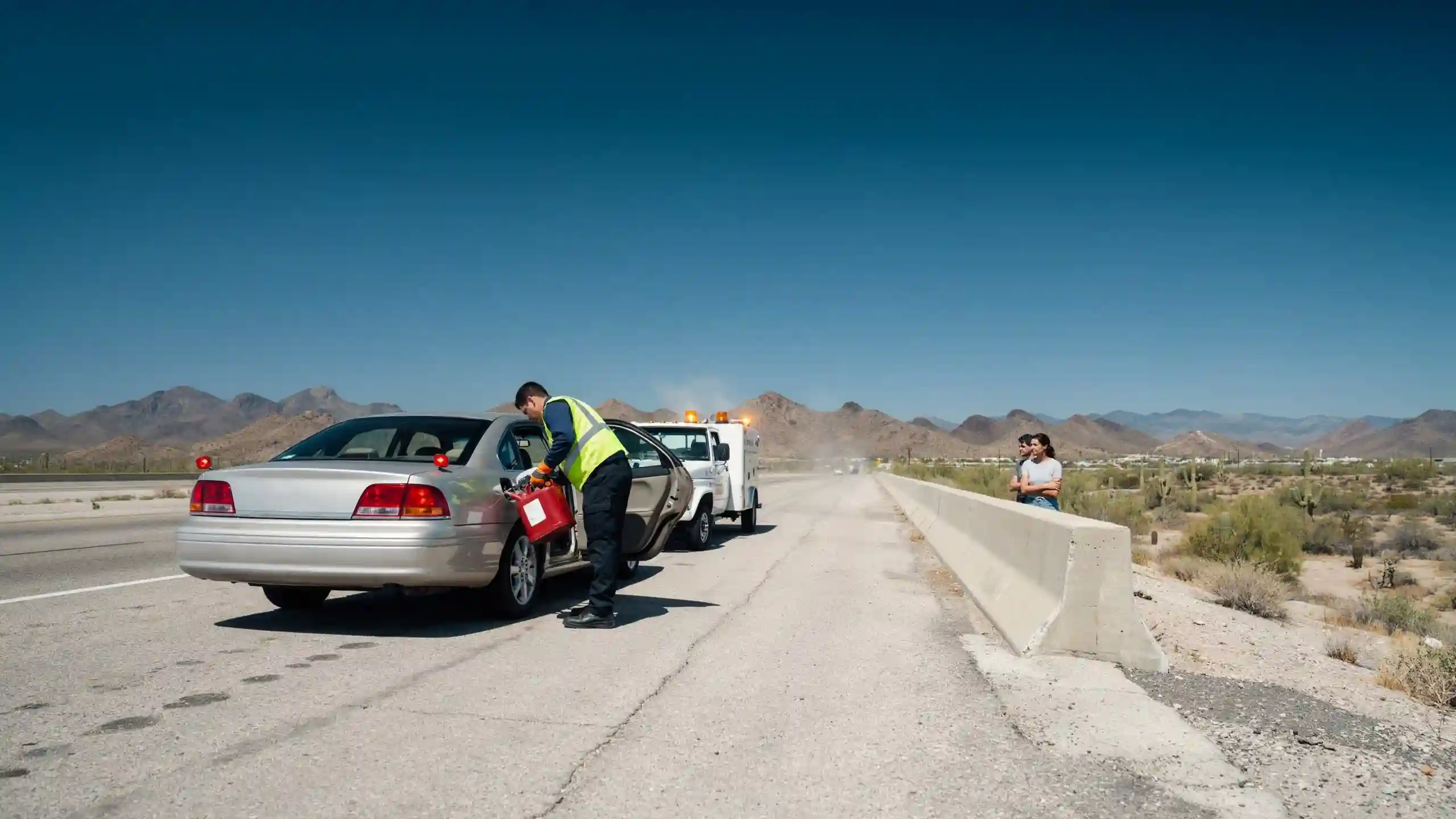
How emergency fuel delivery works starts with the dispatcher. They read your GPS location and send the closest service truck. That cuts drive time and gets you moving sooner.
The truck carries gasoline, diesel, or both. Fuel goes into your car from approved containers or a transfer tank with a metered pump. The driver is trained and licensed, and the truck is built for safe fuel handling. A 24/7 dispatch desk means a night call gets the same response as a noon call. Response time depends on where the truck is when your call comes in.
Step-by-Step Roadside Fuel Delivery From Call to Restart
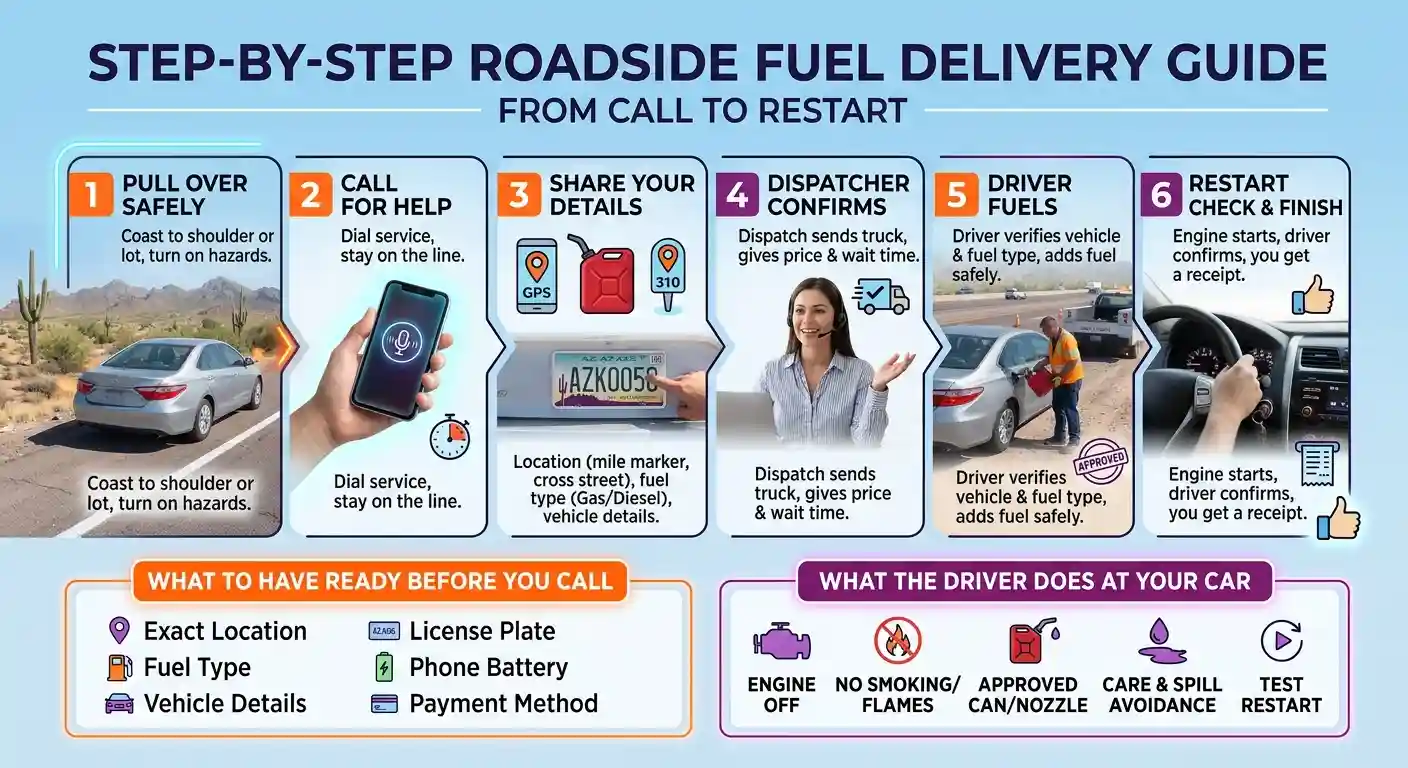
- Pull over safely. Turn on your hazard lights and coast to the shoulder or a parking lot.
- Call for help. Dial your fuel delivery company and stay on the line.
- Share your location and fuel type. Give the mile marker, cross street, or landmark. Say gas or diesel.
- The dispatcher confirms and sends a truck. You get a price and a wait time before anyone drives out.
- The driver verifies and fuels. They check your vehicle and fuel type, then add fuel.
- Restart check. The engine starts, the driver confirms it runs, and you get a receipt.
What to Have Ready Before You Call
- Your exact location, such as a mile marker or cross street
- Fuel type: gas or diesel
- Vehicle make, model, and color
- License plate number
- A phone with battery left
- A way to pay
What the Driver Does at Your Car
The driver asks you to turn the engine off. No smoking and no open flames, since fuel vapor ignites easily. They use an approved can or a nozzle, pour with care, and avoid spills. Then they ask you to test the restart.
How Much Fuel You Get, How Long It Takes, and What It Costs
| Item | What to expect |
| Wait time | 10 to 25 minutes in Phoenix |
| Service fee | Typically $50–$95 in Arizona, excluding fuel costs. Actual pricing varies by location and distance. |
| Fuel price | Charged separately based on the current local gas or diesel price and the amount delivered. |
How Much Fuel You Get
The goal is to get you to the nearest station, not to fill the tank. A few gallons covers that. Ask the dispatcher if you need more.
Wait Time and What Slows It Down
Redline’s real arrival time is 10 to 25 minutes. Heavy traffic, a crash on the freeway, or a dust storm can add time. Rush hour on the I-10 is the usual cause.
What the Bill Includes
You pay a service call fee plus the price per gallon. Some companies add an after-hours surcharge. Ask for the full total on the phone before the truck leaves.
Fuel Delivery Versus Towing: Which One Do You Need?
| Situation | Best choice | Why |
| Empty tank | Fuel delivery | A few gallons fixes it |
| Faulty gauge | Fuel delivery first | Add fuel, then get the gauge checked |
| Car will not restart after fuel | Tow | Something else is wrong |
| Unsafe location | Tow, or call 911 | Safety comes first |
| Wrong fuel in tank | Tow | Running it can damage the engine |
| Diesel that will not prime | Tow, or a diesel-ready technician | Air in the lines needs more than fuel |
When Fuel Delivery Is Enough
If you simply ran dry and the car starts after fueling, you are done. This is also the cheaper fix, since a tow cost adds miles and a flatbed.
When Towing Is the Better Call
Wrong fuel needs a tow, because starting the engine can spread bad fuel through the system. A bad fuel pump or clogged fuel filter also means a shop visit. Not sure how to order one? Read our guide on how to call a tow truck.
Gas, Diesel, and Special Cases
- Diesel: After it runs dry, the system often needs to be primed or bled to clear air.
- Hybrids: They still use gasoline when the battery is low.
- Box trucks and RVs: They hold more fuel, so they may need a bigger delivery.
- Motorcycles: They need a small amount, poured with care.
- Electric vehicles: They need charging, not fuel.
Common Misconceptions and Safety: What Is True and What Is Not
Myths vs Facts
| Myth | Fact |
| They fill the whole tank | Most drops give enough to reach a station |
| It only works in cities | Trucks cover freeways and the West Valley too |
| It is free | You pay a service fee plus the fuel |
| It takes hours | Redline arrives in 10 to 25 minutes |
| Running on fumes is fine | It can pull debris into the fuel pump and leave you stranded |
Safety While You Wait
Keep your hazard lights on. Arizona’s Move Over law, A.R.S. 28-775, tells drivers to change lanes or slow down near a stopped vehicle with flashing lights. Follow the dispatcher’s advice. Stay belted in, or step out on the side away from traffic. Do not walk along the highway shoulder.
Idling to run the AC while you wait is common, but the U.S. Department of Energy says idling can use a quarter to a half gallon of fuel per hour. Plan for that if your tank is nearly dry.
Safety at the Fueling Step
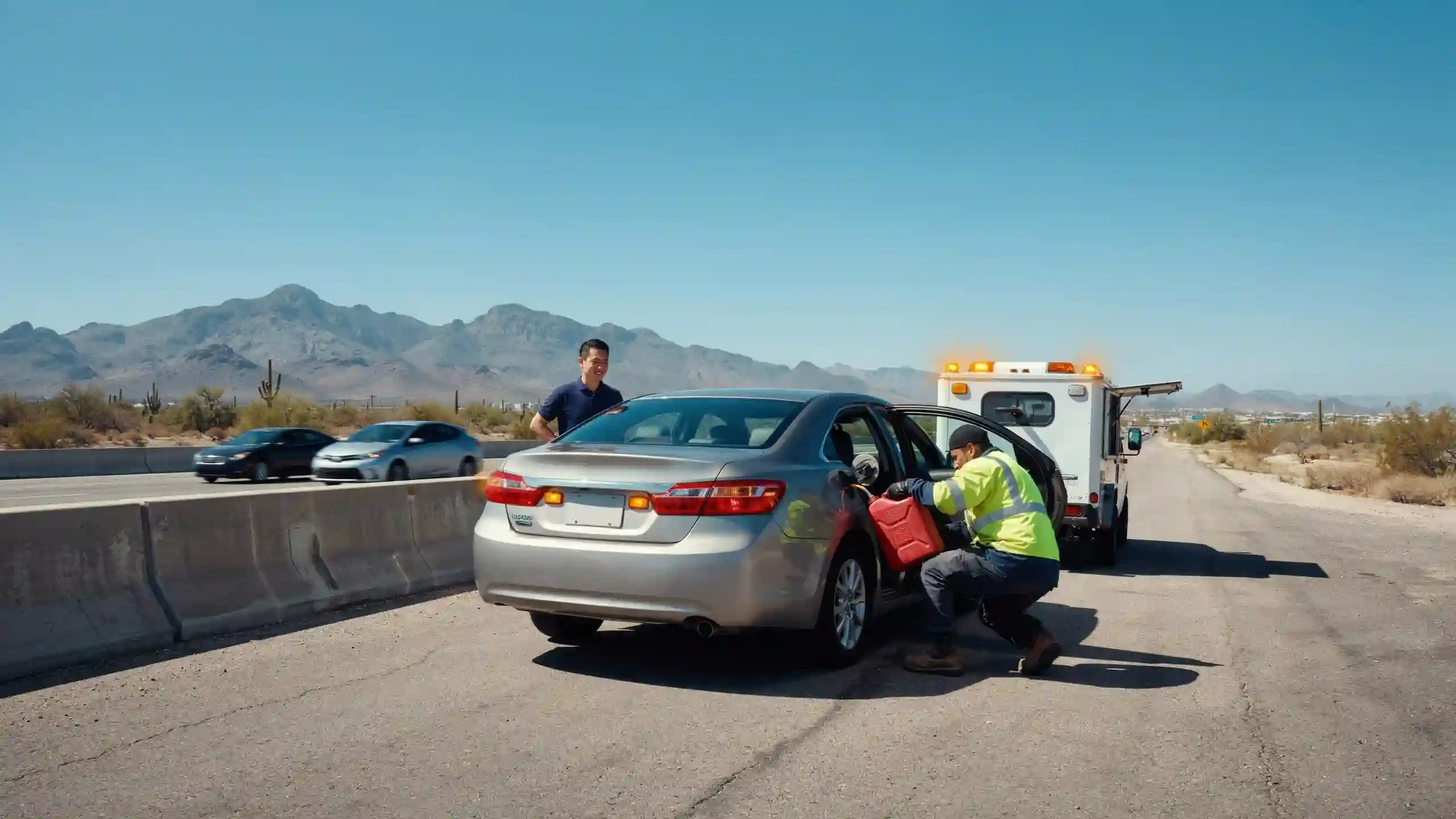
Check the driver’s ID and the company name on the truck before they touch your car. Keep the engine off and do not smoke. Confirm fuel type with the driver so gas never goes into a diesel tank.
How to Avoid Running Out of Fuel in Phoenix Heat
- Refill at a quarter tank. Do not wait for the light.
- AC idling in freeway traffic burns fuel fast.
- Check a stuck gauge by using your trip odometer and range estimator.
- Plan fuel stops before long freeway stretches, where the shoulder is the only place to stop.
Want a fuller picture of what help is out there? See what is 24/7 roadside assistance.
Call Redline for 24/7 Fuel Delivery in Phoenix
Redline Roadside & Towing LLC answers calls day and night. Our dispatchers send the closest truck, and drivers reach you in 10 to 25 minutes. We serve Phoenix, Avondale, Tolleson, Laveen, and the West Valley, with gas and diesel on board.
Out of fuel on a hot Phoenix road? 24/7 Fuel Delivery in Phoenix AZ at (602) 549-8722 now and a truck will be on its way.
Conclusion
Now you know how fuel delivery works: a call, a location, a truck, and a restart in minutes. Redline Roadside & Towing LLC brings fuel across Phoenix and the West Valley at any hour. Call us the next time your gauge hits empty.
Have a question or need to plan ahead? Reach out we’re happy to help and will get back to you as soon as possible.
FAQs
How does fuel delivery work in an emergency?
You call a dispatcher and share your GPS location and fuel type. They send the closest truck. A licensed driver brings gas or diesel, fuels your car with a metered pump or approved can, and checks that the engine restarts. You pay for the fuel plus a service fee.
How much fuel does a delivery bring?
Enough to reach the nearest station, usually a few gallons. Ask the dispatcher if you need more.
Is fuel delivery cheaper than a tow?
Often yes, if the tank is the only problem. A tow adds mileage and flatbed time. Compare both totals on the phone.
Can fuel delivery bring diesel?
Yes. Tell the dispatcher you drive diesel when you call, since diesel may also need priming.
Is fuel delivery available at night?
Yes. Redline runs 24/7 dispatch, so night calls get a truck too.