Bringing along a trailer may seem intimidating at first, so this how to tow a trailer safely for beginners breaks it all down into simple steps that any novice can follow.
Here, you won’t find an overt sales pitch instead you will find an easy checklist-style guide designed specifically to assist real drivers who wish to connect their trailer and travel without hassles or stress.
Know Your Vehicle’s Towing Capacity First
Before attaching anything, the most crucial number you require is your vehicle’s towing capacity – this indicates how much weight can safely be pulled by it.
Towing capacity depends on a range of variables, from engine power and transmission strength to brake performance and frame design. Automakers conduct tests on every vehicle model they manufacture in order to set this limit and rate each one accordingly.
Gross Combined Weight Rating (GCWR), or the total weight of your vehicle with passengers and cargo inside it plus what it tows as cargo trailer, and payload capacity are two related numbers you need to know before towing with any trailer. Mixing them up is one of the more frequent beginner mistakes and must not happen.
Where to Find Your Real Towing Capacity
- Check your owner’s manual first. It lists exact numbers for your trim and engine.
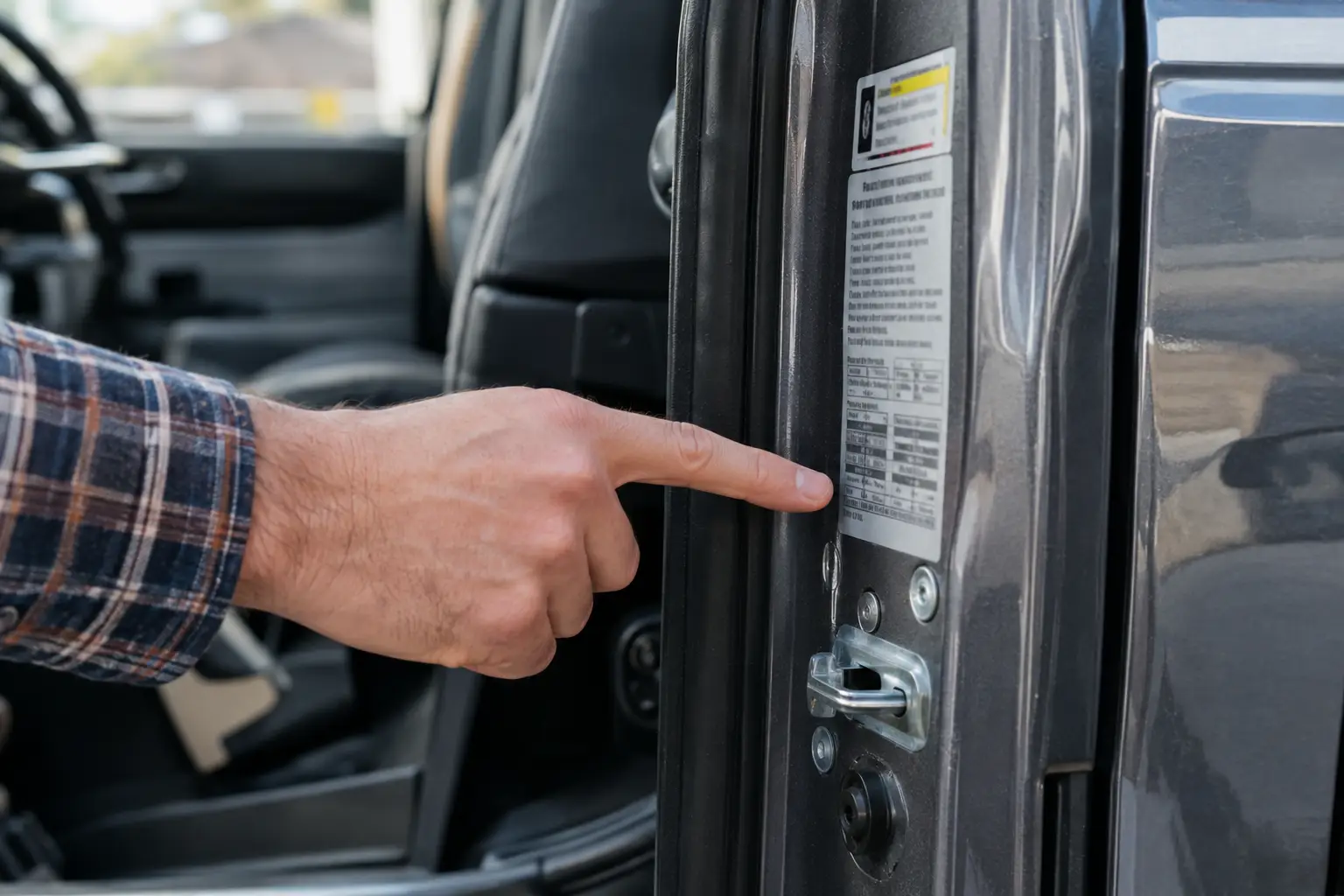
- Look at the sticker inside the driver’s door jamb for GCWR and payload figures.
- Find your VIN and call the dealer if you bought the vehicle used and lost the manual.
Do not estimate a truck’s towing capability by looking at what another similar one can tow; even small differences in engine, axle ratio or trim level could alter this number by thousands of pounds.
As a rule of thumb, aim for keeping your vehicle around 20% under its maximum rated capacity. So if it can handle up to 8,000 pounds, keep its load closer to 6,400 pounds to provide ample breathing room for cargo, passengers and hot weather which reduce engine performance.
Read more What Is Towing Capacity
Choose and Attach the Right Hitch
Once you know what your vehicle can handle, you need towing equipment that matches it. Hitches come in five classes, based on weight.
| Hitch Class | Max Trailer Weight | Common Use |
| Class I | Up to 2,000 lbs | Small utility trailers, bike racks |
| Class II | Up to 3,500 lbs | Light campers, small boats |
| Class III | Up to 5,000 lbs | Mid-size boats, travel trailers |
| Class IV | Up to 7,500 lbs | Larger campers, car trailers |
| Class V | Up to 10,000+ lbs | Heavy equipment, large RVs |
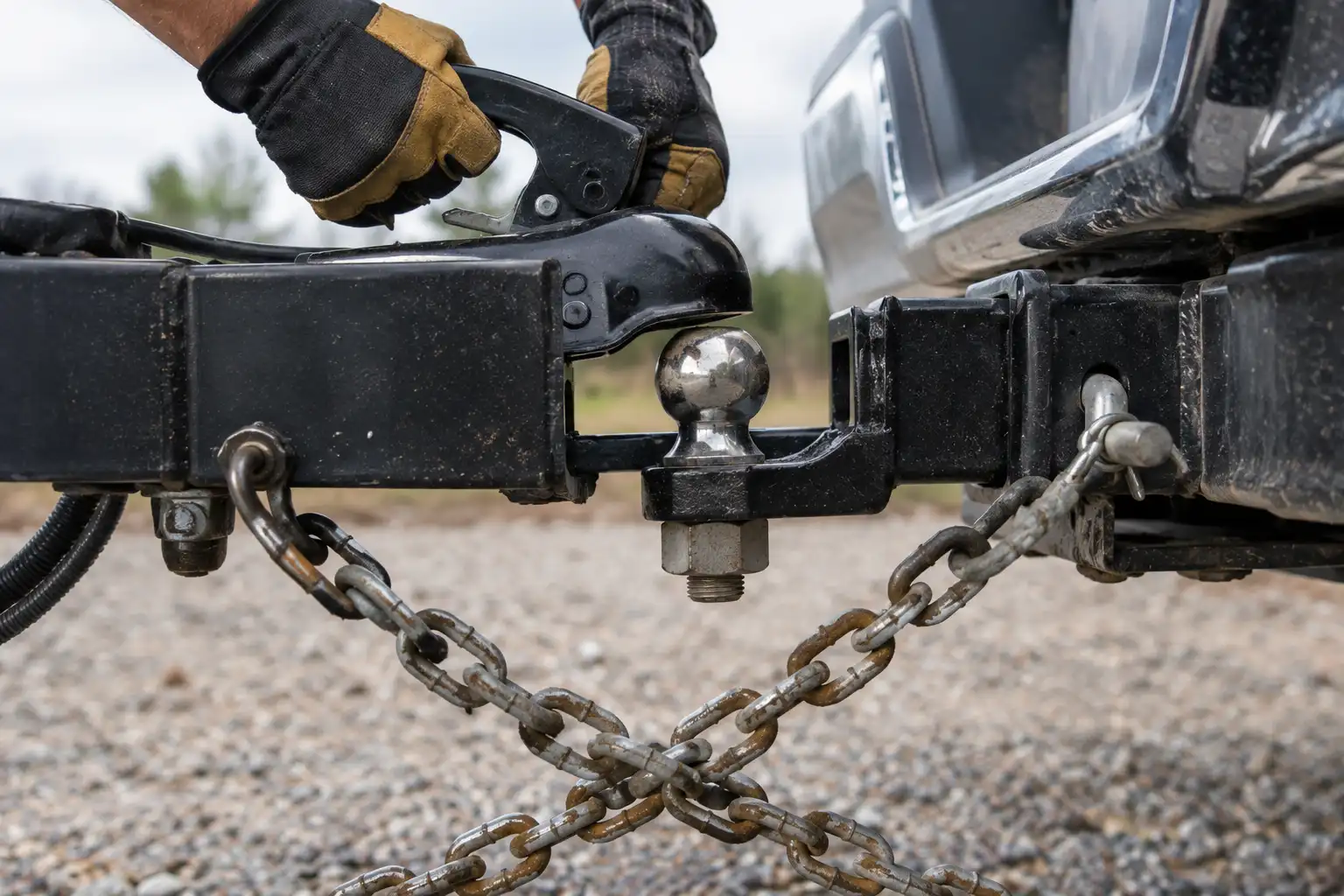
Your hitch ball size also has to match your trailer coupler exactly. Common sizes are 1 7/8″, 2″, and 2 5/16″. A mismatched ball and coupler can pop apart on the road, even if it looks connected.
For heavier loads, a weight distribution hitch spreads the trailer’s tongue weight across both the tow vehicle and trailer axles. This keeps the back of your vehicle from sagging and improves steering control.
How to attach safety chains the right way:
- Cross the chains under the trailer tongue in an X pattern.
- Leave enough slack for turns, but not so much that the chains drag.
- Hook each chain to a solid point on the vehicle frame, not the bumper.
- Check that both hooks are fully latched before you move.
The crossed pattern matters. If the hitch fails, the X shape catches the tongue and keeps it from hitting the ground.
Load the Trailer the Right Way
How you load a trailer affects its handling just as significantly as how it’s hitched; an uneven distribution of weight being one of the major sources of trailer sway.
Use the 60/40 rule when loading cargo onto your trailer: place roughly 60% in front near axles, leaving 40% for back storage – this way your load stays balanced without placing undue stress on your hitch and axles.
Create the appropriate tongue weight by attaching your trailer properly, which measures its downward force on your hitch ball and should account for 10-15 percent of total trailer weight. Too little tongue weight causes sway while too much can push down on the rear tires of the tow vehicle while lifting front tires up, impairing steering and braking capability.
Spread weight equally across both sides. A trailer that leans too heavily toward one side makes controlling and wearing tires unevenly much more challenging, leading to uneven tire wear and tire replacement costs.
Pre-Drive Safety Checklist
Run through this checklist every single time before you tow, even on short trips.
Tires
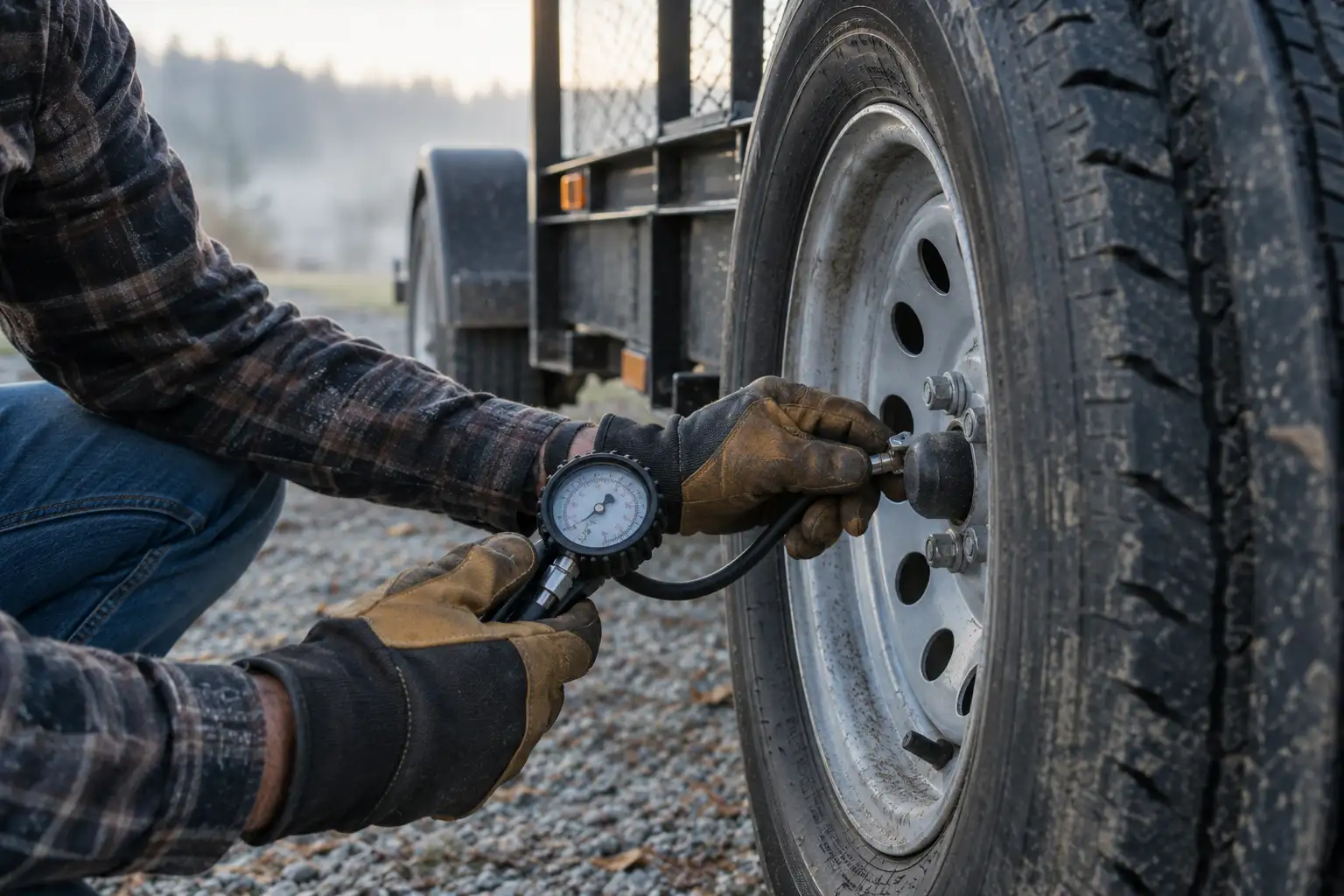
- Check pressure on both your vehicle and trailer tires against the recommended PSI.
- Look for cracks, bulges, or uneven wear.
- Confirm lug nuts on the trailer wheels are tight.
Lights and signals
- Plug in the trailer wiring and test brake lights, turn signals, and running lights.
- Check that hazard lights work on both the vehicle and trailer.
Hitch and chains
- Confirm the coupler is fully latched and locked onto the ball.
- Recheck that safety chains are crossed and hooked securely.
- Make sure any electric brake controller is connected and working.
Tie-downs and cargo
- Test that straps or tie-downs are tight.
- Confirm nothing can shift, slide, or fall out during the drive.
Mirrors
- Adjust side mirrors so you can see down both sides of the trailer.
- Add extended towing mirrors if your factory mirrors do not give a clear view.
Pull over after the first few miles and check everything again. Straps loosen and connections settle once you’re actually moving.
Practice Before You Hit the Road
Trailer towing tips for beginners always mention practice, and for good reason. An empty parking lot is the safest place to learn.
Backing up: Put one hand at the bottom of the steering wheel. Move that hand in the direction you want the back of the trailer to go. Turn in small amounts. A little steering input moves the trailer a lot.
Turning: The trailer follows a tighter path than your vehicle. Swing wider than feels natural so the trailer clears curbs and corners.
Parking: Pick spots with plenty of open space around you. Skip tight spaces until you’ve had more practice.
Bring a spotter if you can. A second set of eyes catches obstacles you cannot see from the driver’s seat.
Driving Tips While Towing
Once on the road with a trailer in tow, your driving habits must adapt accordingly. Strictly adhere to gentle acceleration and breaking as sudden movements could unsettle it and increase risk. Provide yourself extra following distance as stopping may take more time with so much extra weight onboard.
Use it – If your truck comes equipped with a tow-haul mode, take full advantage of it – to optimize shifting and engine braking to manage speed on hills. And for frequent towing sessions, installing a trailer brake controller might prove worthwhile, applying trailer’s own brakes in sync with vehicle brakes to shorten stopping distance and reduce wear on both sets of brakes, shortening stopping distance while decreasing wear on yours and the trailer’s.
Trailer sway happens when the trailer starts moving side to side on its own, often from wind, a passing truck, or uneven loading. Here’s how to correct it:
- Ease off the gas. Do not brake hard, since this can make the sway worse.
- Keep the steering wheel steady. Do not try to steer out of the sway.
- Let the trailer brakes (if equipped) or gentle vehicle braking slow you down gradually.
- Once speed drops and the sway settles, pull over to check your load and hitch setup.
Keep your speed moderate, especially on windy days or downhill grades, and always leave more room than you think you need.
What to Do If Something Goes Wrong on the Road
Even with good prep, things can go wrong. Knowing how to react keeps a small problem from becoming a dangerous one.
Warning signs to watch for:
- Grinding, clunking, or scraping sounds from the hitch area
- The trailer pulling to one side
- Repeated sway that does not settle after you slow down
- A tire that feels soft or a trailer riding lower on one side
What not to do:
- Do not slam the brakes during sway. This shifts weight suddenly and can cause a jackknife.
- Do not keep driving on a flat or damaged trailer tire, even a short distance.
- Do not try to fix a hitch or brake issue on the shoulder of a busy road.
When to pull over versus when to call for help:
If you catch a loose strap or a minor light issue, it is safe to pull into a rest area and fix it yourself. But if you have a tire blowout, a hitch that has come partly loose, or a trailer that will not stop swaying, get off the road completely and call for professional help. Trying to limp home on a compromised setup puts you and everyone around you at risk.
This is exactly the kind of situation Redline Roadside & Towing LLC handles every day. If your trailer setup fails on the road, or you need a trained team to recover a vehicle and trailer safely, Towing Service in West Valley AZ and surrounding areas is available for light duty, medium duty, and heavy-duty towing. Save our number before your next trip. It is a lot easier to call for backup than to handle a roadside trailer emergency alone.
Conclusion
Learning how to tow a trailer safely for beginners starts with knowing your vehicle’s limits, securing the hitch and load, and checking everything before hitting the road. Drive carefully, allow extra stopping distance, and stay prepared for trailer sway or other roadside issues.
If you face a trailer breakdown, tire problem, or towing emergency, Redline Roadside & Towing LLC is ready to help. Contact us for reliable towing and roadside assistance across West Valley, AZ.
FAQs
Are You Learning How To Tow A Trailer Easy?
No. Although learning the fundamentals takes practice and some time in an empty parking lot may help beginners feel confident when first beginning, most should become adept after several sessions and feel at home backing up quickly with practice. Backing Up becomes much simpler quickly!
What Is The 80% Rule When Towing
Some drivers practice towing using an 80-20 rule instead of the usual 20% buffer zone; both serve the same function – staying below your vehicle’s max towing capacity rather than exceeding it.
Do I require special permission to tow a trailer?
For most personal trailers, standard driver’s license should suffice – though rules may change once your combined weight of both car and trailer exceeds certain weight thresholds set by state DMV sites; check them first if towing anything unusually heavy!
How fast should I drive while towing?
Trailer tires typically have lower speed ratings than your vehicle tires (usually 65mph or lower), so always refer to your trailer tire sidewall and follow posted limits that may differ based on tow vehicles versus non tow vehicles when towing trailers.