What is the 80/20 rule for towing? It’s a simple safety habit. You keep your loaded trailer at or below 80% of your vehicle’s max towing capacity. The other 20% is your cushion. If your truck is rated to tow 10,000 pounds, you plan for 8,000. That gap gives you more room to brake, climb hills, and stay in control.
Redline Roadside & Towing LLC pulls heavy loads across Phoenix around the clock, so we know what an overloaded rig looks like on the shoulder. This guide shows the math, the weights that count, and what to do if your trailer is too heavy.
What Is the 80% Rule for Towing?
The 80% rule is a rule of thumb. Drivers, RV clubs, and tow pros have passed it around for years because it works. Your vehicle has a maximum towing rating from its maker. The rule says to stay well under that number and never sit right on it.
Think of the rating as the most the truck can do on a good day, with fresh brakes, cool air, and a flat road. Real trips rarely look like that. A 20% buffer covers wind, hills, heat, and a trailer that weighs a bit more than the sticker says.
Here are two quick cases. A truck rated for 7,000 pounds should tow no more than 5,600. A small SUV rated for 3,500 should stop at 2,800.
Is the 80/20 Rule for Towing the Same Thing?
Yes. The names 80/20 and 80% describe one idea. You use 80% of your rating and leave 20% unused. Some drivers call it the 20% safety margin. The math and the result are the same.
The 80/20 rule in business and other fields is a different idea. Here, the numbers only compare your trailer’s weight to your vehicle’s tow rating.
How to Calculate Your 80% Towing Limit
You need two things: a rating you can trust, and a calculator.
Find Your Vehicle’s Max Towing Capacity
Start with the owner’s manual. The maker’s website works too, if you pick the exact year, engine, axle ratio, and cab style. Ratings can jump by thousands of pounds between trims of the same truck. The sticker on the driver’s door jamb lists weight ratings like GVWR and payload, but the tow rating itself usually lives in the manual. Skip dealer guesses and forum posts.
Do the Math
Multiply your max towing capacity by 0.8. The answer is your working limit.
| Max Towing Capacity | 80% Limit |
|---|---|
| 3,500 lb | 2,800 lb |
| 5,000 lb | 4,000 lb |
| 7,500 lb | 6,000 lb |
| 10,000 lb | 8,000 lb |
| 12,000 lb | 9,600 lb |
Compare that number to your trailer’s real weight, not the brochure weight. The next section shows which weight to use.
Which Weight Counts: Dry, GVWR, or Loaded?
Trailer makers advertise dry weight. That’s the trailer empty, with no water, propane, battery, or gear. Nobody tows a trailer like that. Your check needs the loaded weight, or at least the trailer’s GVWR, which is the most it’s built to weigh when full.
Trailer GVWR vs. Actual Loaded Weight
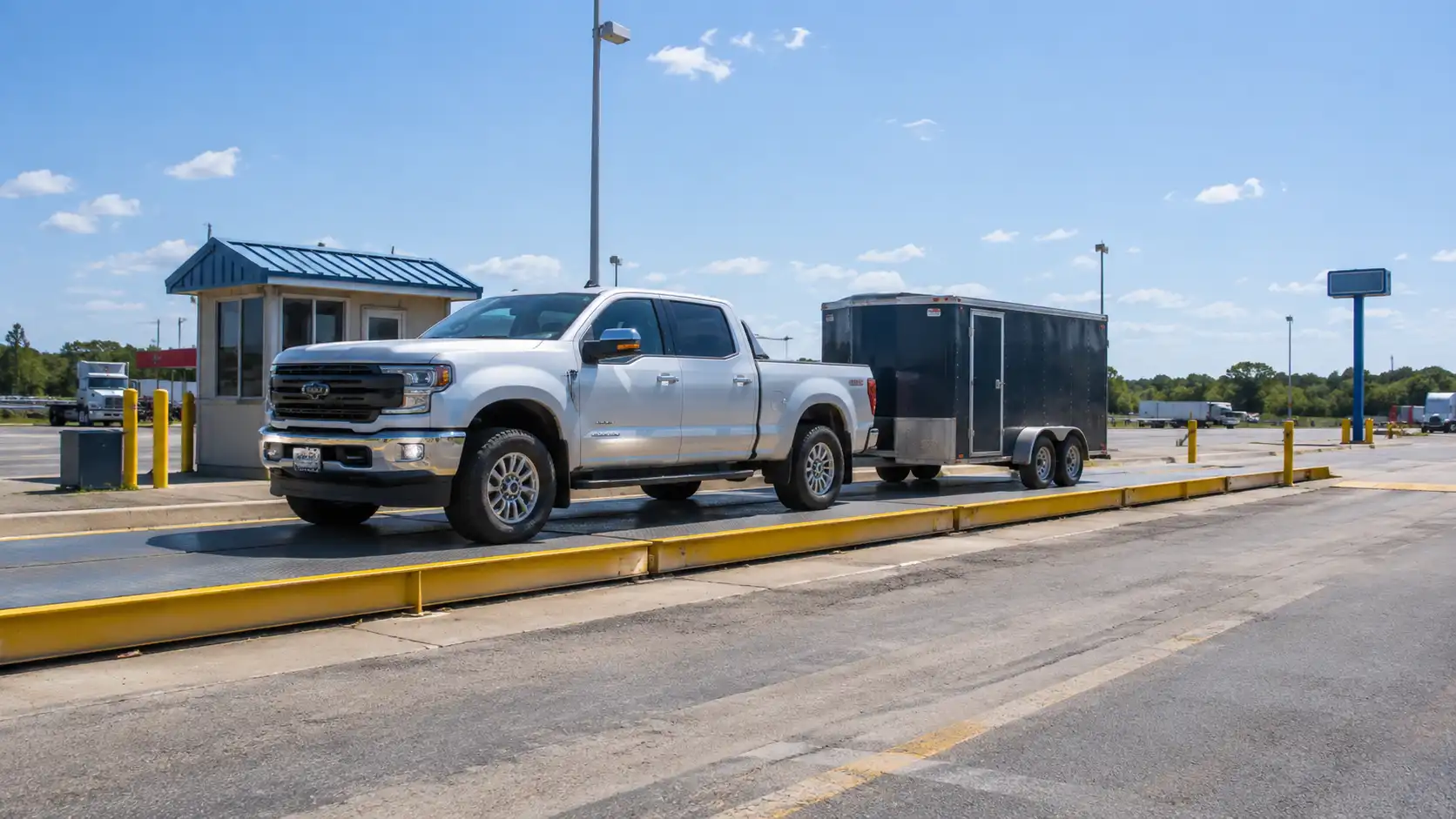
GVWR gives you a safe worst case. If it fits under your 80% limit, you’re covered no matter how you pack. For a tighter answer, weigh the loaded rig on a truck scale. Many truck stops have one, and the fee is small. Water adds up fast too. A 40 gallon fresh water tank holds about 330 pounds before you pack a single bag.
Tongue Weight, Payload, and GCWR in Plain Words
Three more numbers matter, and the 80% rule doesn’t replace any of them.
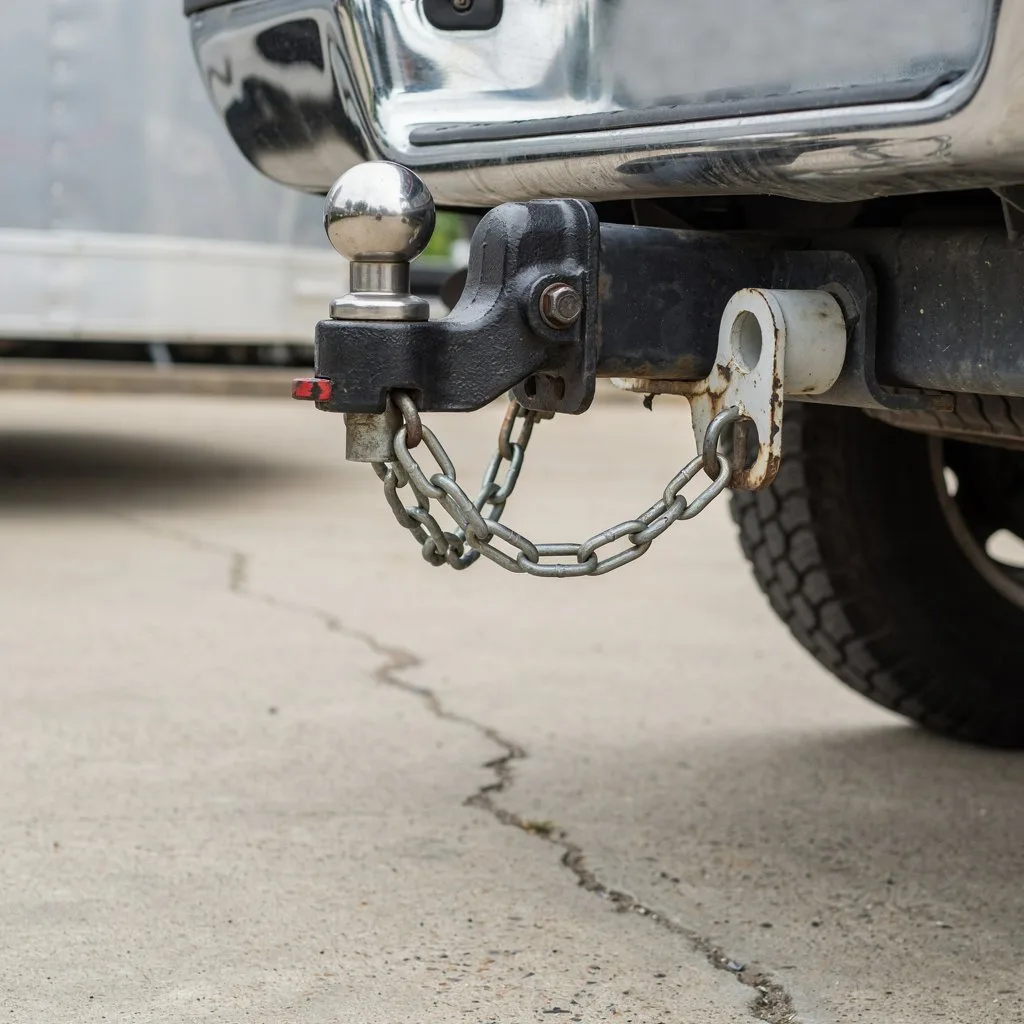
Tongue weight is the downward push the trailer puts on your hitch. For most travel trailers it runs about 10 to 15% of the trailer’s weight. Payload is how much your truck can carry in the cab and bed, and tongue weight counts against it. GCWR is the most your truck, trailer, people, and cargo can weigh all together. Many pickups run out of payload before they run out of tow rating, so check all three. Wikipedia explains these weight ratings well if you want the full picture.
Buying a Trailer? Run the Numbers First
Shopping for a camper? Use the trailer’s GVWR, not the dry weight on the listing, and check it against your 80% limit before you fall for a floor plan. A trailer that looks light on paper can land well over your limit once you add water, bikes, and a week of food. Used trailers carry a certification label with the real GVWR. Find it before you buy.
For a deeper look at ratings, read what towing capacity means.
Why Towing at 80% Is Safer
Weight changes how your truck behaves. A heavier trailer takes longer to stop, and your brakes get hot on long downhills. The engine and transmission also work harder on climbs, which builds heat fast. Close to the limit, a gust of wind or a quick lane change can start trailer sway, and a swaying trailer is hard to bring back under control.
Leave room and most of that goes away. Brakes last longer, the truck climbs without struggling, and you have space to react when traffic stops short.
Is the 80% Rule a Law or a Guideline?
No law sets 80% as the cutoff. It’s a guideline. The maker’s rating is the real ceiling, and you should never go over it. The 80% habit just keeps you far from that line. For the basics of hitching, braking, and loading, NHTSA publishes a free guide called Towing a Trailer: Being Equipped for Safety.
When to Tow Even Less Than 80%
Some trips call for more cushion than the rule gives you.
Steep Grades and Long Downhills
Mountain roads push your brakes and cooling system hard. Shift down before the descent starts, not halfway down it. On a long climb, a trailer near your limit can be too much for a truck with a small engine.
Phoenix Summer Heat
When it’s 110 degrees outside, your engine, transmission, and tires run hotter than the ratings assume. Tow early in the morning when you can. Check tire pressure while the tires are cold, and leave extra room to stop.
New Drivers and Borrowed Trailers
If you’re new to towing, or the trailer isn’t yours, aim well under 80%. Backing up, turning wide, and braking early all take practice. A lighter load forgives mistakes.
What 80% Looks Like in Real Life
A weekend camper: your truck is rated for 9,000 pounds, so your limit is 7,200. A camper with a 7,000 pound GVWR fits, with 200 pounds to spare.
A utility trailer: your SUV is rated for 3,500 pounds, so your limit is 2,800. A 1,200 pound trailer carrying 1,400 pounds of mulch weighs 2,600. That works.
A car hauler: your truck is rated for 10,000 pounds, so your limit is 8,000. A 3,000 pound trailer plus a 4,800 pound car adds up to 7,800. Add a toolbox and a spare tire, and you’re right at the line.
| Where You Tow | What It Feels Like | Risk |
|---|---|---|
| At or below 80% | Steady, normal braking, room to climb | Low |
| Near 100% | Slow on hills, long stops, more sway | High in heat, wind, and hills |
| Over 100% | Fading brakes, hard steering | Unsafe |
Mistakes That Push You Past the Limit
Most overloads come from small slips. People check the dry weight and forget the water. They load the truck bed with gear and ignore payload. They trust a sales tag instead of the trailer’s own label. Plenty of drivers also read the wrong truck’s rating, since a V6 and a V8 version of the same model can differ by thousands of pounds.
When you’re not sure, weigh it. A scale ticket beats a guess every time.
Trailer Too Heavy? Let a Pro Move It
Sometimes the math says no. Maybe the trailer is too big for your truck, or you bought a rig and can’t get it home. Don’t force it. Overloaded tows are how brakes fade and trailers swing out of lane.
Our 24/7 Heavy Duty Towing in Phoenix service moves trailers, campers, and heavy loads with a truck that fits the weight. Redline Roadside & Towing LLC dispatches around the clock, and a driver usually arrives in 10 to 25 minutes in Phoenix, Avondale, Tolleson, Laveen, and the West Valley. Call (602) 549-8722 right now and we’ll send a truck.
Conclusion
The 80/20 rule for towing is a simple, practical guideline: keep your trailer’s loaded weight at or under 80% of your vehicle’s rated towing capacity. It’s not a law, but it’s a buffer that accounts for real-world conditions your manufacturer’s rating doesn’t fully capture. Pair it with a real check of your tongue weight, payload, and GCWR, and you’ll have a much clearer picture of what your rig can actually handle.
If you’re ever unsure about your numbers, or you need help after towing trouble on the road, Redline Roadside & Towing LLC is here for you. Reach out to our team for a straight answer and dependable help, whether you’re planning a trip or dealing with a breakdown right now.
FAQs
Is the 80/20 rule official?
No. It’s not a law or an SAE standard. It’s a widely used safety buffer that RV owners and towing pros recommend.
What if I’m at exactly 80%?
You’re following the guideline correctly, but you should still check tongue weight and payload separately. Weight at 80% of GTW does not guarantee everything else is within limits.
Does the 80/20 rule apply to fifth wheels too?
Yes, the same math applies. Heavy fifth wheels often eat through that 20% buffer faster because of pin weight and onboard gear.
Is the 80/20 towing rule the same as the 80/20 Pareto rule?
No. The Pareto principle is a business idea about outcomes and effort. The towing version is a weight safety guideline. They just share a number.