
If your car battery dies, stay calm and check the signs first. Look for dim lights, a fast clicking sound, or a slow crank. Then try a safe jump-start. If that fails, call for help. Knowing what to do if car battery dies saves time and keeps you safe. Redline Roadside & Towing LLC helps Phoenix drivers with this every day.
This guide walks you through each step. You will learn how to spot a dead battery, jump it the right way, and know when a tow is the better call.
Quick Steps When Your Car Battery Died
Start here if you are stuck right now.
- Turn off the radio, lights, and fans.
- Put the car in park and set the parking brake.
- Check the signs: dim dash lights, clicking, or a slow crank.
- Look at the battery for cracks, swelling, or leaks.
- If the case looks fine, jump-start it with cables or a jump pack.
- If it will not start, or you have no gear, call roadside help.
Is It Really the Battery?
A bad starter or an empty tank can look like a dead car battery. Do this ten-second check first. Turn the key or press the start button and watch what happens.
| What you see or hear | What it likely means |
| Dim or flickering dash lights | Weak battery |
| Fast clicking, no crank | Battery has too little charge |
| Slow, struggling crank | Battery is low but not empty |
| Bright lights, one loud click, no crank | Starter or a loose cable |
| Nothing at all | Dead battery, loose clamp, or a car not in park |
| Car starts, then dies | Charging problem, not just the battery |
If the lights are bright and the engine still will not turn, a jump will probably not help. Skip to the section on calling for help.
If the Battery Dies While You Are Driving
This is a safety problem first. Do not panic.
- Turn on your hazard lights.
- Ease off the gas. Do not slam the brakes.
- Steer to the shoulder or a safe spot away from traffic.
- Shift to park and set the parking brake.
- Stay in the car on a busy road until help is near.
A healthy battery keeps an engine running once it has started. So a car that dies mid-drive often has an alternator or charging issue. A jump may get you moving for a few minutes. Get the charging system checked before you drive far.
Read more: How Long Does It Take to Jump a Car Battery
How to Jump-Start a Car With Cables
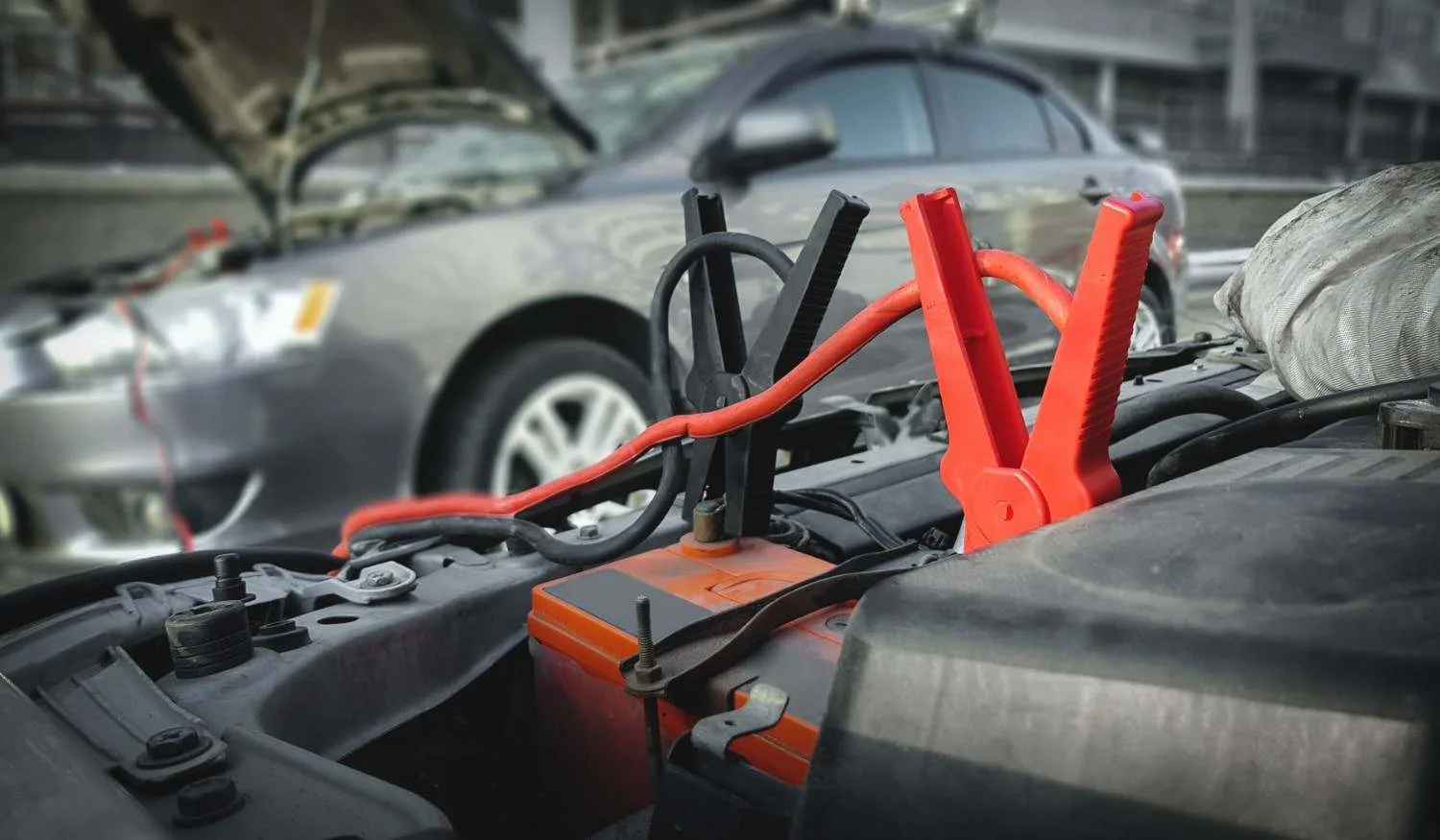
You need jumper cables and a second car with a good battery. Park the cars close, but do not let them touch. Read your owner’s manual first, because some cars have set jump points.
- Turn both cars off. Set both parking brakes.
- Open both hoods. Find the plus (+) and minus (–) marks on each battery.
- Clip one red clamp to the plus post of the dead battery.
- Clip the other red clamp to the plus post of the good battery.
- Clip one black clamp to the minus post of the good battery.
- Clip the last black clamp to bare, unpainted metal on the dead car. Use an engine bolt or a metal bracket, away from the battery.
- Start the good car. Let it run for two to five minutes.
- Try to start the dead car.
Once it starts, remove the cables in the reverse order. Take off the black clamp from the metal first. Then the black clamp from the good battery. Then the red clamp from the good battery. Last, the red clamp from the car that was dead.
Never let the clamps touch each other while they are connected. Keep flames and sparks away. Batteries can give off gas and hold acid.
No Second Car? Try These Options
A portable jump pack is the easiest fix. It is a small battery you keep in the trunk. Clip it on the same way as cables, then switch it on. Many packs can start a dead battery in about a minute. Check the charge on it every few months so it is ready when you need it.
A plug-in lighter charger is slower. It trickles power into the battery. It can help a weak battery but rarely revives an empty one.
If you drive a stick shift, a push start can work. You need a slope or two helpers. Turn the key on, press the clutch, shift into second gear, and get rolling at a walking pace. Then release the clutch fast. This does not work on most other cars.
For anything else, call for help.
When Not to Jump-Start
Stop and call for a tow or a pro if you see any of these:
- The battery case is swollen, cracked, or leaking.
- You smell rotten eggs near the battery.
- The terminals are badly crusted or melted.
- Two jump attempts failed.
- The battery is more than five years old.
- Your hybrid or EV manual says not to jump it.
Call Redline for 24/7 Jump Starts in Phoenix
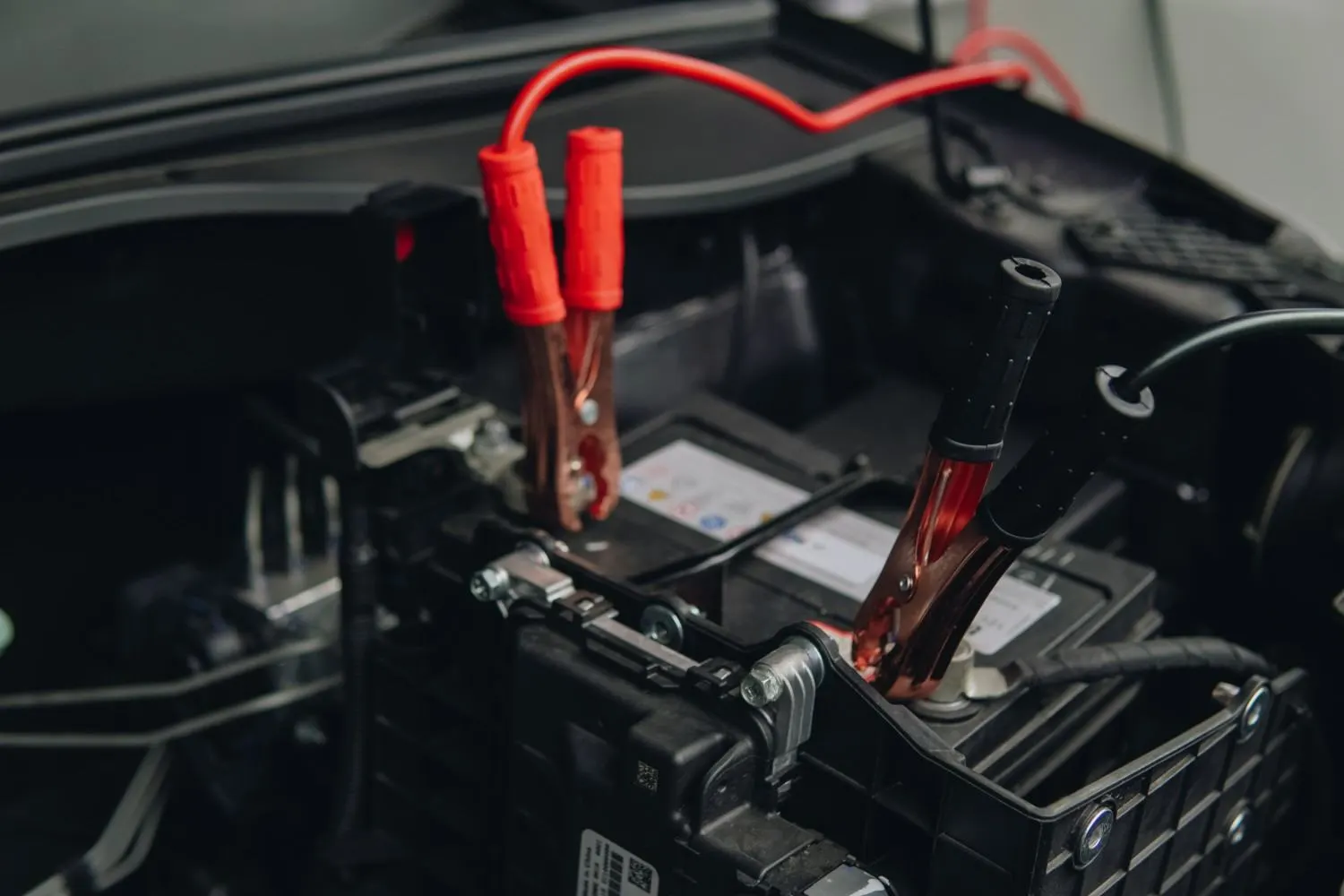
You do not have to fix this alone, especially in the Phoenix heat. A pro can test the battery, jump the car, and tow it if the jump does not work. Redline Roadside & Towing LLC sends a tech anywhere in Phoenix, usually in 10 to 25 minutes. That includes Avondale, Tolleson, Laveen, and the rest of the West Valley.
Need help now? Book 24/7 Jump Starts in Phoenix with Redline Roadside & Towing LLC. Call us any hour, and we will get you running again.
What to Do After the Jump
Do not shut the car off right away. Drive for at least 20 minutes, or longer on a hot day. Steady driving helps the alternator refill the battery. A short trip around the block is not enough.
Then get the battery and alternator tested. Many auto parts stores test them for free. A working charging system reads about 13.5 to 14.5 volts with the engine running. A much lower number points to the alternator. A new battery will not fix that.
If the car dies again within a few minutes, the problem is not just the battery.
What Does It Cost?
Typical US prices run like this. Verify local numbers before you publish.
| Item | Typical cost |
| Basic jumper cables | $20 to $50 |
| Portable jump pack | $60 to $150 |
| Battery and alternator test | Free to $30 |
| Mobile jump-start | $50 to $400 |
| New standard battery | $100 to $300 |
| New AGM battery | $200 to $400 or more |
| Short tow | $75 to $250 |
A jump costs far less than a tow. But a tow makes more sense when the battery is cracked, old, or will not hold a charge.
Why Batteries Die in Phoenix, and How to Prevent It
Heat is a top killer. Hot weather speeds up wear inside the battery. It can fail in summer even if it seemed fine in spring. Other common causes:
- Age. Most batteries last about three to five years.
- Lights or a phone charger left on.
- Corroded terminals.
- Short trips that never refill the charge.
- A dead key fob battery on some newer cars.
- The wrong battery type for your car.
To prevent a repeat:
- Get the battery tested before summer.
- Clean the terminals with baking soda and water.
- Park in shade or a garage when you can.
- Check the battery age once it passes four years.
- Keep a jump pack in the trunk.
For more on battery safety and care, see Battery Council International.
Conclusion
Now you know what to do if car battery dies: check the signs, jump it safely, and drive long enough to recharge. If it still will not start, a pro is the safest choice. Redline Roadside & Towing LLC is ready any hour with fast jump starts across Phoenix.
Stuck with a dead car battery right now? Contact us today and we will be there fast.
FAQs
Can a dead battery come back on its own?
Not often. An empty battery needs a jump or a charger. Waiting can shorten its life.
How long should I drive after a jump?
At least 20 minutes of steady driving. Short trips do not refill the charge.
Is it safe to jump a hybrid or EV?
It depends on the car. The small 12-volt battery is usually the one that dies. Some models have set jump points. Others say not to jump them. Check your manual.
How do I tell the battery from the alternator?
If the car will not start but runs fine after a jump, think battery. If it starts and then dies while you drive, think alternator.
What if it clicks but will not start after a jump?
The battery may be too far gone, or a clamp may be loose. Check the connections once.