If you ask what is vehicle recovery system, the short answer is this: it is the trucks, gear and tech used to get a vehicle back when it is stuck, wrecked, broken down or stolen. A recovery truck pulls a car out of a ditch. A GPS tracker helps police find a stolen one. Both bring your vehicle home.
The term has two meanings, and this guide covers both with costs and steps. Redline Roadside & Towing LLC handles the road side of it across Phoenix, day and night.
What Is a Vehicle Recovery System in Simple Words?
A vehicle recovery system is any truck, tool or tech that gets a vehicle back to safety or back to its owner. Most people mean one of two things. Some mean a tow truck with a winch and a flatbed. Others mean a GPS tracker linked to a monitoring center. The goal is the same. Your vehicle is stuck, wrecked or stolen, and you want it back.
| Physical Recovery | Tracking Recovery | |
| What it is | Tow truck, winch, flatbed, straps and a trained operator | GPS tracker, cellular link and a monitoring center |
| When it is used | Vehicle is stuck, wrecked, rolled or broken down | Vehicle is stolen or moved without you |
| Who does it | Recovery company or tow operator | Tracker provider working with police |
Jump to physical recovery or tracking recovery.
Roadside Vehicle Recovery: When a Tow Is Not Enough
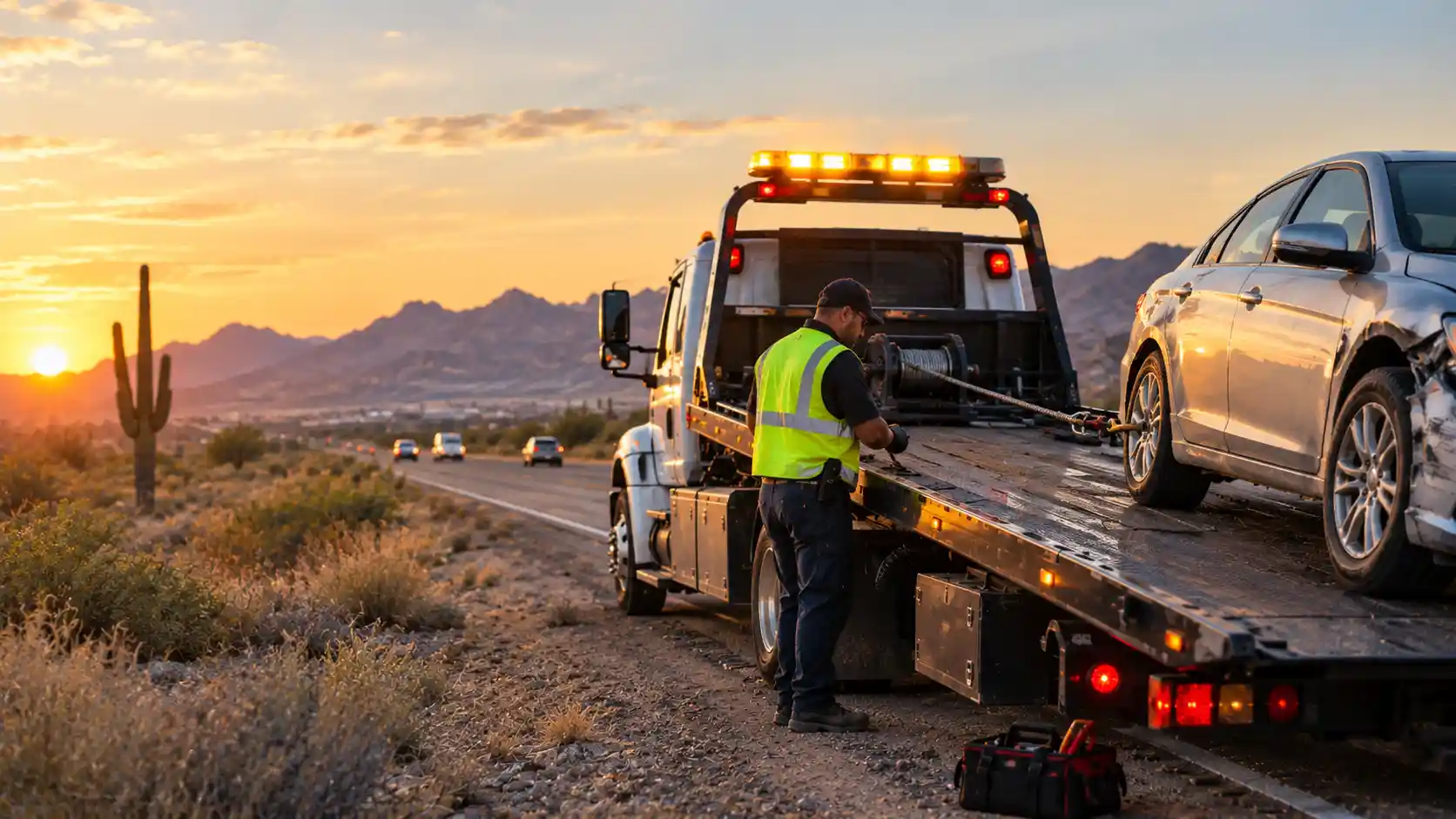
Roadside vehicle recovery starts where a plain tow ends. A tow moves a vehicle that can roll. Recovery handles one that cannot. Your car may sit in a ditch, bog down in sand or lie on its side. Someone has to get it onto firm ground before any tow can happen.
Common Roadside Recovery Jobs
- Ditch: The car slides off the road and sits below pavement level. A winch pulls it up the bank.
- Soft shoulder: The wheels sink into loose dirt next to the lane.
- Sand: The tires dig in and the frame rests on the surface.
- Washout: Rain cuts away the road edge, or a desert wash catches the vehicle.
- High-centered: The belly sits on a rock, curb or mound, and the wheels hang in the air.
- Rollover: The vehicle lands on its side or roof and needs a slow, controlled turn upright.
Recovery vs a Simple Tow
Recovery gets the vehicle back on the road or back on its wheels first. Then it is towed. A simple tow skips that first step. A wheel-lift lifts two wheels and drags the other two. A flatbed carries the whole vehicle on the bed.
If you are stuck, turn on your hazard lights and stay clear of traffic. Arizona’s Move Over law tells drivers to change lanes or slow down when they pass a stopped vehicle with flashing lights. That covers stranded drivers and tow trucks. Call a 24/7 dispatch line and describe the spot. Tell them if you are on the shoulder or off the pavement.
Accident Vehicle Recovery: How It Works Step by Step
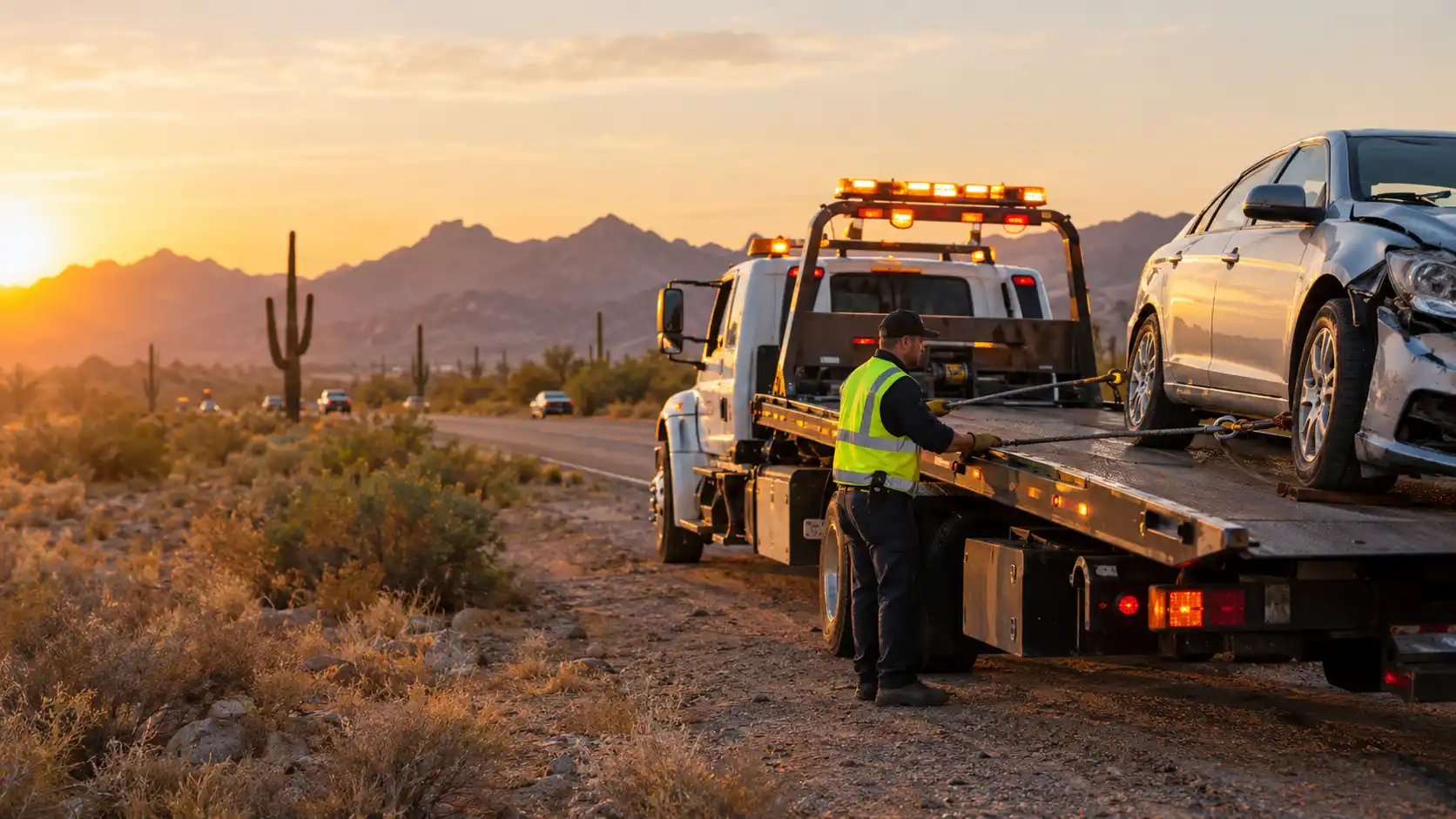
Accident vehicle recovery is the full job of clearing a crashed vehicle from the road and moving it somewhere safe. The steps below follow the order of a real scene.
Steps at the Scene
- Safety first. Turn on hazard lights. Move yourself and passengers away from traffic.
- Call 911 if anyone is hurt. Medical help comes before the vehicle.
- Get a police report. Ask the officer for the report number.
- Call dispatch. Share your location, the vehicle type, its condition and whether it rolls.
- Clear debris and fluids. The crew sweeps glass and handles fuel or oil on the road.
- Hook up or winch. The operator rigs the vehicle. A rollover or ditch job needs a winch first.
- Tow. Most wrecked cars ride on a flatbed. Big trucks and rollovers may need a heavy-duty wrecker.
- Storage. The vehicle goes to a storage yard or an impound lot. Ask for the address and the release steps.
A Phoenix accident tow recovery with Redline costs about $100 to $500. The price depends on the vehicle type and how hard the pull is.
Who Picks the Tow Company
At some scenes, police call a tow company from their own rotation list. That is a police-ordered tow. At others, you can choose your own company. Ask the officer what applies. If the road is clear and the scene is safe, you often have a say.
Want the full picture? Read our guide on Where Do Cars Get Towed After an Accident.
Off-Road Vehicle Recovery: Gear, Methods, and Safe Pulls
Off-road vehicle recovery means freeing a vehicle from sand, mud, rocks or a trail mishap. It needs the right gear and a calm plan. Arizona trails and desert washes give plenty of chances to need both.
Common Stuck Situations
- Sand and mud: The vehicle is bogged down, and the wheels spin without grip.
- Rocks: The vehicle is bellied out on a ledge or boulder.
- Desert washes: Soft, loose ground grabs the tires. Water in a wash adds real danger.
- High-centered: The frame rests on a ridge, so the tires cannot bite.
- Trail rollover: The vehicle tips on a slope and ends up on its side.
Gear Pros Use
- Kinetic rope: A stretchy rope that stores energy and gives a smooth tug.
- Strap: A flat strap for a steady pull with little stretch.
- Rated recovery points: Solid mounts bolted to the frame. They are built to take a pull.
- Soft shackle: A light rope loop that links a strap to a recovery point.
- Winch: A drum and cable that pulls from the front or rear. Pick a line rating well above your vehicle’s weight.
- Traction boards: Boards that give tires grip on sand and mud.
- Recovery jack: A lift that raises a stuck wheel so you can pack the hole.
- Tree saver: A wide strap that wraps a tree and protects both the tree and the strap.
Two terms matter here. Self-recovery means you free your own vehicle with your own gear. Assisted recovery means a second vehicle or a pro crew does the pull. A spotter watches the whole setup and signals the driver.
Why DIY Pulls Go Wrong
Most bad pulls come from four errors:
- A weak anchor, like a bumper or a small tree.
- A pull from a tow hook that was never made for shock loads.
- A worn strap that snaps under strain.
- People standing in the line of pull.
A snapped strap or a loose hook can fly like a bullet. Stay out of the line and keep the crew back. Learn more in What Does Off-Road Recovery Mean and What Are Common Mistakes During an Off-Road Recovery.
Vehicle Recovery Equipment: What Each Tool Does
Each tool on a recovery truck has a job. This table shows which one fits which problem.
| Tool | Best For | Why |
| Flatbed (rollback) | Wrecked cars, low cars, all-wheel-drive models | Carries the whole vehicle, so nothing drags |
| Wheel-lift | Quick short tows and tight parking spots | Lifts two wheels fast with a small truck |
| Heavy-duty wrecker or rotator | Big trucks, buses, rollovers | Strong boom and winches for heavy loads |
| Winch | Ditches, mud and slopes | Gives a slow, straight pull with a rated line |
| Dolly or skates | Locked wheels or a broken axle | Small wheels let a stuck corner roll |
Two more items matter on every job. Safety chains back up the main hook-up. A tow dolly carries one set of wheels on small wheels while the other set rolls.
How a Stolen Vehicle Recovery System Works
Here is the plain answer to what is vehicle recovery system tech for stolen cars: a hidden device that reports where your car is, so police can find it fast. The National Insurance Crime Bureau counted 659,880 stolen vehicles in 2025, about one every 48 seconds. That is down 23% from 2024, but it is still a lot of cars.
The Parts
- GPS/GNSS receiver: Reads satellite signals to fix the car’s position.
- Cellular link: Sends that position to a monitoring center and to your phone.
- Cell ID fallback: When GPS drops, the device uses nearby cell towers for a rough location.
- Backup battery: Keeps the unit alive if a thief cuts the car’s power.
- Accelerometer: Senses motion, a bump or a tow-away.
- Geofence: A virtual boundary. You get an alert if the car crosses it.
- Jamming and tow alerts: Warn you when a signal is blocked or the car is lifted.
- Remote engine cutoff: On some systems, the provider can stop the engine from restarting. Police usually guide this step for safety.
The 5 Steps
- Alert. You get a text or app alert that the car moved.
- Verify. Check that no family member has the car. The monitoring center may call you.
- Report to police. Give them the plate number, VIN and tracker details.
- Track. The provider shares live location with officers.
- Recover. Police find the car. A tow company may then move it if it is damaged.
Where It Fails
- GPS needs sky view. A concrete garage or shipping container can block the signal.
- Cellular dead spots. No signal means no update.
- Thieves who find or jam the device. Pros know where trackers hide and use jammers.
- Lapsed subscriptions. If you stop paying, the tracker may not wake up when you need it.
The vehicle tracking system page gives more background on how this tech works.
Vehicle Recovery vs Towing vs Roadside Assistance
People mix these three up. Each one solves a different problem.
| Service | What It Does | Example Job | Who Does It | Typical Time | Cost |
| Roadside assistance | Small fixes on the spot | Jump start, flat tire, lockout, fuel delivery | Roadside technician | Minutes after arrival | Flat fee, quoted by phone |
| Towing | Moves a vehicle that can roll | Dead car to a shop | Tow operator | Arrival in 10 to 25 minutes, then a short load | Priced by distance and vehicle |
| Recovery | Frees a stuck or wrecked vehicle | Ditch pull, rollover, sand | Recovery operator with winch gear | Longer, based on the scene | About $100 to $500 for accident recovery in Phoenix |
| Tracker | Finds a stolen vehicle | Stolen car located by GPS | Tracker provider and police | Starts at the first alert | See the cost table above |
How to Know If Your Vehicle Has a Recovery System
Part of learning what is vehicle recovery system tech is checking your own car. Many cars already have one. Use this checklist:
- Owner’s manual. Look for connected services or stolen vehicle tracking.
- Window sticker. Some list included services and trial lengths.
- Connected services app. A companion app often has a locate or theft tab.
- Subscription emails. Search your inbox for trial or renewal notices.
- Dealer paperwork. The sales file may list an installed tracker.
- Padlock dash light. The immobilizer light shows the anti-theft system is on.
- VIN check. Call the dealer or the maker with your VIN and ask what is active.
What to Do When You Need Vehicle Recovery Right Now
If You Are Stuck or Crashed
- Move to a safe spot and turn on your hazards.
- Call 911 if anyone is hurt.
- Share a location pin with dispatch.
- Tell them the vehicle type, its condition and whether it rolls.
If It Is Stolen
Call police first. Give them your license plate, VIN and any tracker details. Ask for the police report number. Then call your tracker provider. Never chase the vehicle yourself.
Call Redline Roadside & Towing LLC for 24/7 Vehicle Recovery
When your vehicle is stuck or wrecked, you need a crew that shows up fast. Redline Roadside & Towing LLC offers 24/7 Accident Recovery in Phoenix with flatbed and light-duty tow trucks. Our 24/7 dispatch sends help across Phoenix, Avondale, Tolleson, Laveen and the West Valley. Arrival is usually 10 to 25 minutes.
How to pick a recovery company:
- Ask for a price range before the truck rolls.
- Confirm they have a flatbed and winch gear, not just a hook.
- Check that dispatch answers all night and every day.
Stuck in a ditch or sitting after a crash? Call Redline now. A real person will answer, send a truck and get your vehicle moving again.
Conclusion: Know Your Recovery Options Before You Need Them
Now you know what is vehicle recovery system tech and gear, from winches on the road to trackers inside a car. Save the Redline Roadside & Towing LLC number in your phone today, so help is one call away when you are stuck or wrecked.
Ready to talk to a pro? contact us and tell us what you need.
FAQs
What does vehicle recovery mean?
Vehicle recovery means getting a vehicle back. It can mean pulling a stuck or wrecked vehicle to safety. It can also mean finding a stolen one with a tracker.
Is a recovery system a GPS tracker?
Only one kind is. A stolen vehicle recovery system uses a GPS tracker. Roadside recovery uses trucks, winches and straps.
What is the difference between recovery and roadside assistance?
Roadside assistance fixes small problems like a flat tire or dead battery. Recovery frees a vehicle that is stuck, off the road or wrecked.
How do I know if my car has one?
Check your manual, window sticker, connected services app and subscription emails. You can also call the dealer with your VIN.